notes:
- sound is made by changing air pressure: push to dissipate, pull to concentrate.
- sound is transmitted through molecules crashing with each other. denser material will have more sound transmission. luke dubois said that sound will move through water quicker than air. that’s how whales communicate with each other well.
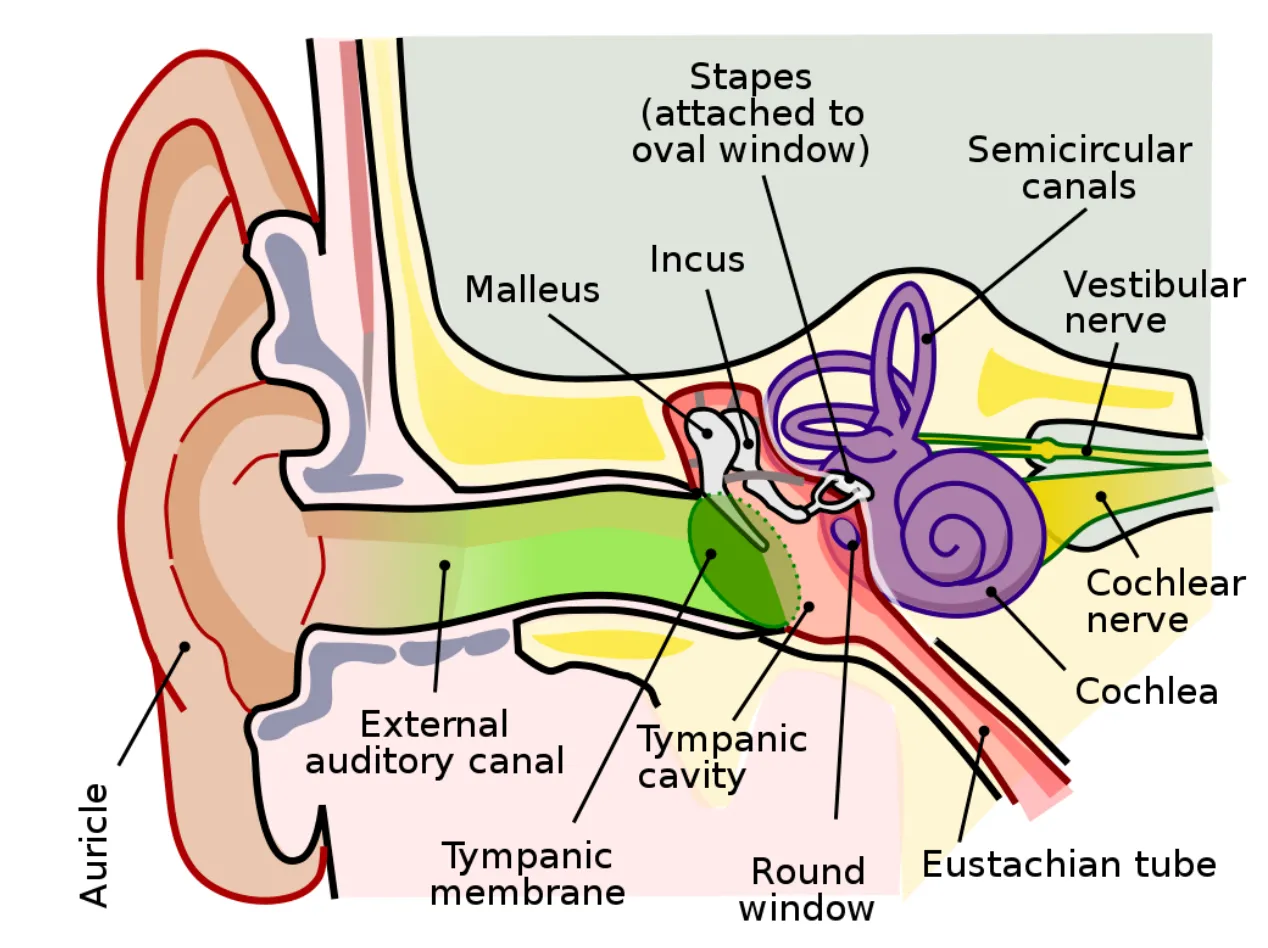
- the ear is fascinating. sound moves through air, pressure is increased by the small opening of the ear, then rattles some bones inside (solid), then hits a liquid in the cochlea, and then, apparently, little hairs are tuned to certain frequencies — they stand up when the resonating frequency is detected. finally, the signal is converted into electrical impulses.
- luke dubois introduced us to umvelt.
- he also spoke about gestalt in sound — the idea that we group certain frequencies together to understand that they’re part of the same sound. he then demonstrated it by splitting an audio file into multiple frequencies with spear.
- introduced psychoacoustics, and suggested “auditory scene analysis”.
- craig fahner mentioned listen
- spoke about analog being analogous to something, and not physical.
- discussed analog vs digital vs electric vs electronic sound.
- craig fahner showed us this (a group of japanese scientists trying to digitally produce human-voice):
- we spoke a little bit about bicycle built for two, by max mathews.
- spoke about unit generator theory.
how computers save & play sound:
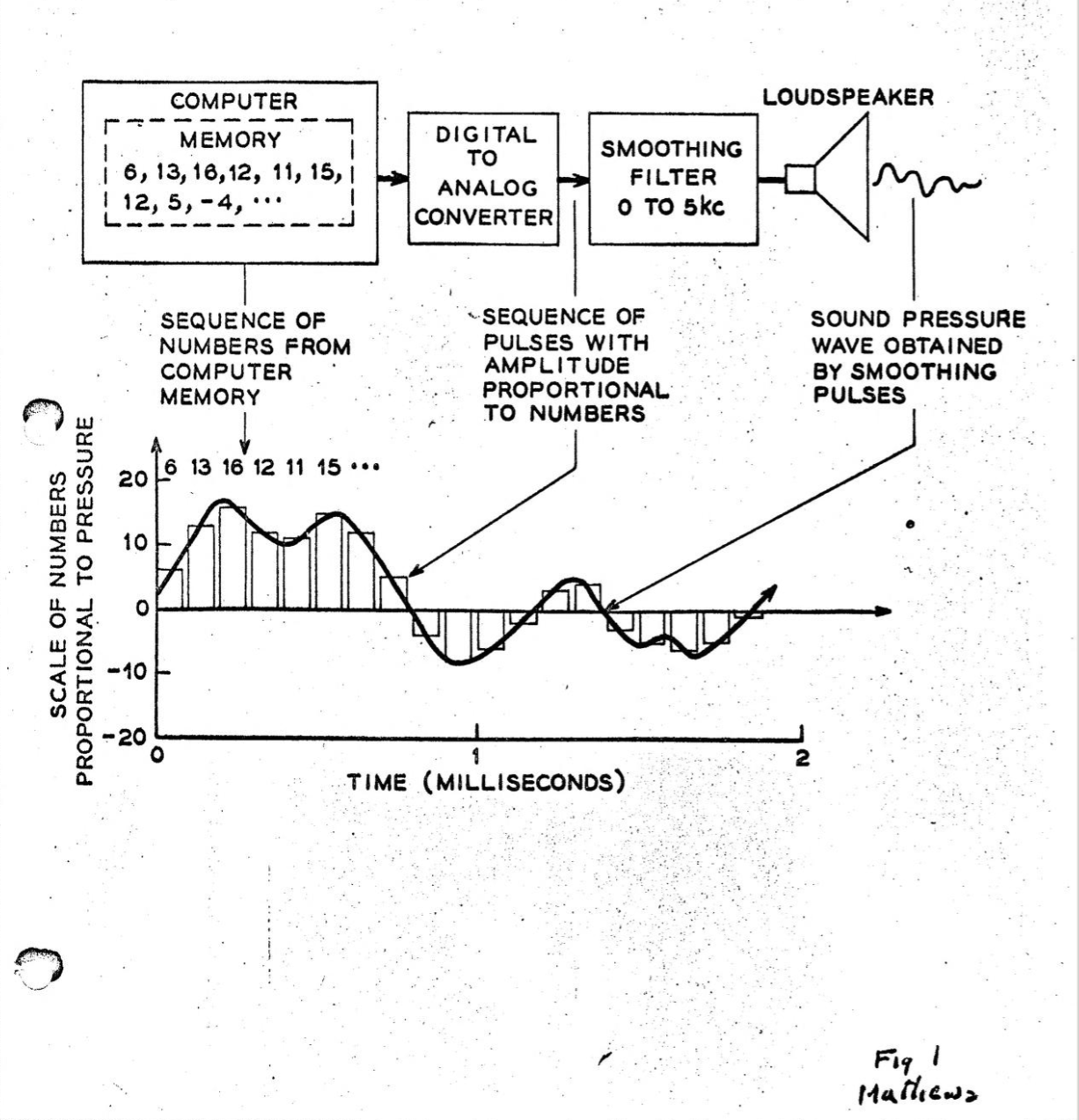
- i also realised how audio could be additive or channelled. in the synth i made in final-project-2_log, my sound was additive and not channelized.