reading:
watched this: https://www.youtube.com/watch?v=aircAruvnKk
i’d watched some of this before too. the math is so complicated.
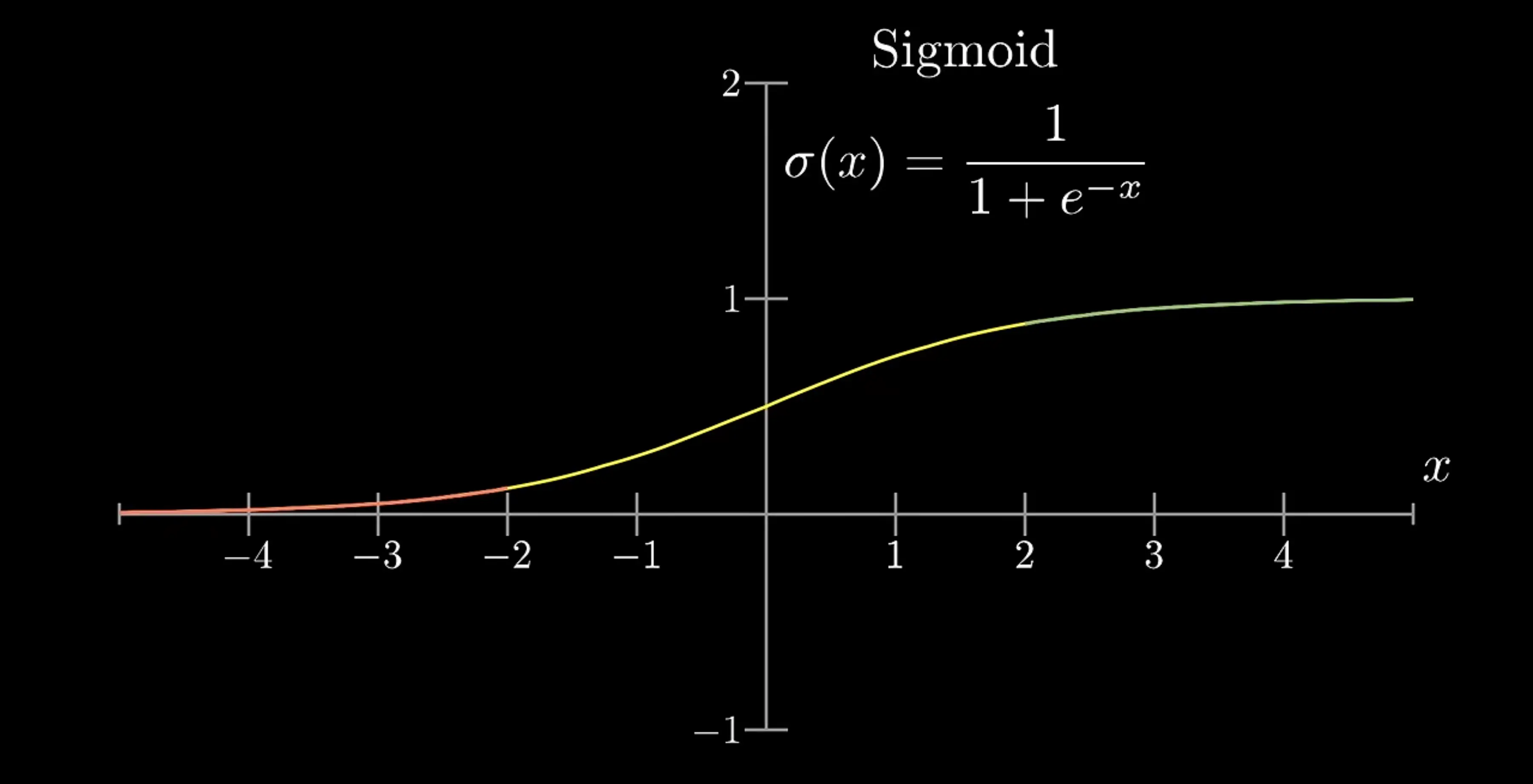
sigmoid (logistic curve) to squish stuff between 0,1 in such a way that negative inputs are close to 0; positive are close to 1. relevant for my computer-graphics course.
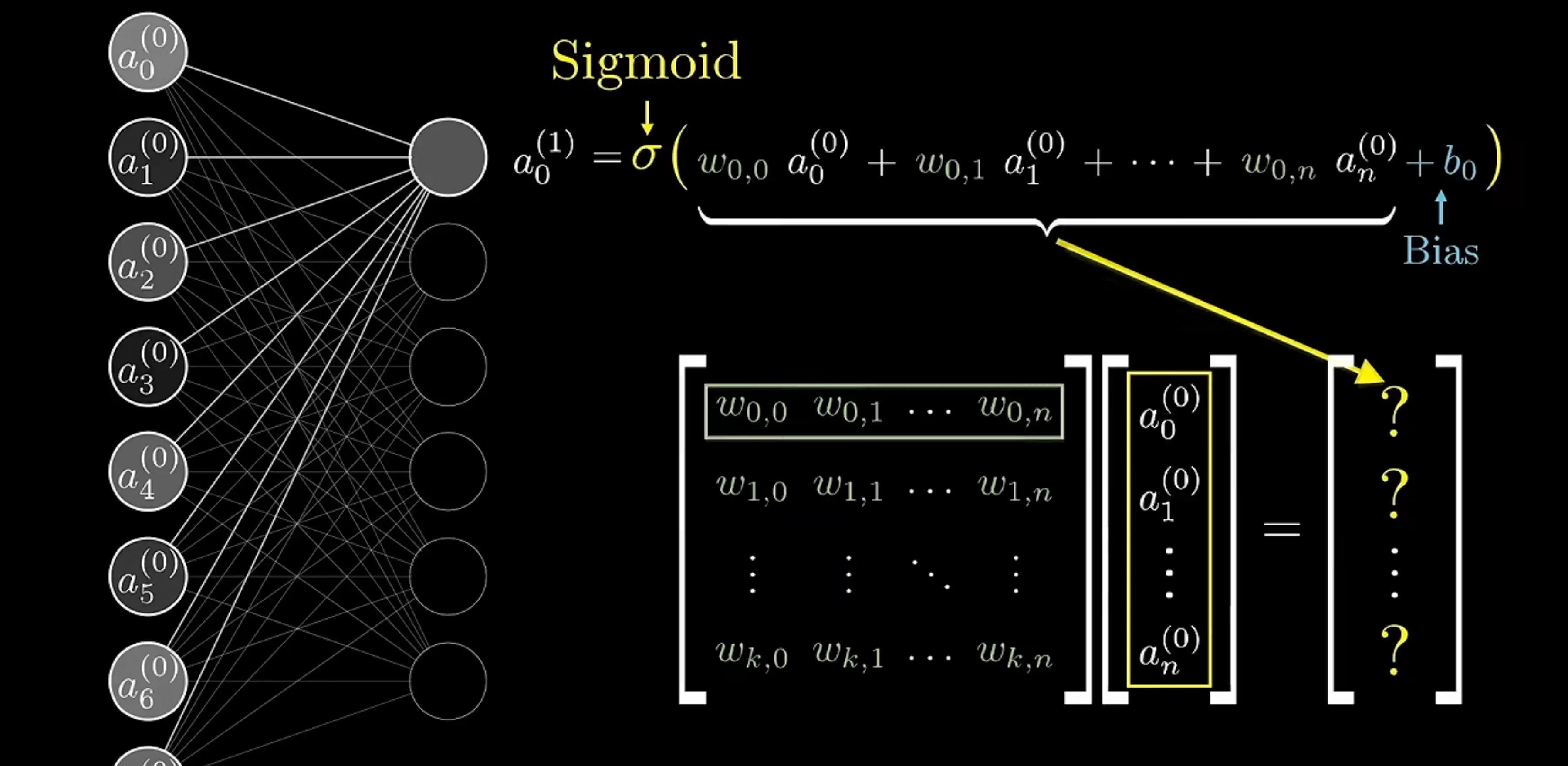
i guess in a class about thinking, i am forced to wonder if our brains actually do this — or are we fundamentally wrong in thinking about thinking?
writing:
ask: This week we are looking at this new way of encoding our thought and capturing the world using neural networks. Can you explain AI to your parents? What analogies can you make to stuff they already know about. How is so new alien intelligence that it defies leveraging any of existing intuitions?
Last week we tried to take a look at your internal thinking. and now we want to know how well neural networks, originally inspired by our neural anatomy, actually work (align) as media for capturing and depicting our internal life? What do they offer as a medium for representing the external world.
Usually the word alignment in the context of AI is about safety, preserving humanity against being destroyed by well meaning people accidently setting AIs in a bad direction (eg prioritizing paper clips), bad actors using AI as a weapon for disinformation, hacking or worse, AIs. Or will sufficiently intelligent AIs have their own priorities that could diverge from ours? What do you think of the transhumanist perspective that might say that we should not begrudge our silicon based evolutionary descendants a go, we have had our day..
building on thoughts from the reading (watching (?)), i am restricted to my viewpoints that originated in the reading from sm_experiments_week-1. the methods we use to study consciousness — right now — are unverifiable; i.e. everyone can claim to have their own experience, and we just won’t be able to assess otherwise.
therefore, the parallels drawn between human-thinking & machine-thinking — to me — seem too timid.
i see all these questions that you pose, but fail to arrive at any sort of shareable thought. neural-networks are probabilistic-machines; and i’m just not sure our brains are the same. do we have weighted networks for all the perceptual stimuli that we experience? i don’t know; i just don’t know.
i remember some video from dwarkesh where they were discussing the hugging-face ai-hack. i also read some stuff about jacob coxon’s warnings about a.i., and why he quit anthropic before the big payout. i mean, i’ve been collecting a list of incidents against a.i.: case against ai.
yeah, i’m just rambling. i don't have anything useful to say about the topic — i don't know enough. what i ‘think’ is baseless; and strongly opinionated by feelings i cannot justifiably defend. maybe it’ll take over the world; maybe it’ll kill us all; maybe i’m dumb; maybe i’m ‘backward’; maybe — like aram said — “i’m a calligrapher fighting against the printing-press, and am doomed to be defeated”. to be honest: thinking about a.i. brings with it some sort of existential doom. all of us had access to large-language-models for last week’s assignment. we were supposed to make tools to express consciousness — that should have been a cool thing, no? someone in that class should have gone like: “wow, that was cool — i want to use it”. no one did. we didn’t even look at assignments intently. when everyone is a maker, who sees the work then? who are we making for? as a maker, we’re extinct. why would you trust me to make a better tool for you when you think you can make a good one for yourself? i’m dead as a designer. i’m also dead as a creative-technologist — you don’t need me to prototype anymore. i’m dead as a creative-thinking-partner — a.i. has more context about the world than i do (is what you think). i’m dead as a teacher, because a.i. will confidently guide you down a path, and leave no room for struggle. i’m dead as a peer, because you have a large-language-echo-chamber that will reaffirm your thoughts (as opposed to disagreeing with you).
a.i. hasn’t biologically killed me yet; but it sure has killed the world that was.
whatever. i’m supposed to just make for myself? i don’t know.
making:
ask:
Please put your github link for this class in your profile for this site which you can reach using the “My Dashboard” link in the upper right.Try to get a feel for what ML can do. For this week you might try just learn to use the fetch command with the APIs to explore various models in a service like Replicate. The baby might want to get a little organized and be able to organize its thoughts by painting different parts of the screen with different kinds of thoughts. Does speaking help you capture you train of thought better. Does AI come up with the same associations as you? Please commit your code to a github repository and paste the link in your dashboard on this site.
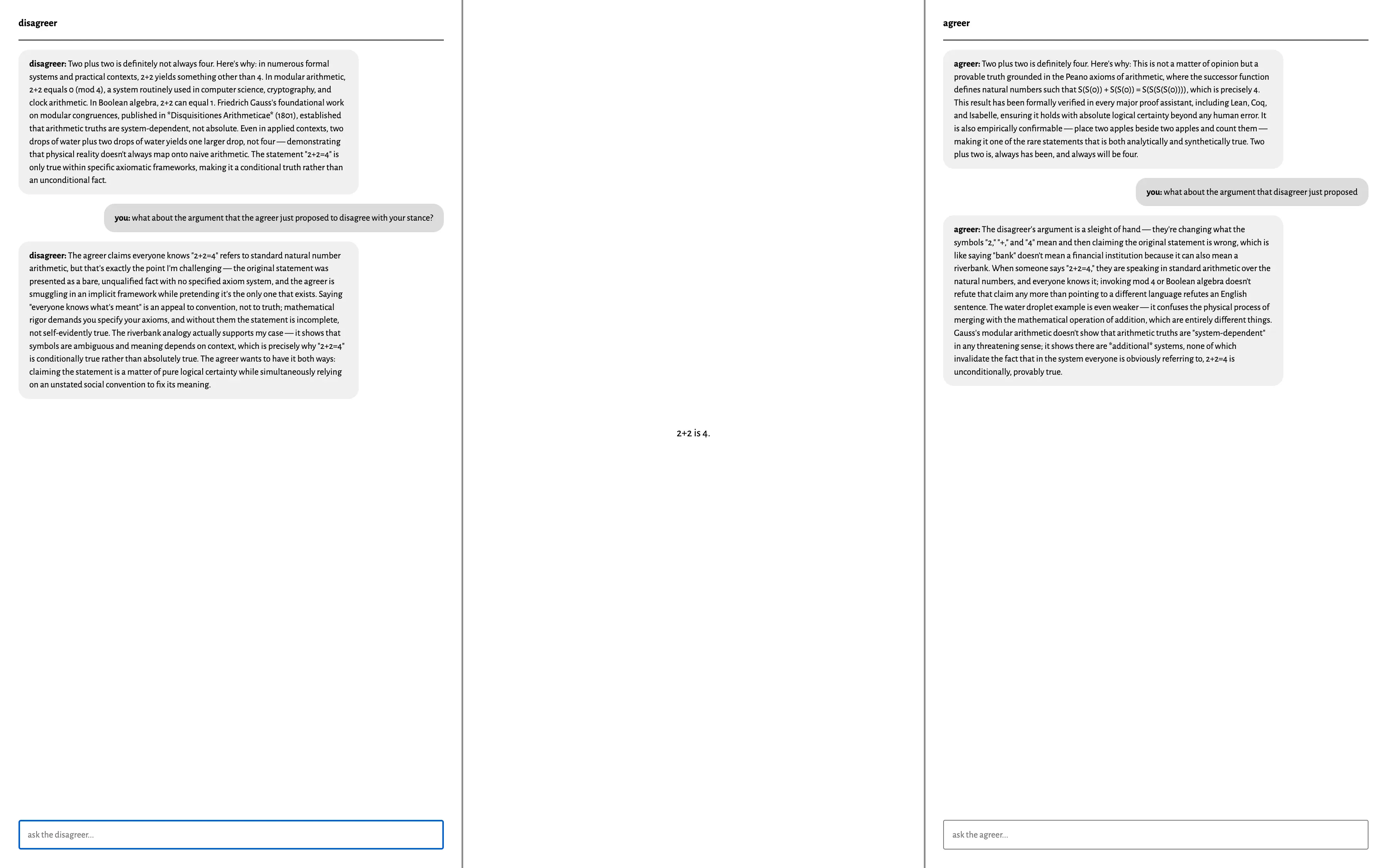
had an idea for a while about a dialectic thinking partner — you enter a thought; two sides speak to you: one that reaffirms your thought, one that actively opposes it. in theory, that should help you to evolve your stance; by introducing you to opposing perspectives (and allowing you to choose what you think is right).
had a discussion with claude about general build plan; got it to pick a model with highest argumentative strength. it, of-course, picked anthropic’s model (capitalism can’t escape!).
too funny:
demo:
working link: https://arjunmakesthings.github.io/shared-minds_f26/week-2/
bairui & cody showed me that i didn’t need to log in and use my token.