ask:
Fabricate something using primarily two different materials.
phil also said that this is the last project, so we might as well do it ‘well’ (and make something ‘kickass’).
thought:
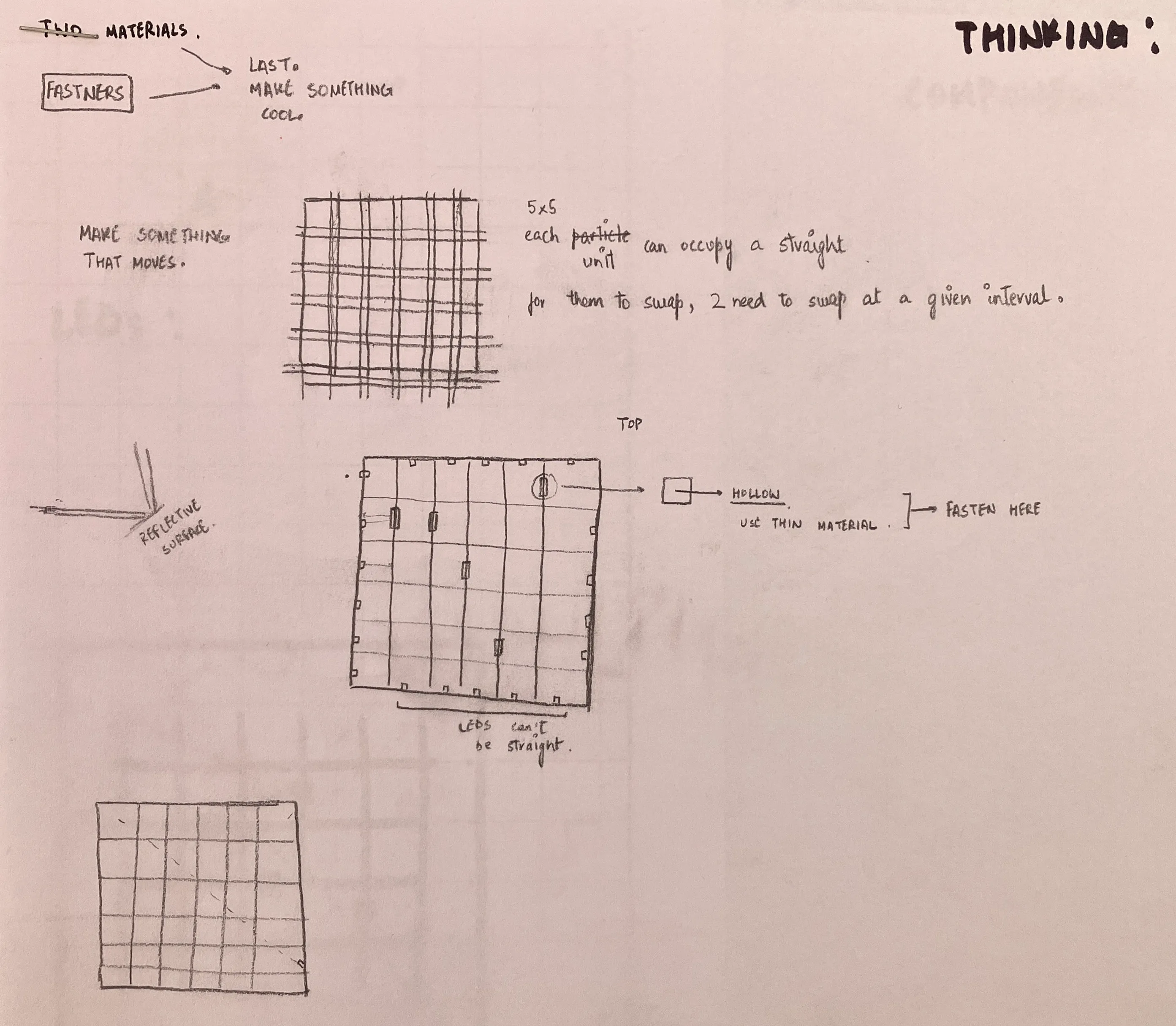
i wanted to make something that moves, and is generative (in some way).
i spent an hour thinking through things.
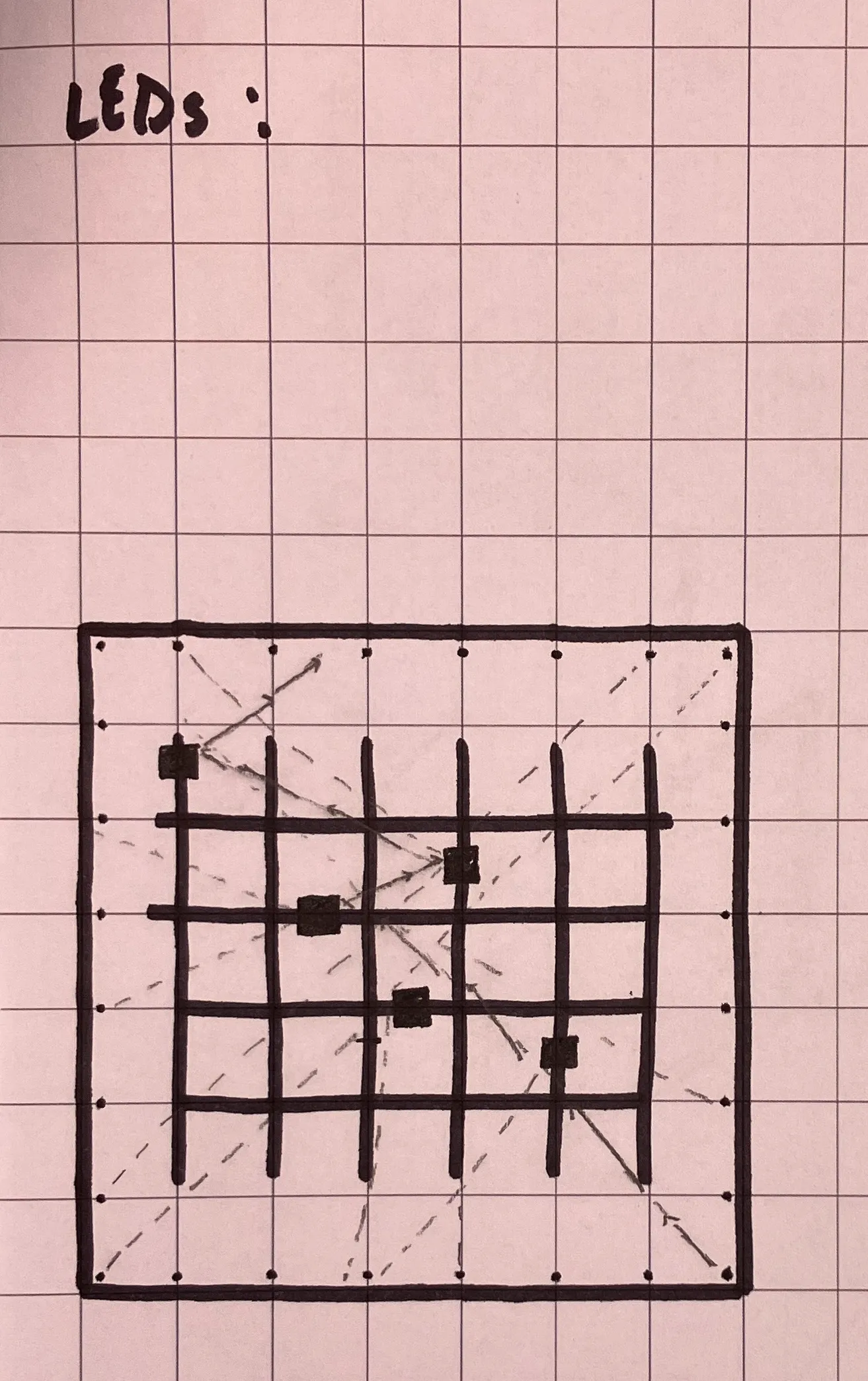
testing lights:
booked an appointment with phil.
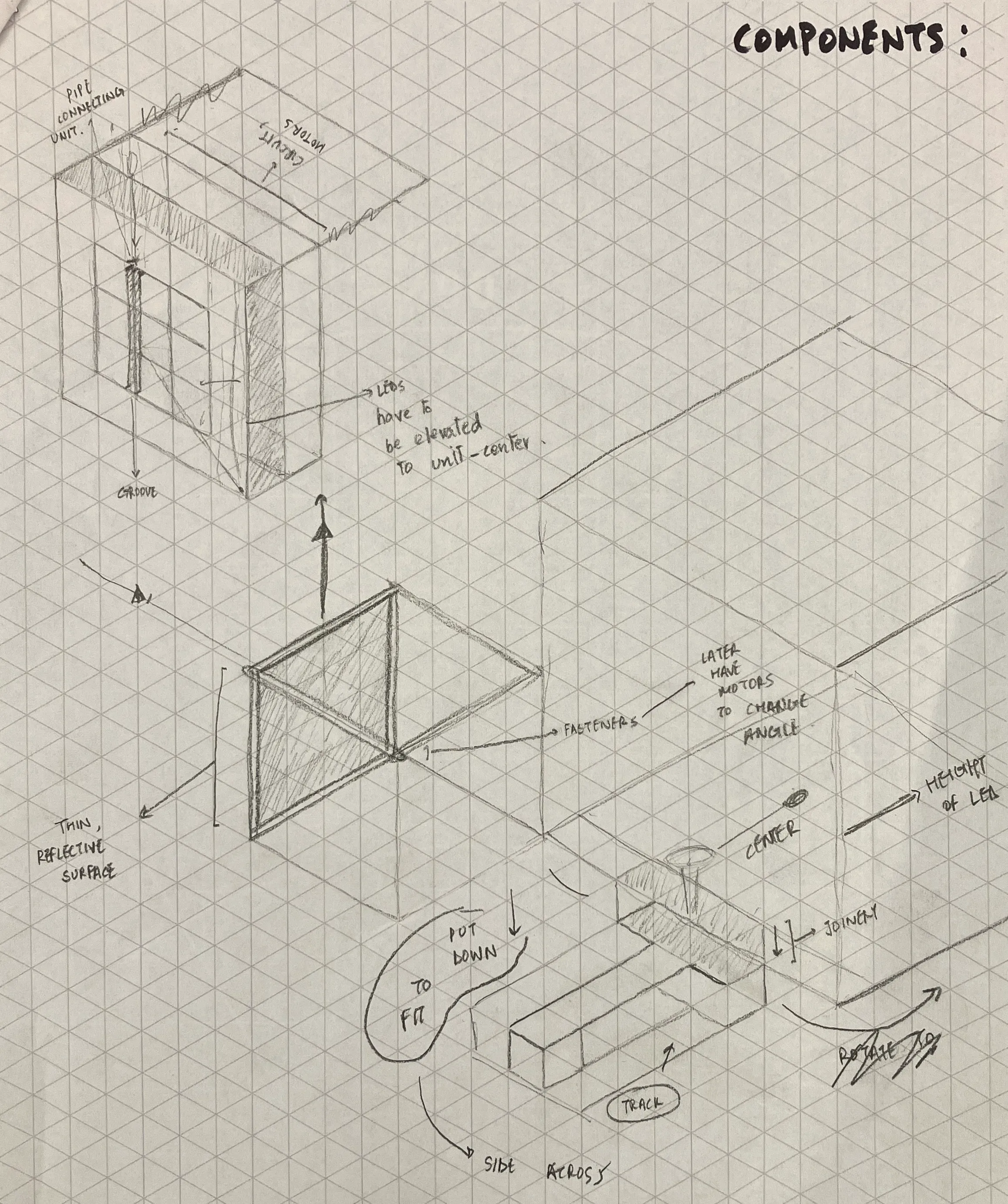
phil recommended that i make the base (12 x 12”) with 3/4inch plywood. then, i buy t-slot channels. and, the units i make out of metal or metal sheets.
material hunt:
i realised that the linear actuators don’t get me a lot of distance. they’re only meant for small pushes.
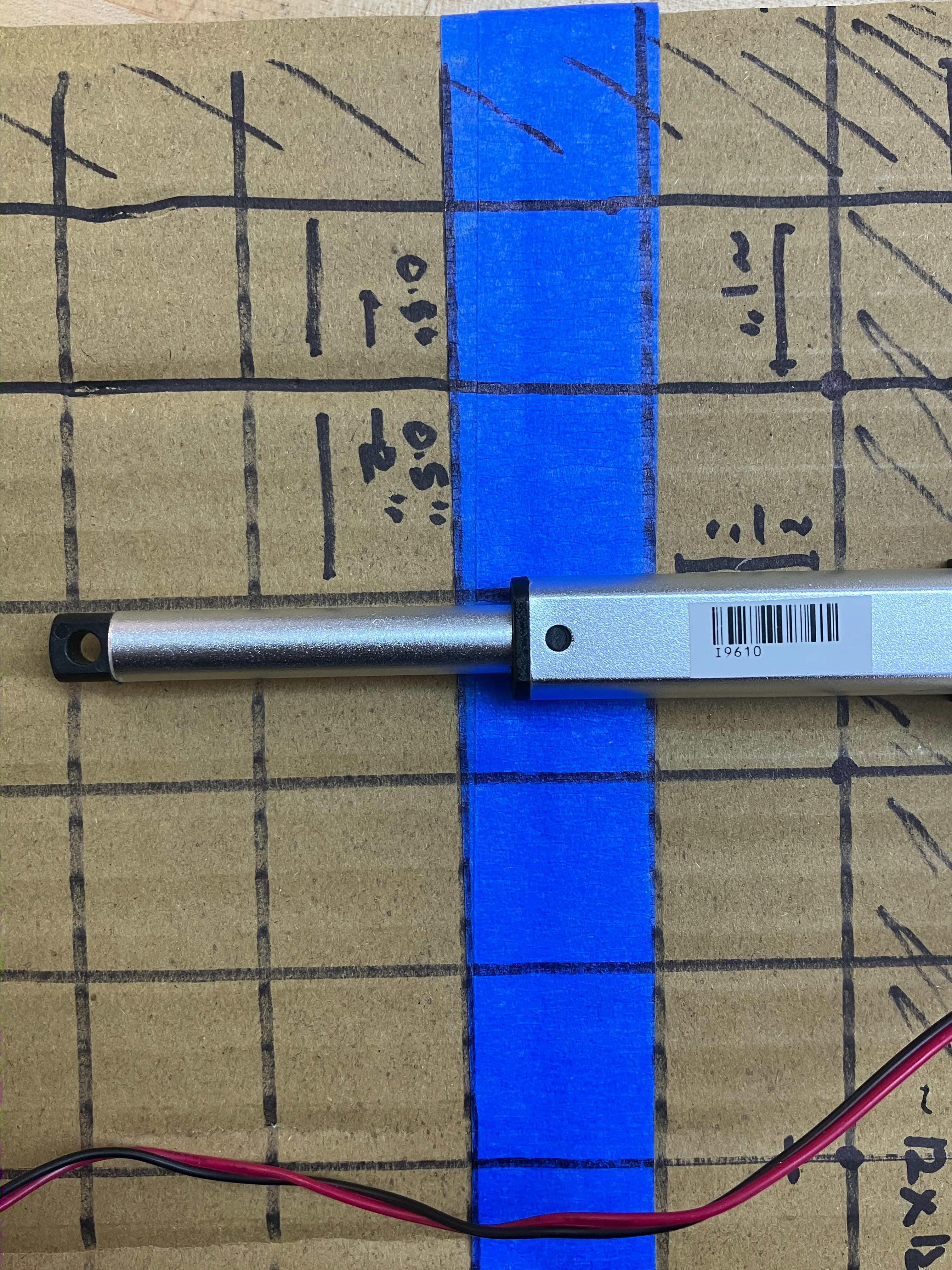
and that i would have to leave more room for their housing.
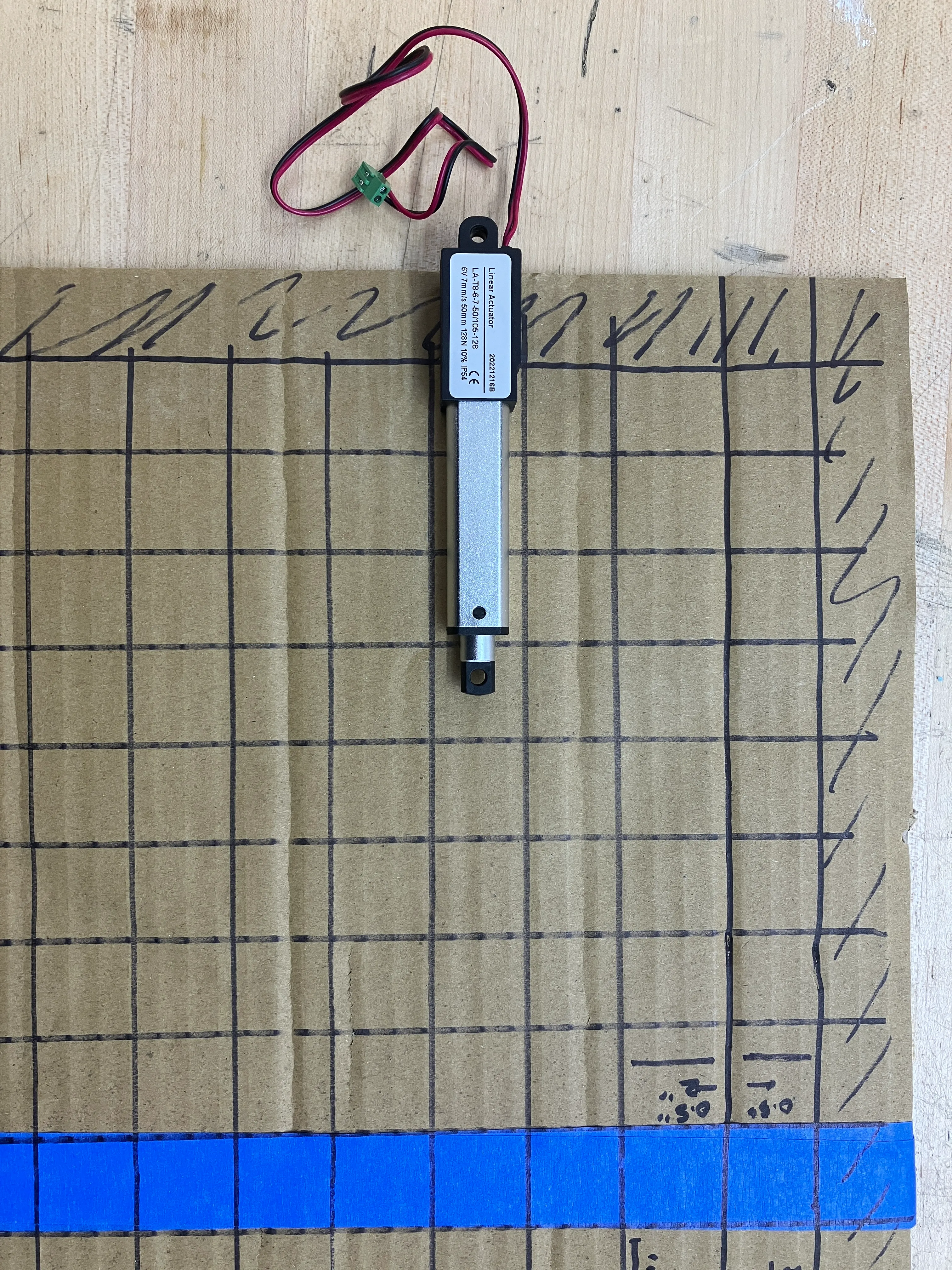
cody & aram suggested a core-xy system. i contemplated. i was enticed, but realised that it wouldn’t be fabrication. it would be more electronics, to get the thing to work.
so, i decided to skip the machine part entirely. just fabricate it. figure out the machinery later, if you have the time post-fabrication.
i tried to study a t-joint and replicate it. but failed.
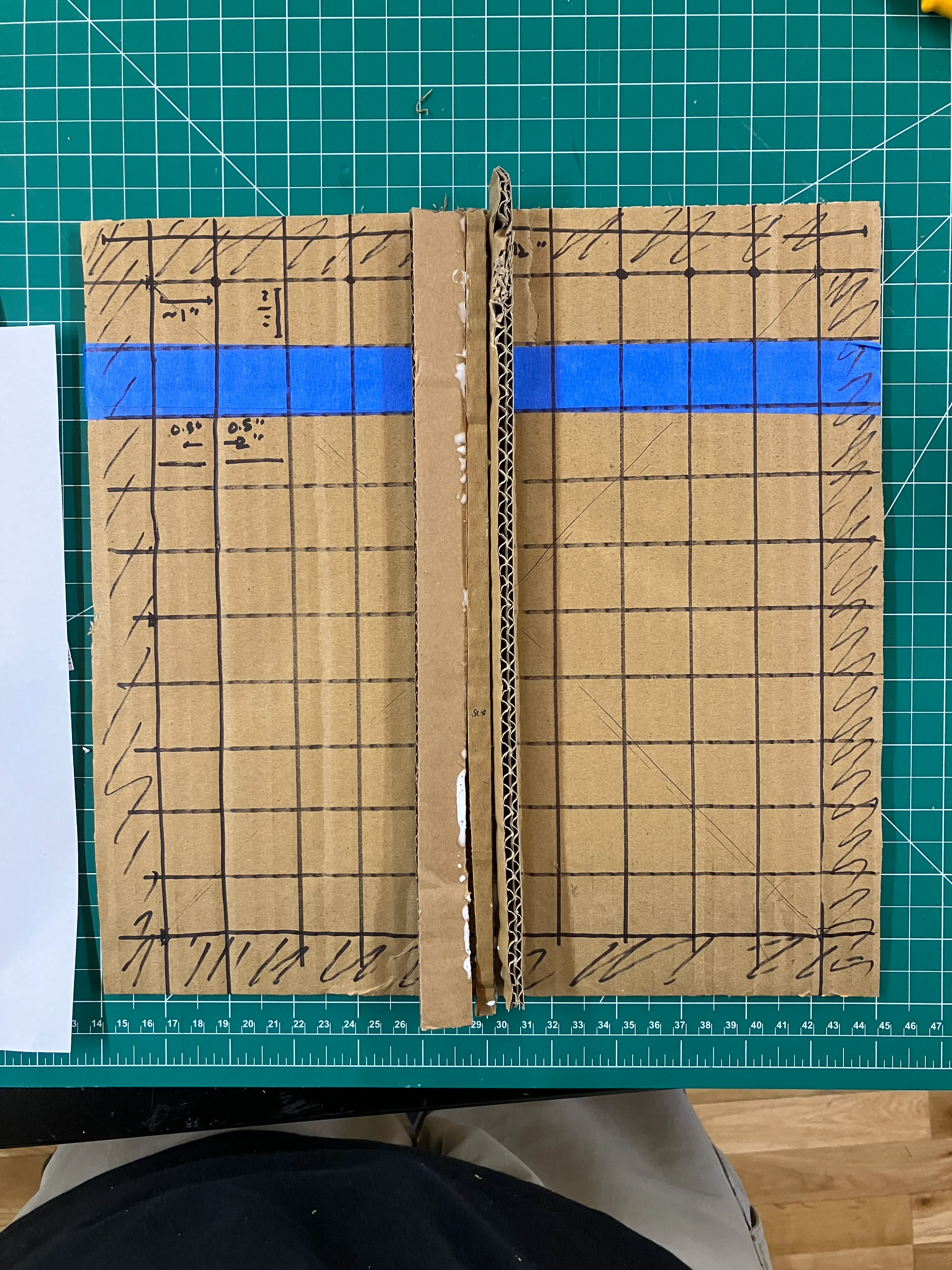

i then looked up the parts that i’d need for making this project. i cannot afford it. wrote to phil.
also reflected on the ask:
Fabricate something using primarily two different materials (40%, 40%; not plywood or acrylic).
realised that my idea wasn’t particularly fitting the ask.
i then started to think about materials. paper & wood is what is available.
i first thought of making something with units that substitutes the material in each unit. for example: flowers — each one made of either wood or paper, with the stem being made from the material that is not the form.
looked at origami flowers: https://origami.guide/instructions/origami-flowers/
i think this is a decent project. i’m going to make flowers with origami, and then replicate the same with wood; in such a way that there are two versions of the same type of flower: one paper, one wood. this will also help me think more 3-d, and i’d have to convert folded-form in wood.
i think this line of enquiry is interesting to me because of fab_experiments_week-4.
what i make also meets the ask: it’s 40% wood, and 40% paper.
watched this: https://www.youtube.com/watch?v=NYKcOFQCeno
i tried a couple of origami flowers. failed.
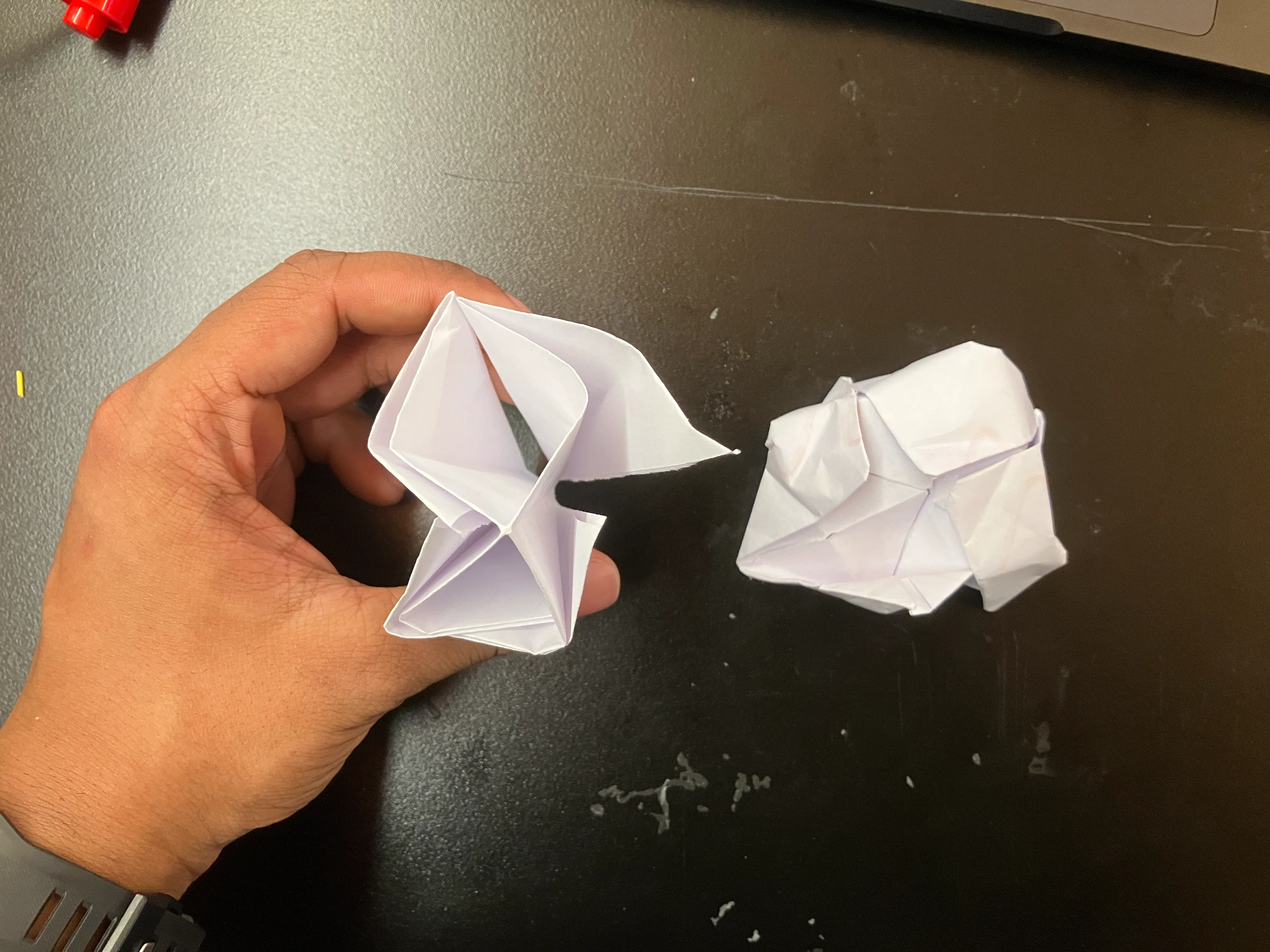
jisoo came and helped me. she did origami as a child — apparently like most children do.
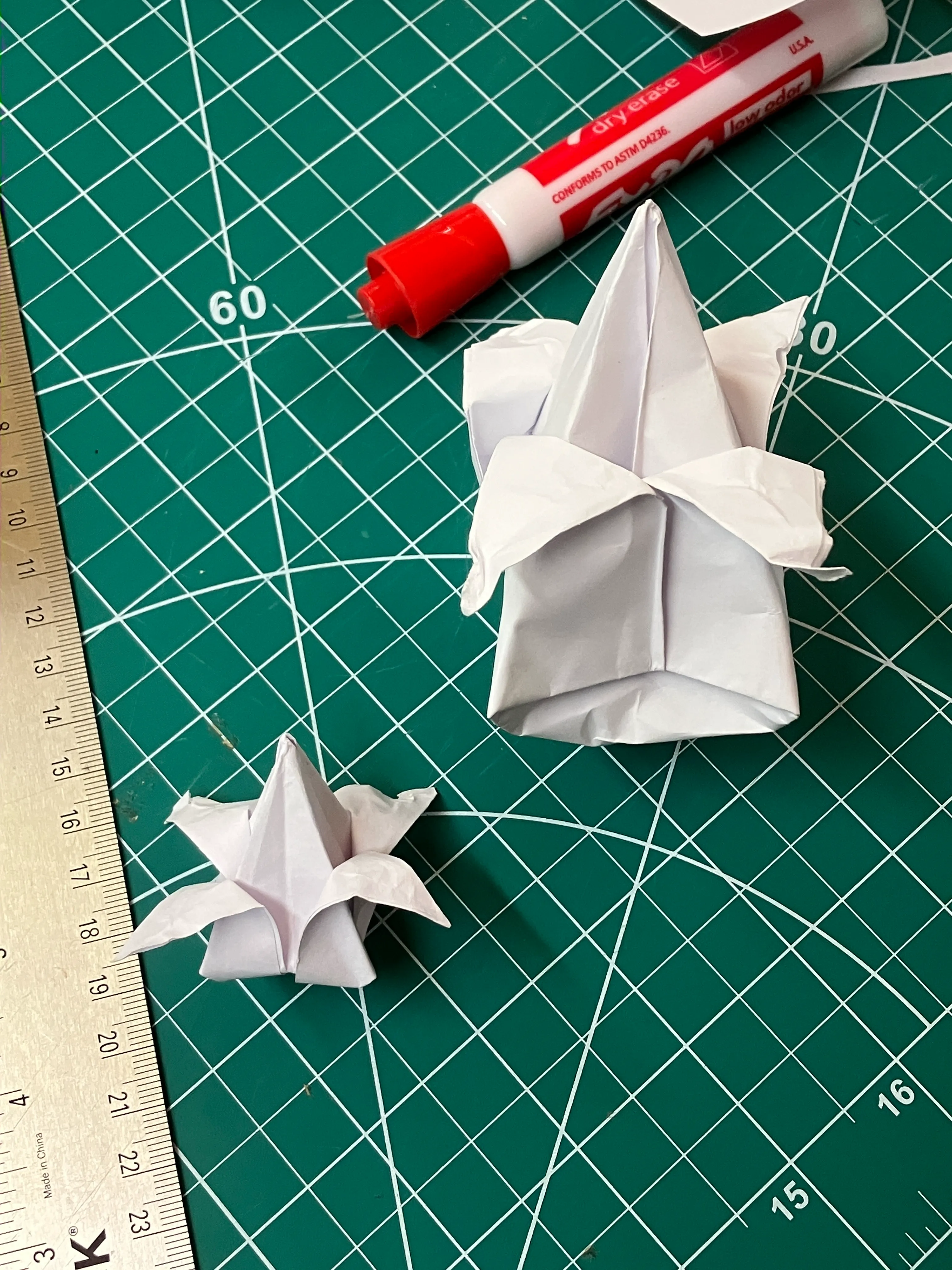
i then went to blicks, as per phil’s suggestion. i got basswood.
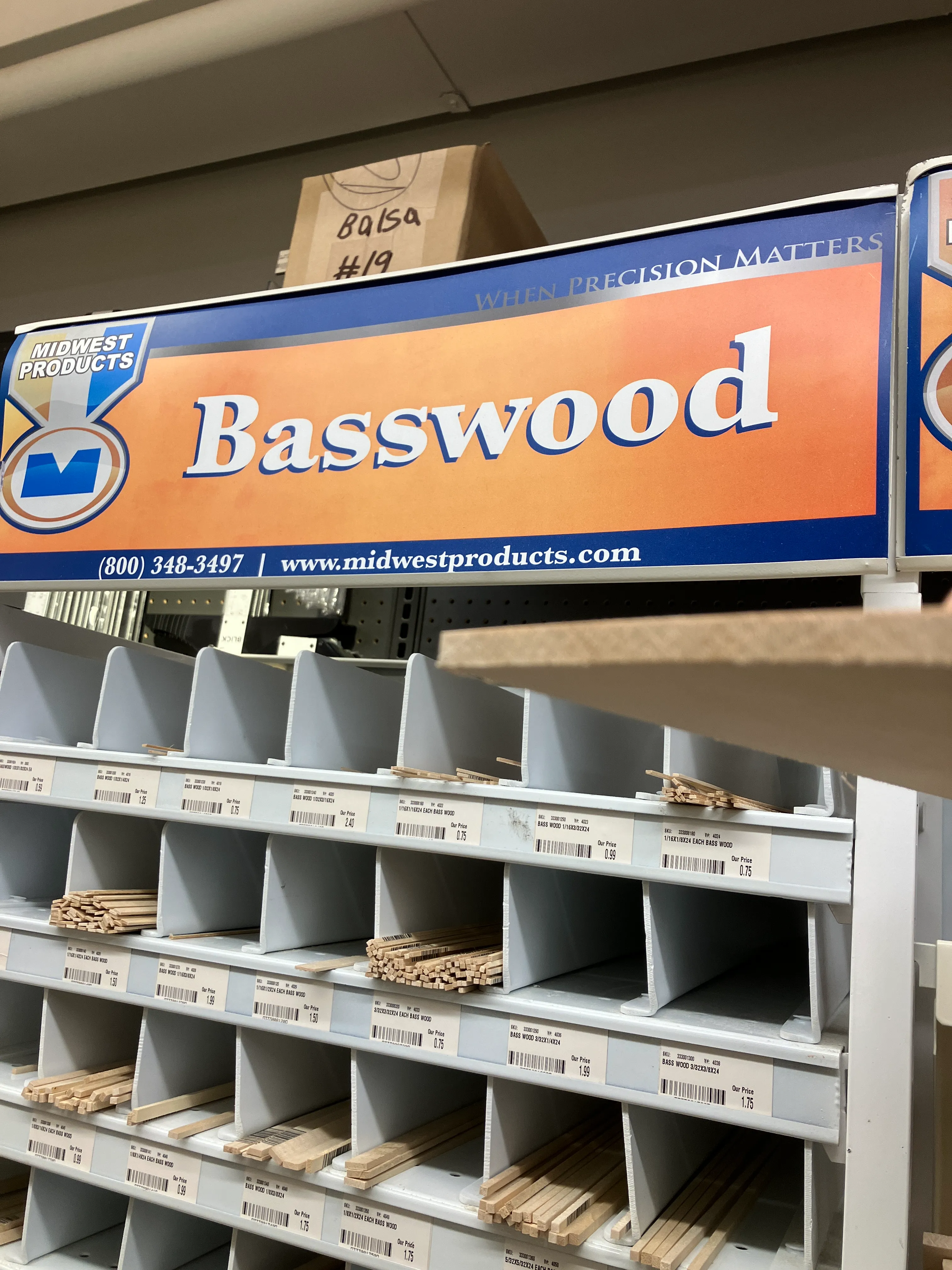
blicks also had a section for tubes, that i can use as my stem. but, i will go back for these later.
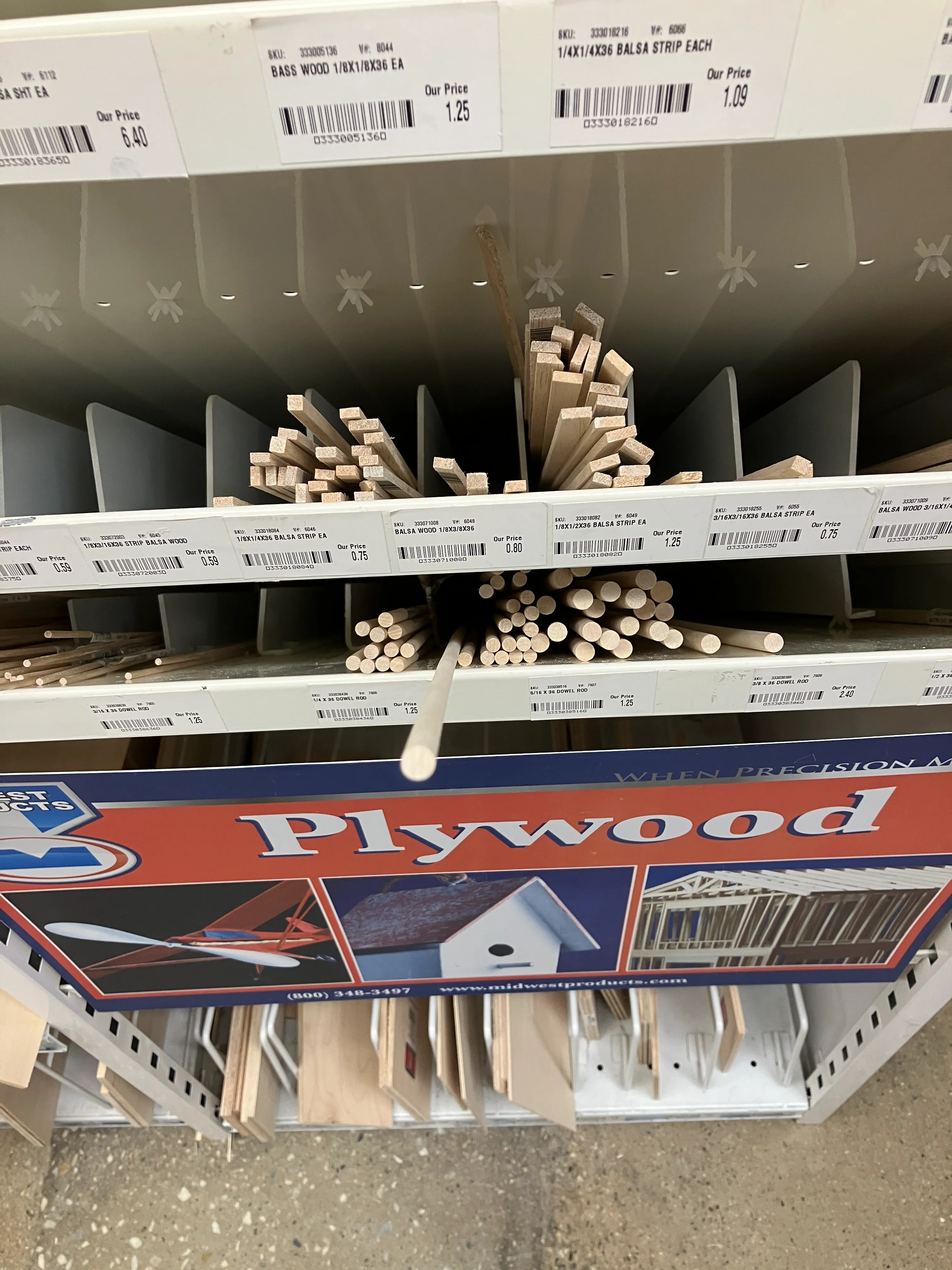
the idea is to make the same form with two different materials.
i first measured the sizes exactly. i’m going to make the same form from pieces of material that are 8” tall.
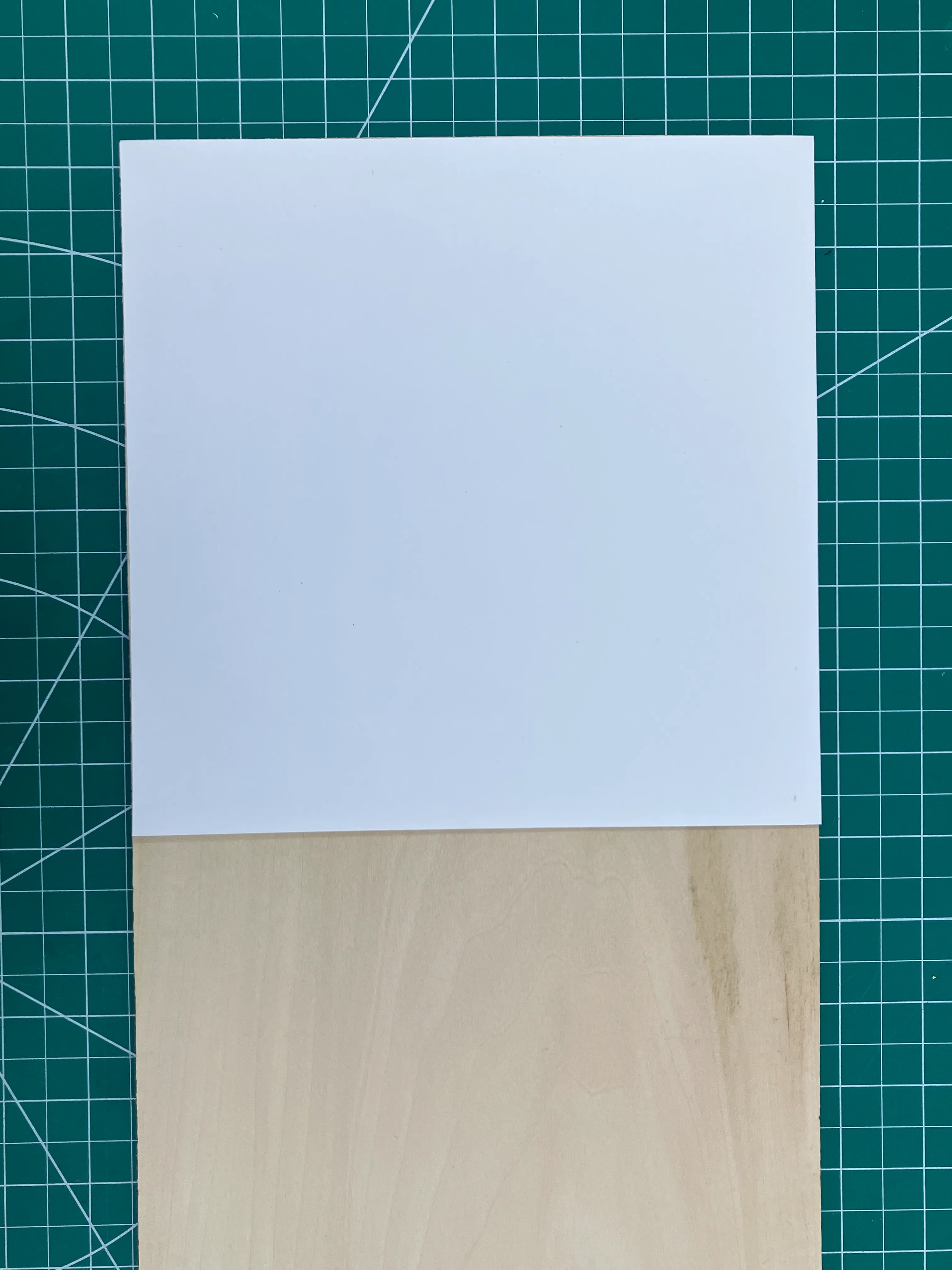
i made a flower-bulb and realised that i need to use thinner paper.
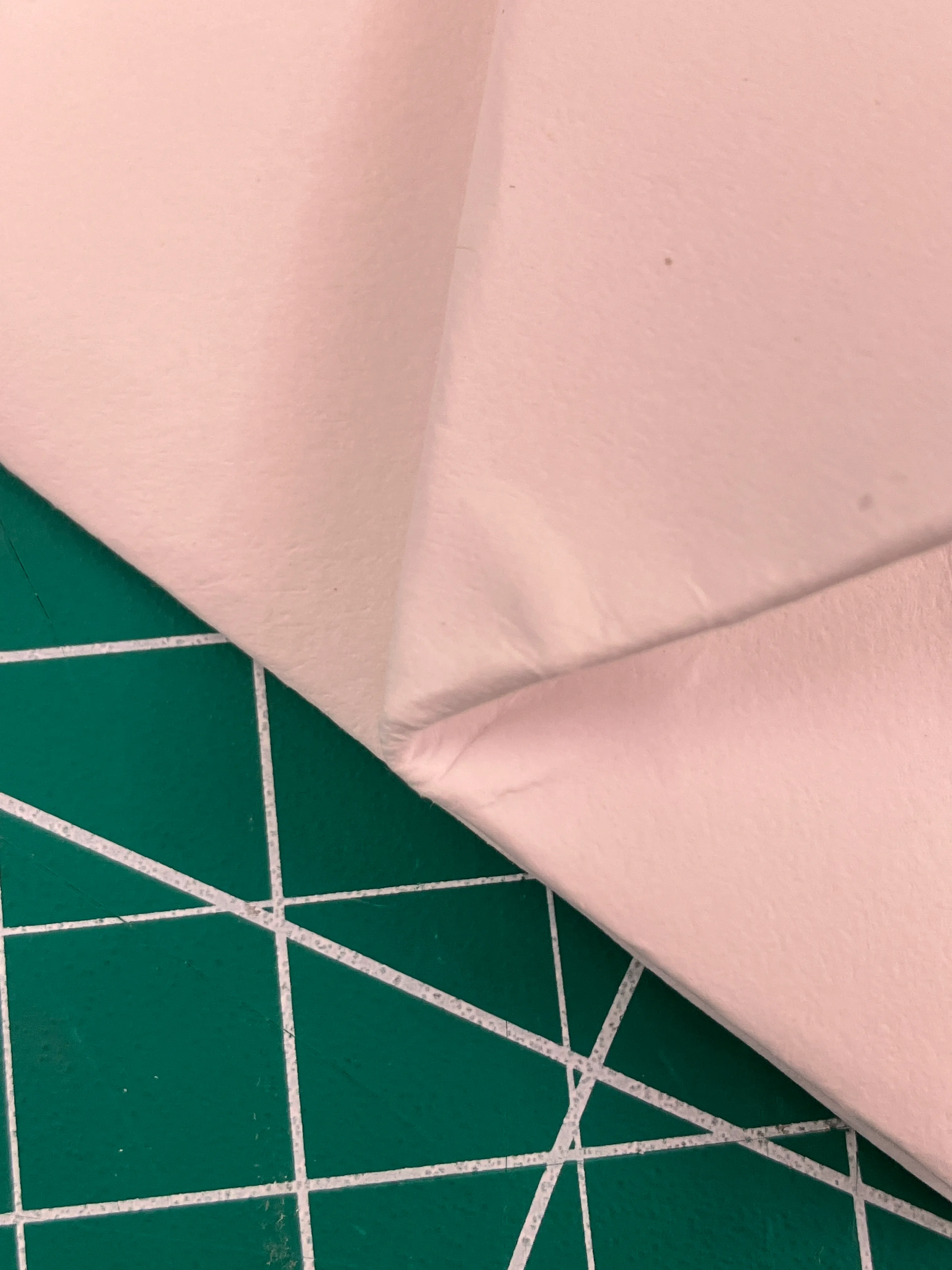
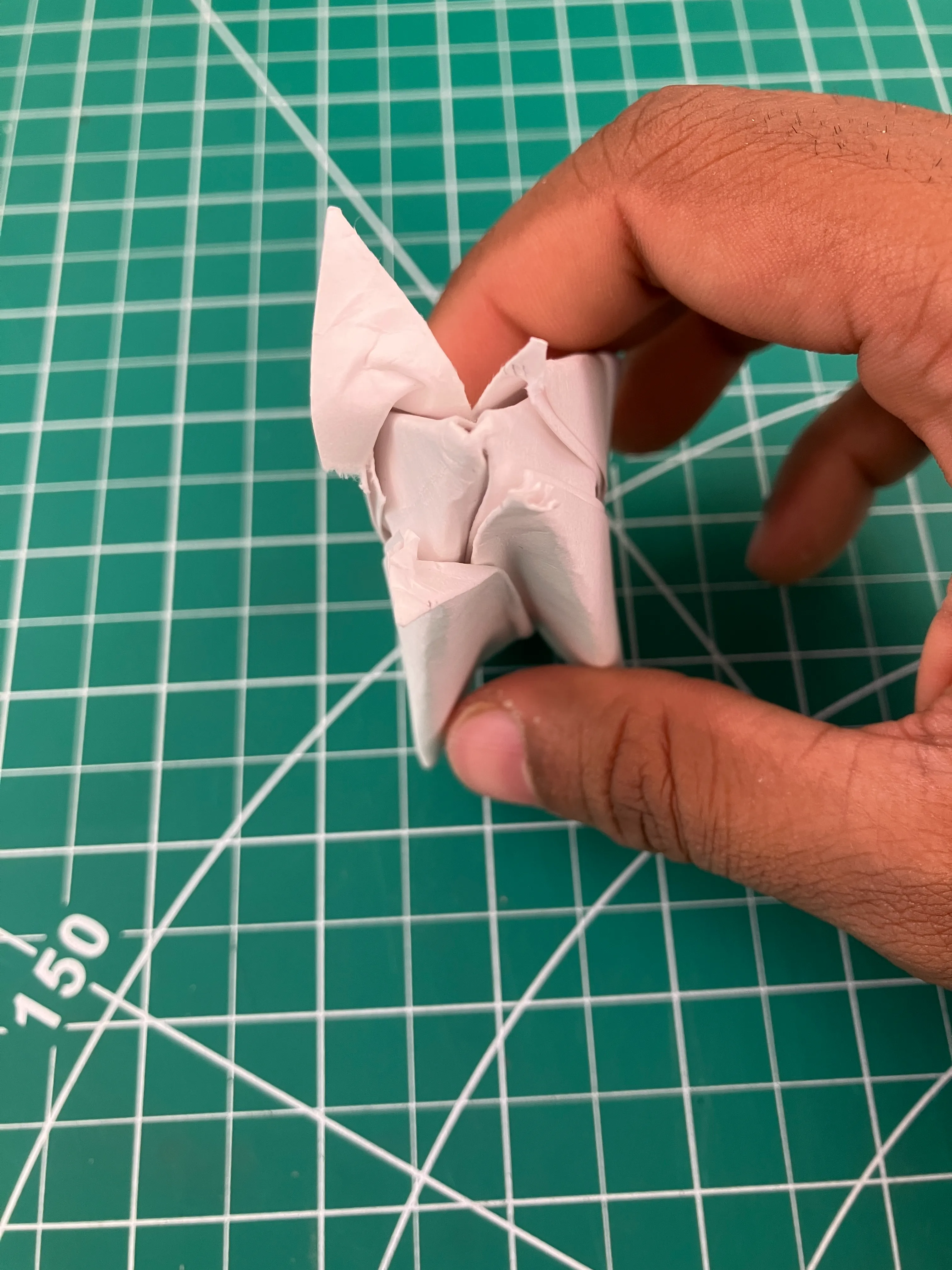
the next one failed too. i realised it could be a combination of thicker paper, and bigger size. so, i changed both in the next one.
okay, i got something with volume. i’m not able to ‘peel’ the petals, but that’s okay.
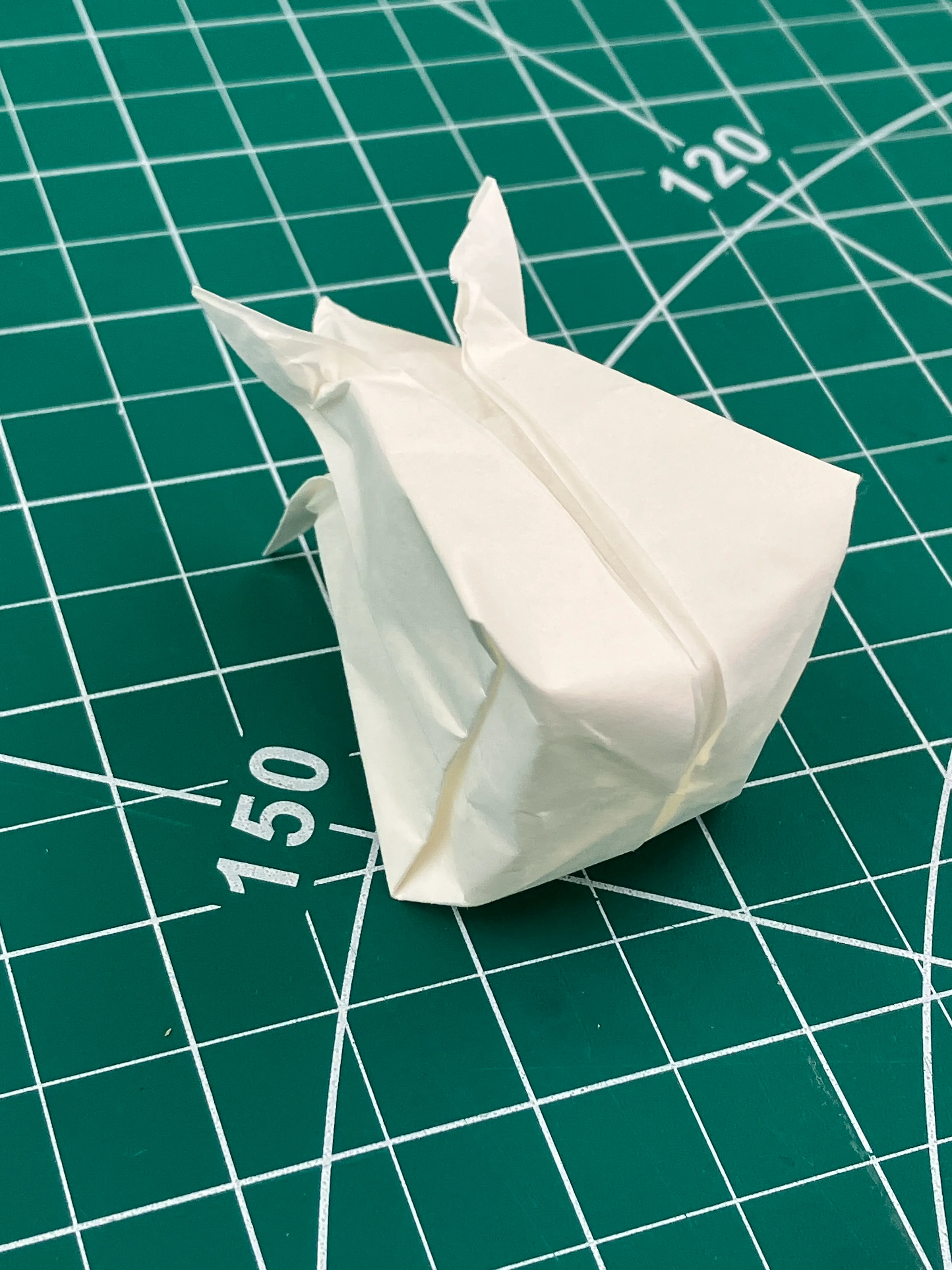
i will now attempt to duplicate this in wood, and clean up the paper version if i have the time.
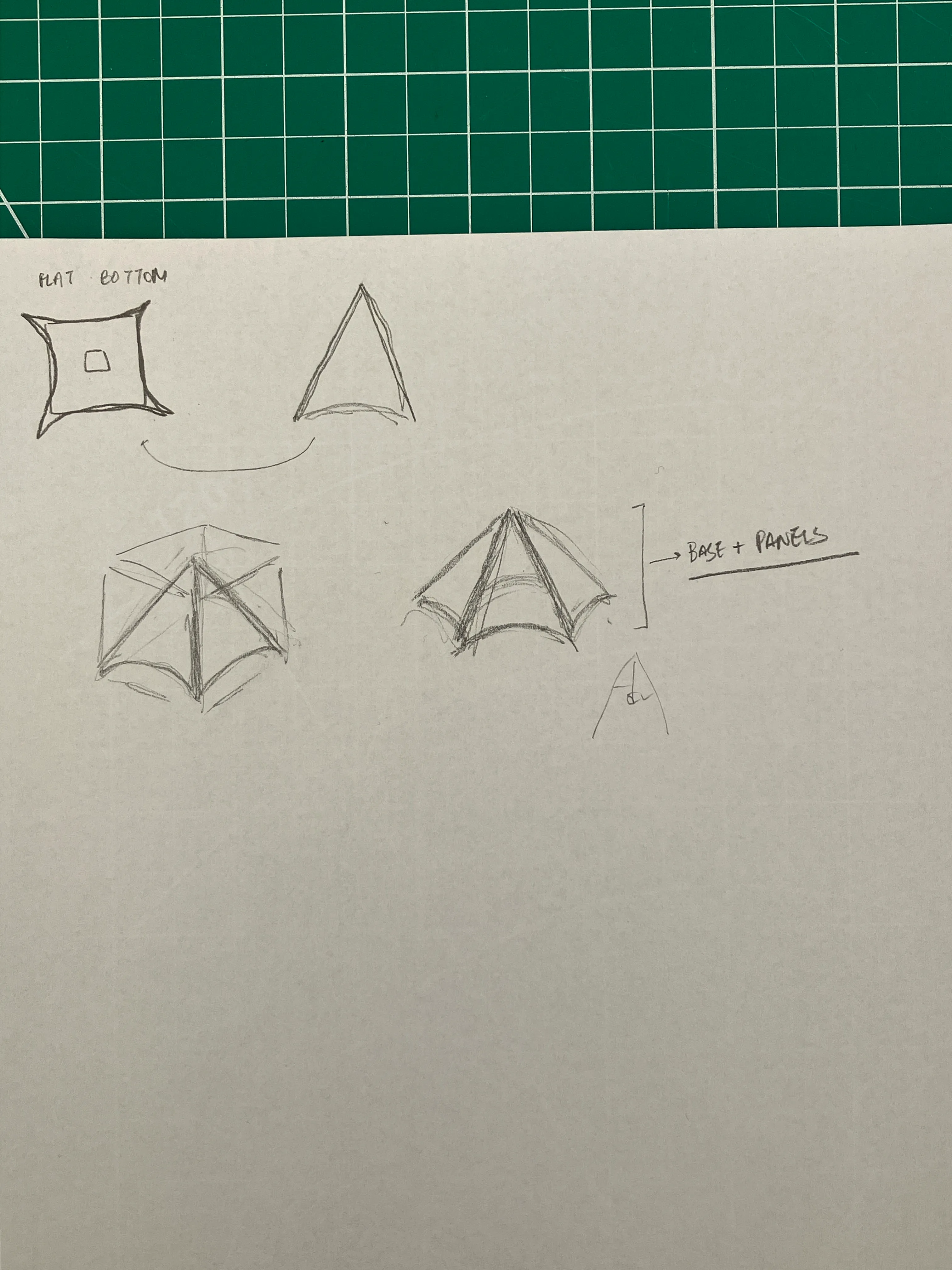
first, i sketched out the form.
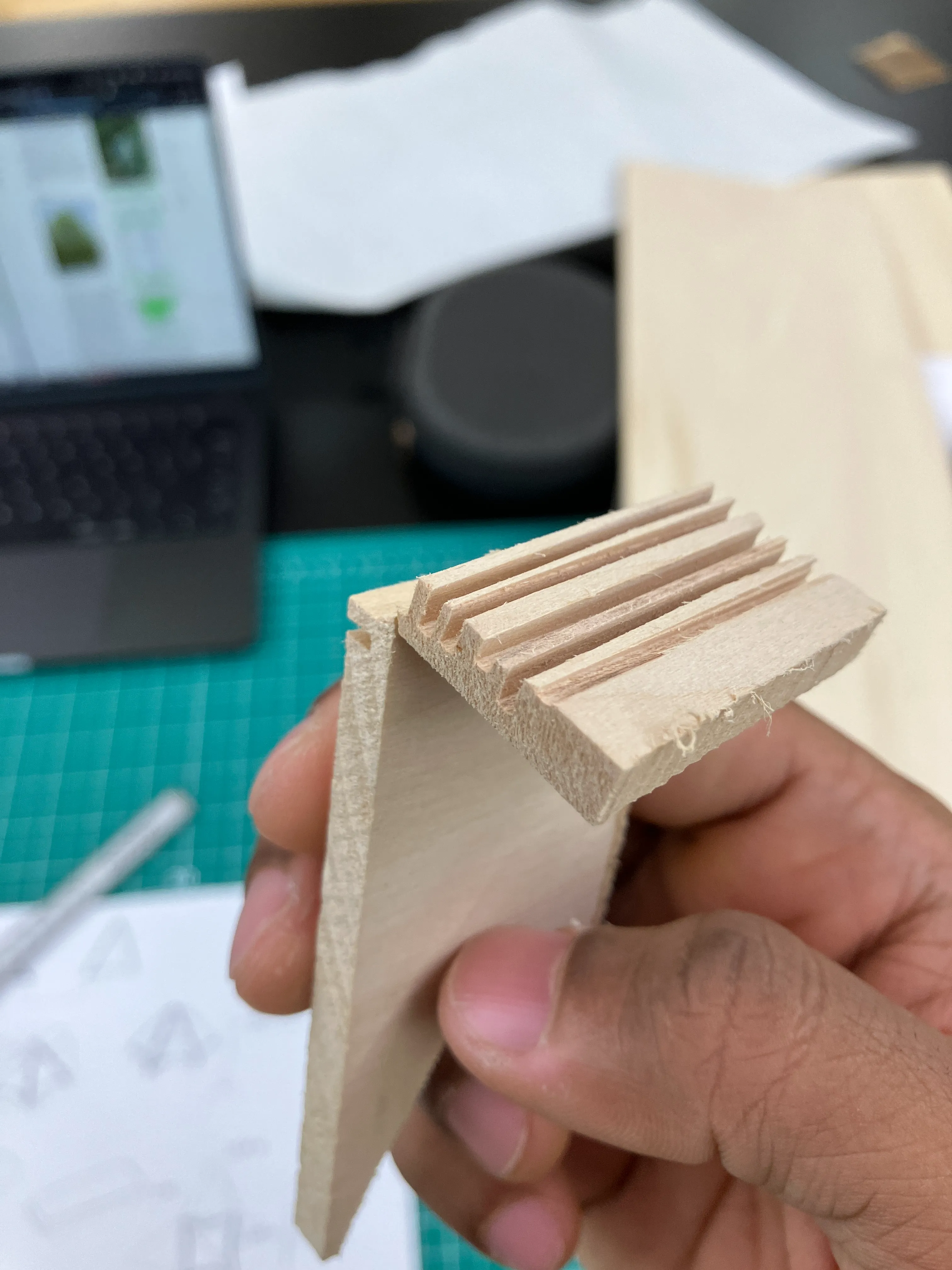
i then played around with the wood to see how i could achieve the petals.
then, i measured the paper-form (i made it out of 6” x 6” paper; so it would always be the same dimension).
nikolai & nasif helped me think through the cuts.
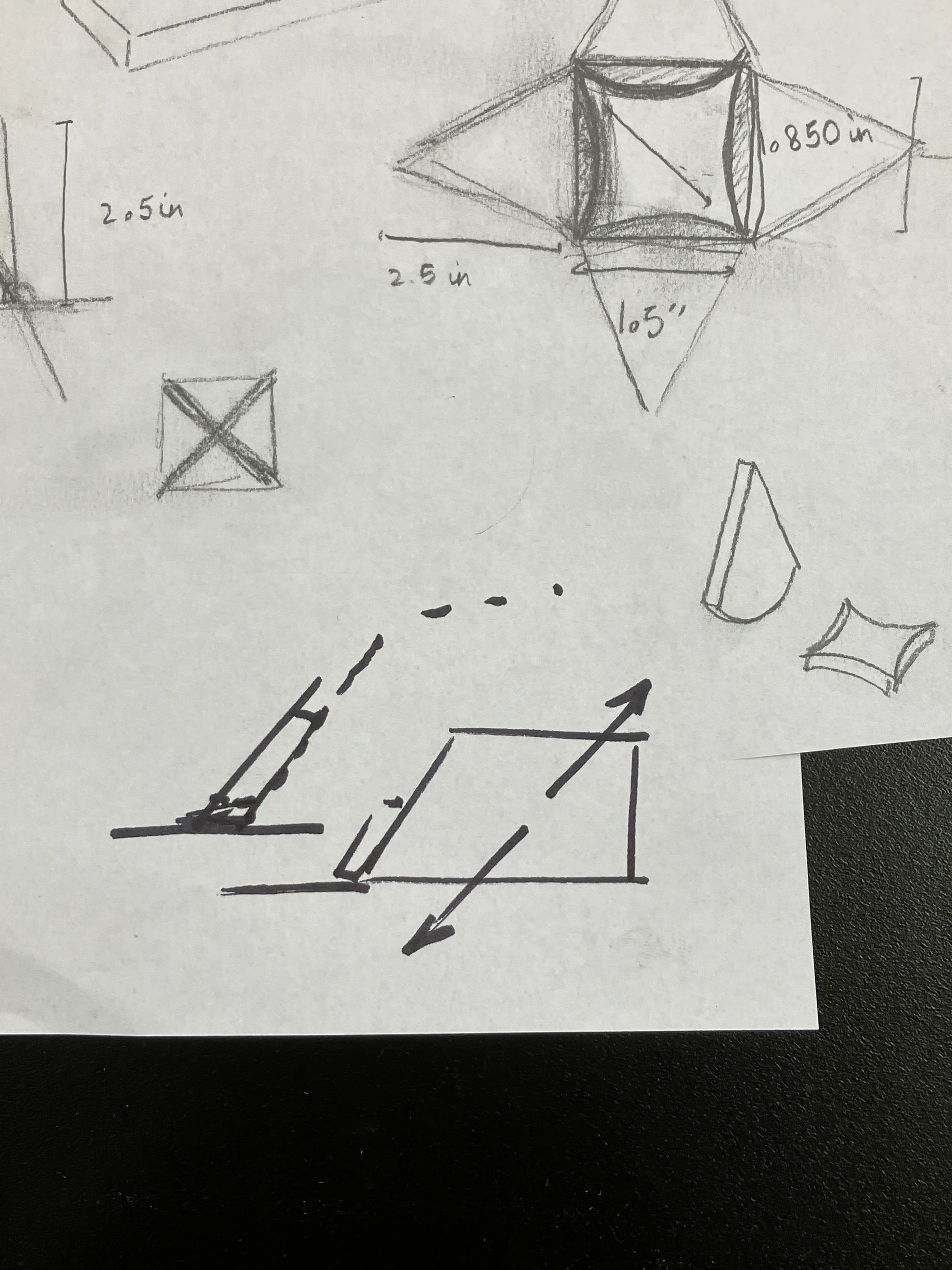
i then measured everything and cut it.
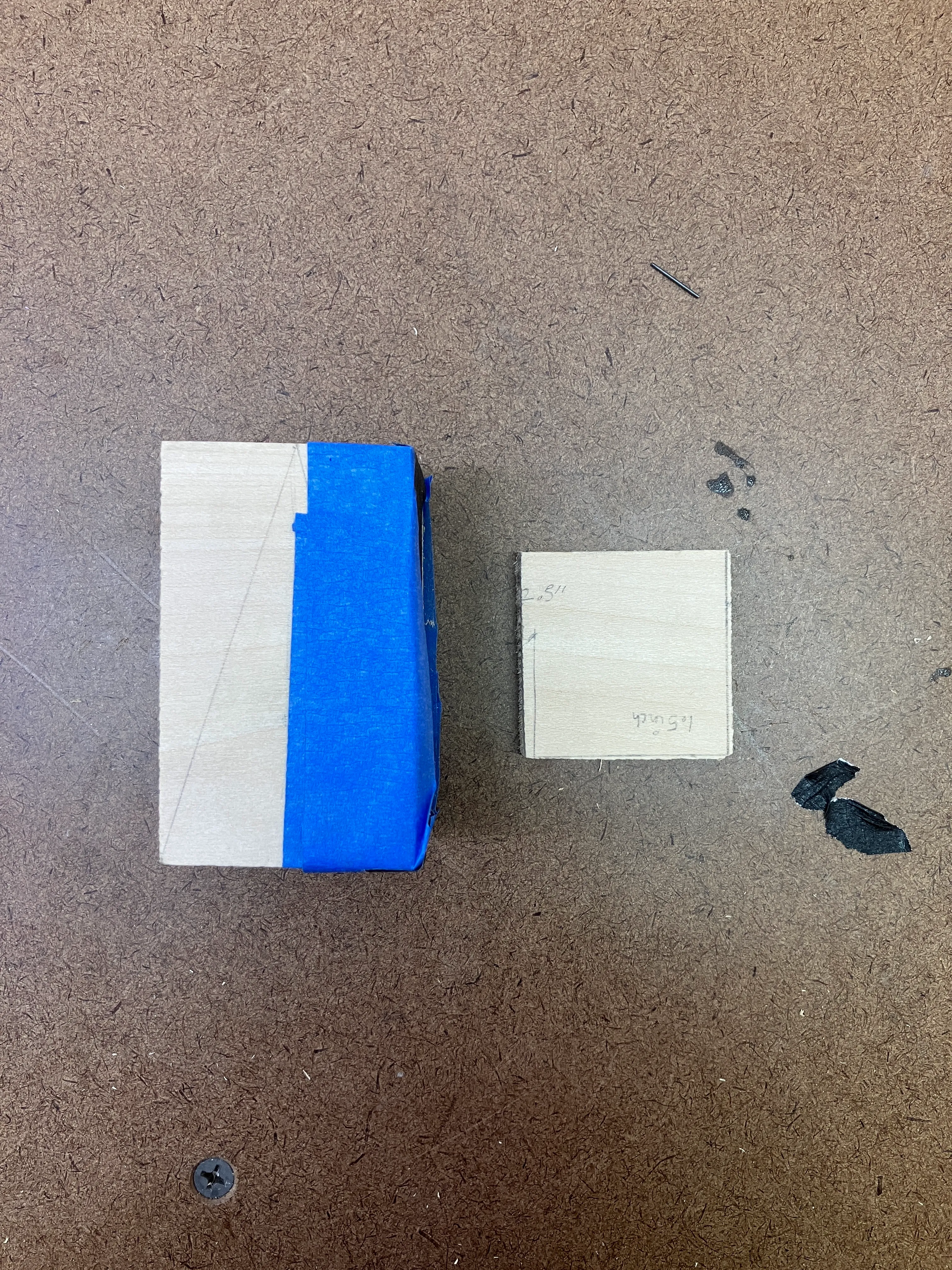
for the triangular panels, i drew on top of square-ones and then cut them on the tiny bandsaw.
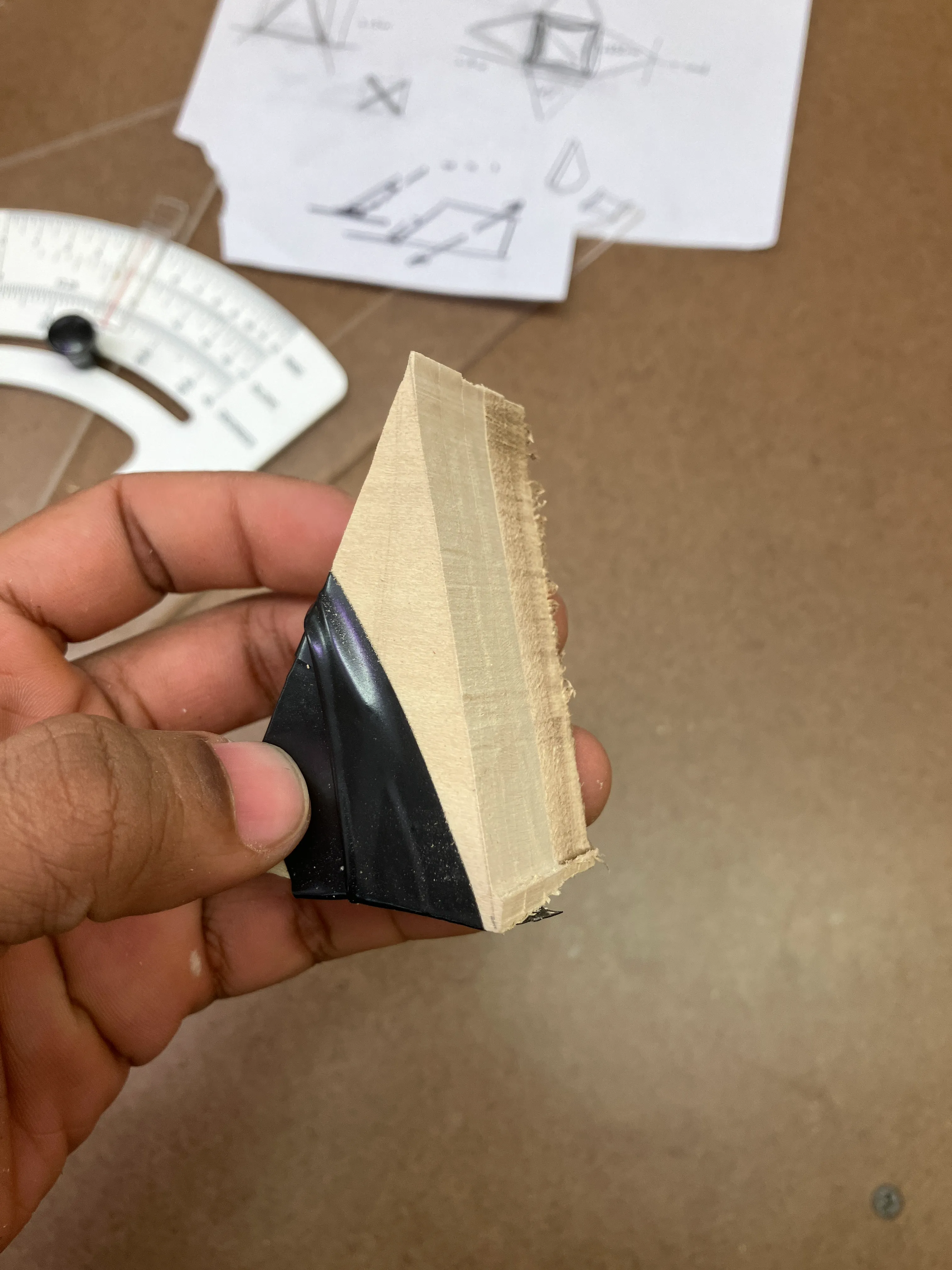
then, i figured that i needed angled-cuts for the panels to stand on the square. nikolai, nasif, fabri (and jasmine) suggested different approaches. i tried some.
first, i tried manual saws.
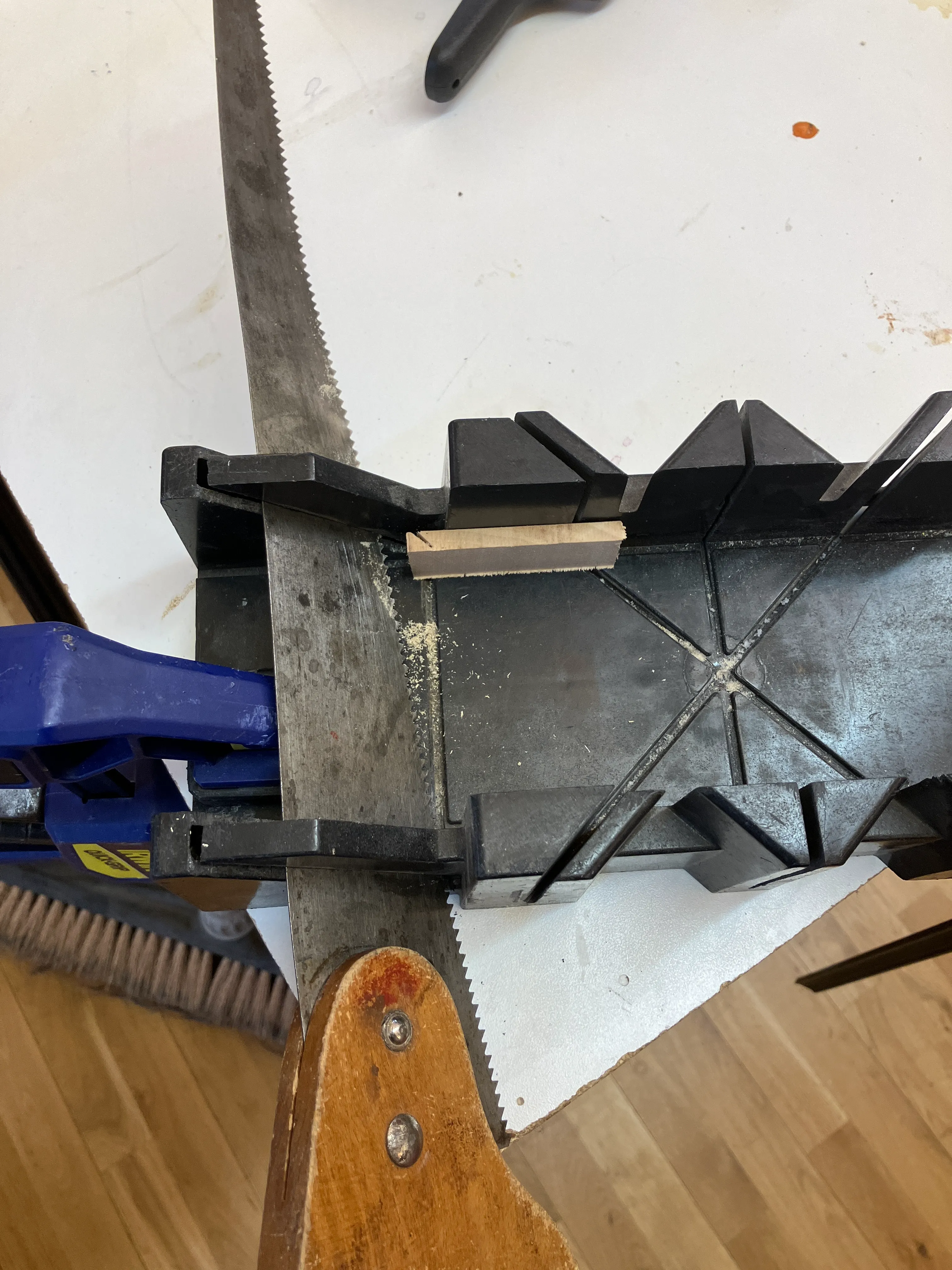
that kind of worked.
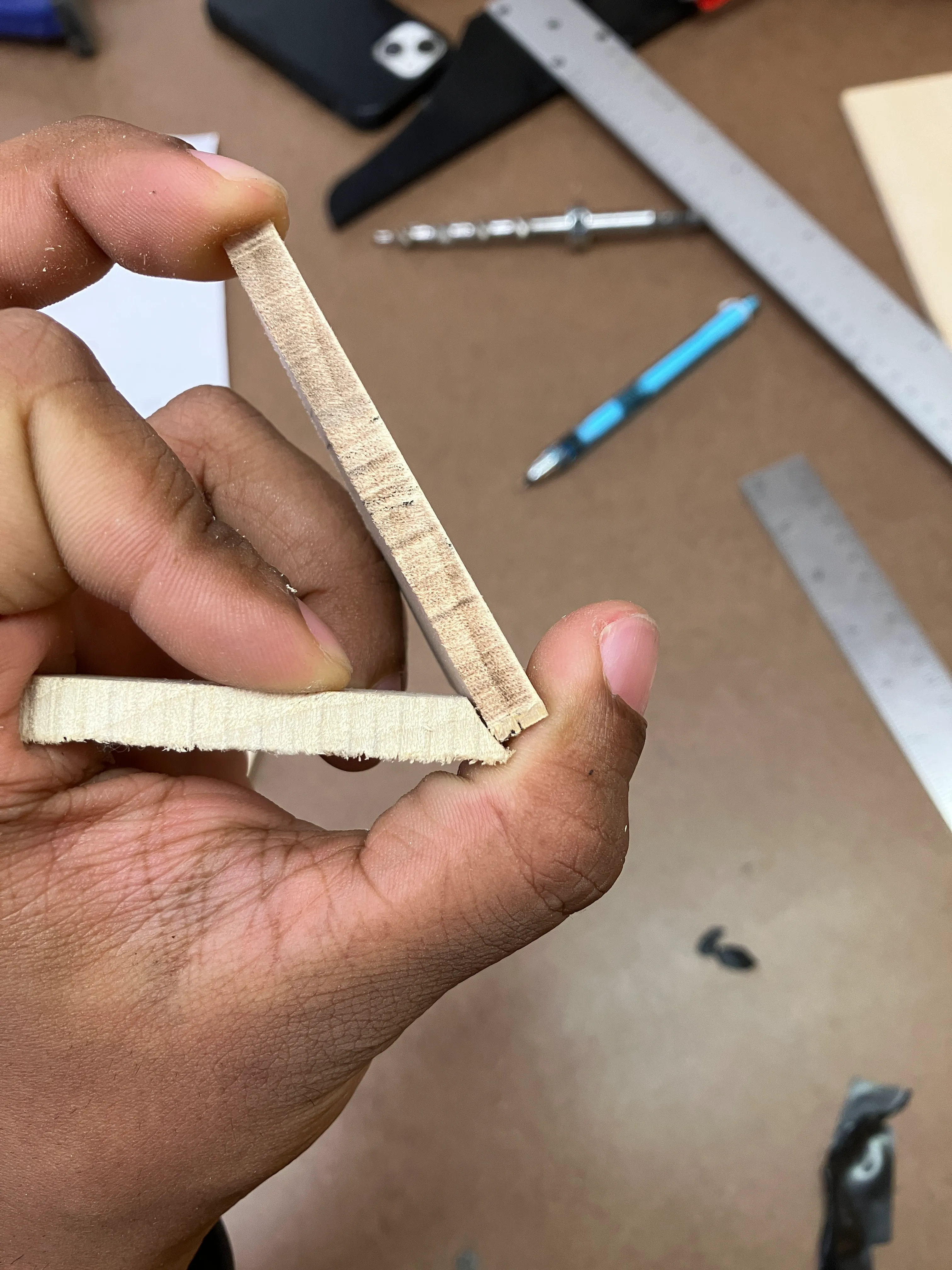
but then, i realised that the more precise way was to angle the base of the bandsaw (like how nikolai showed me).
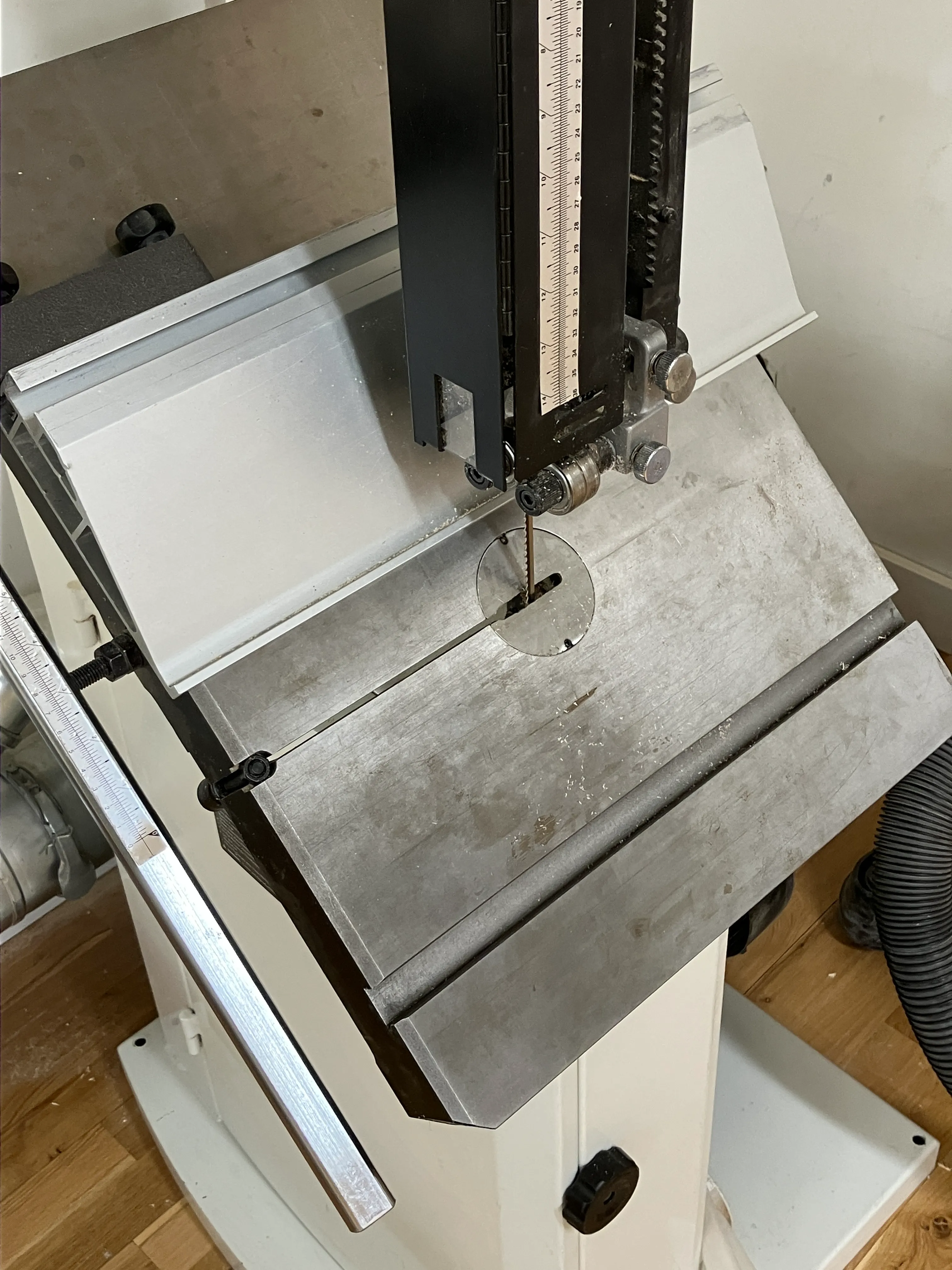
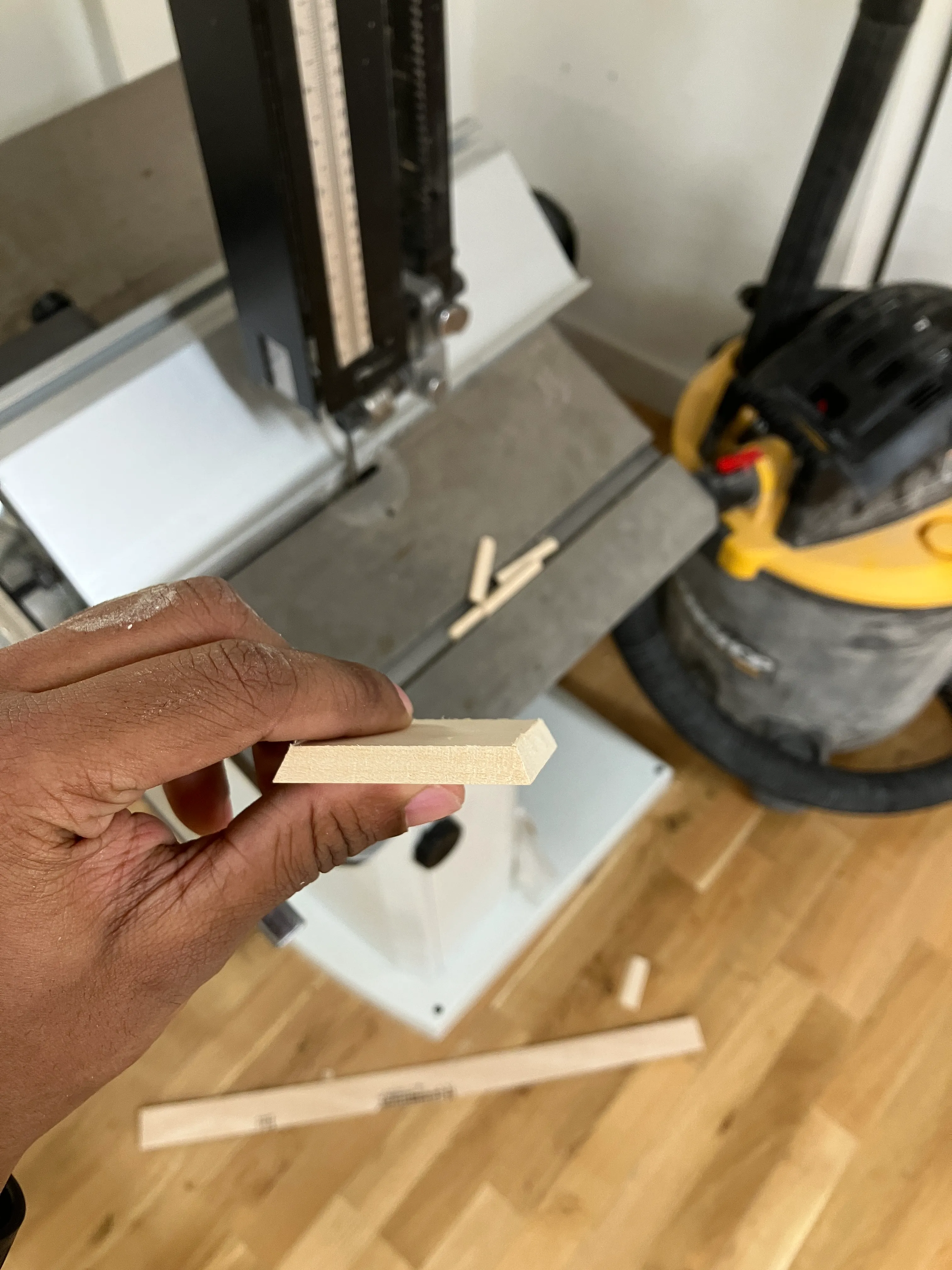
after cutting & a little bit of sanding, i could get perfect angles.
i also decided to half-cut the triangles to enable them to flex.
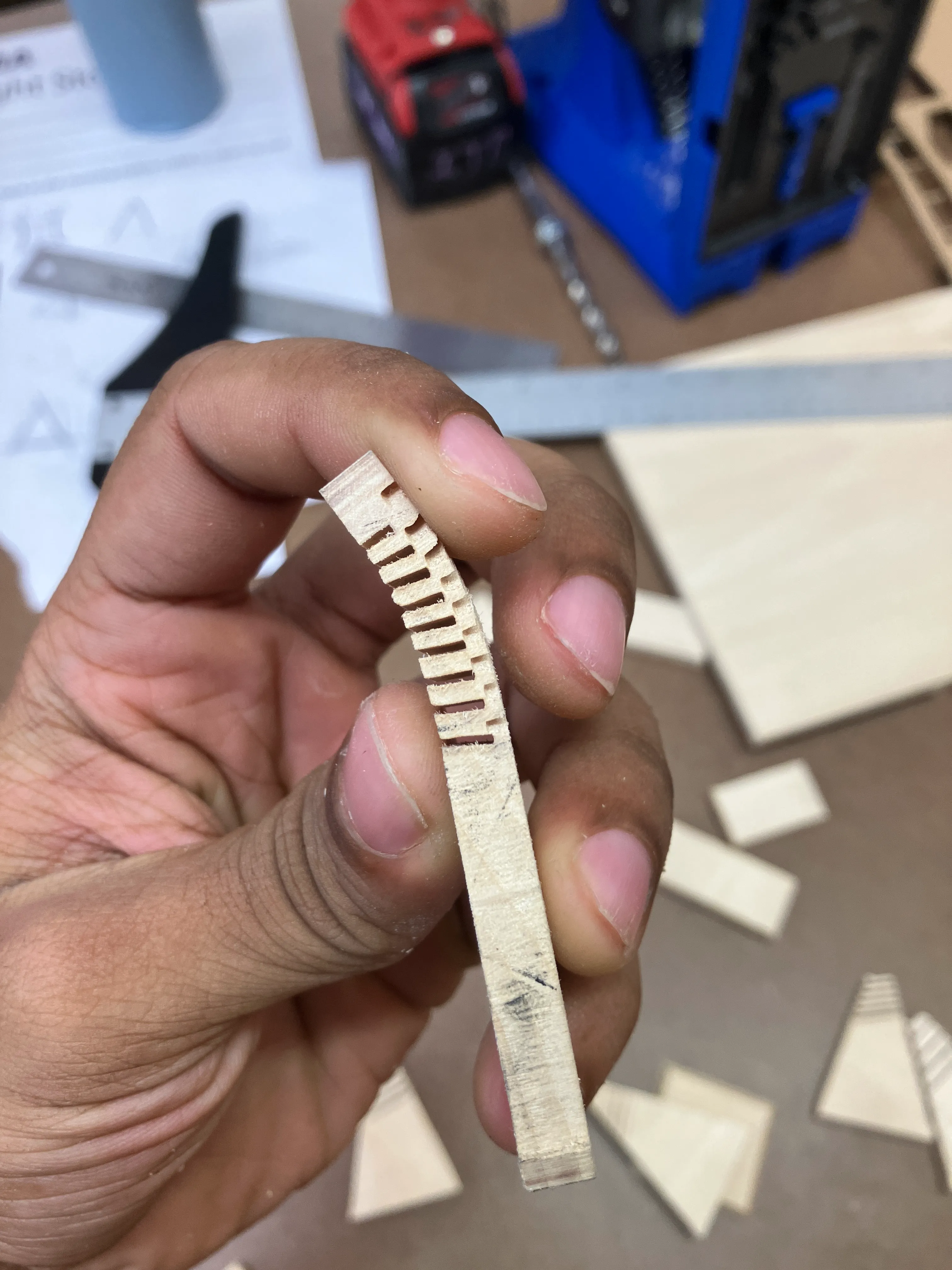
some of them chipped off.
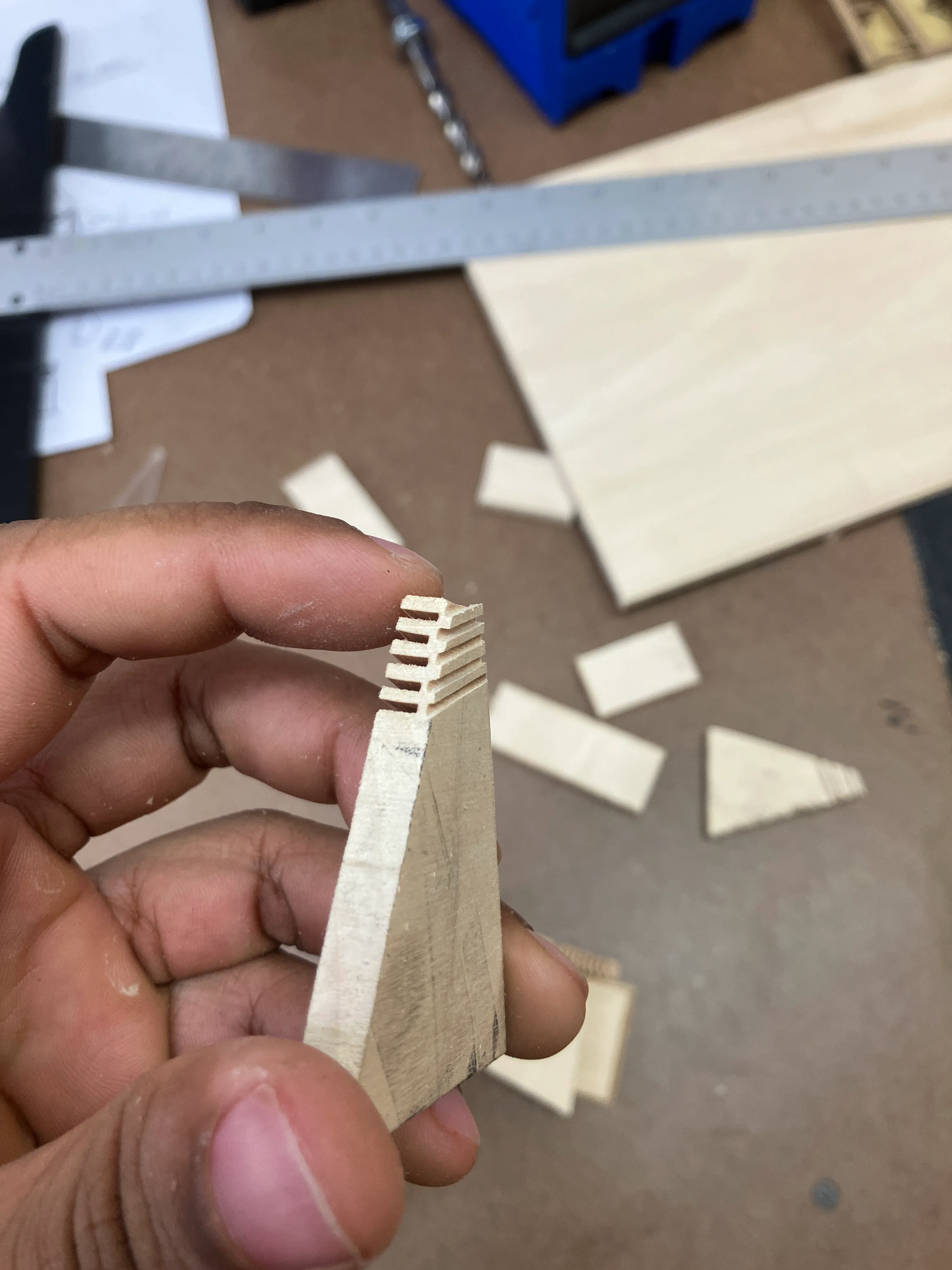
i then sanded each panel, with increasing sandpaper-grit. then, i stuck them to the base.
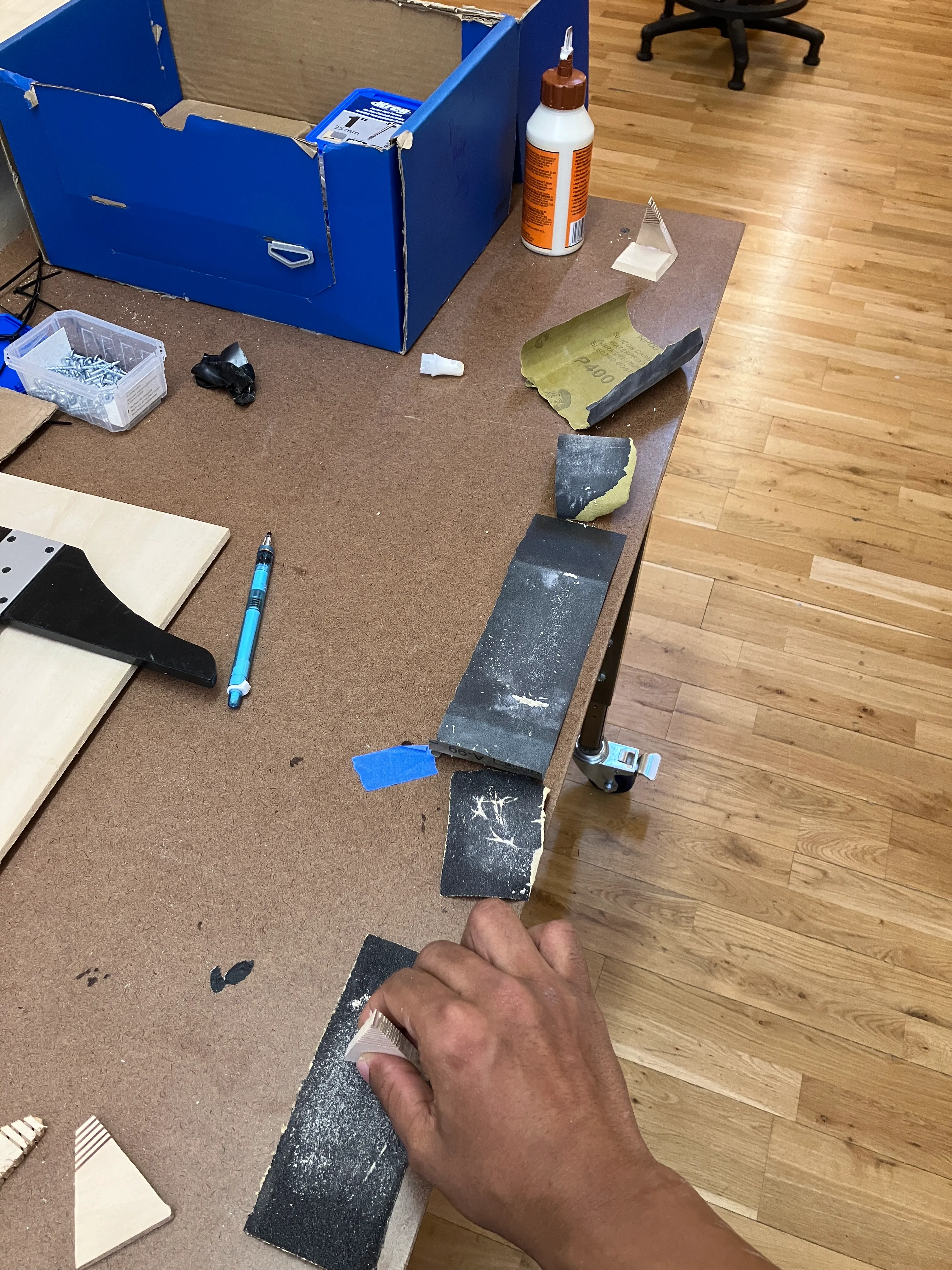
i also wanted it to be perfect. saw that the base had a little more width than required. went to chop it at an angle; messed up. did it again.
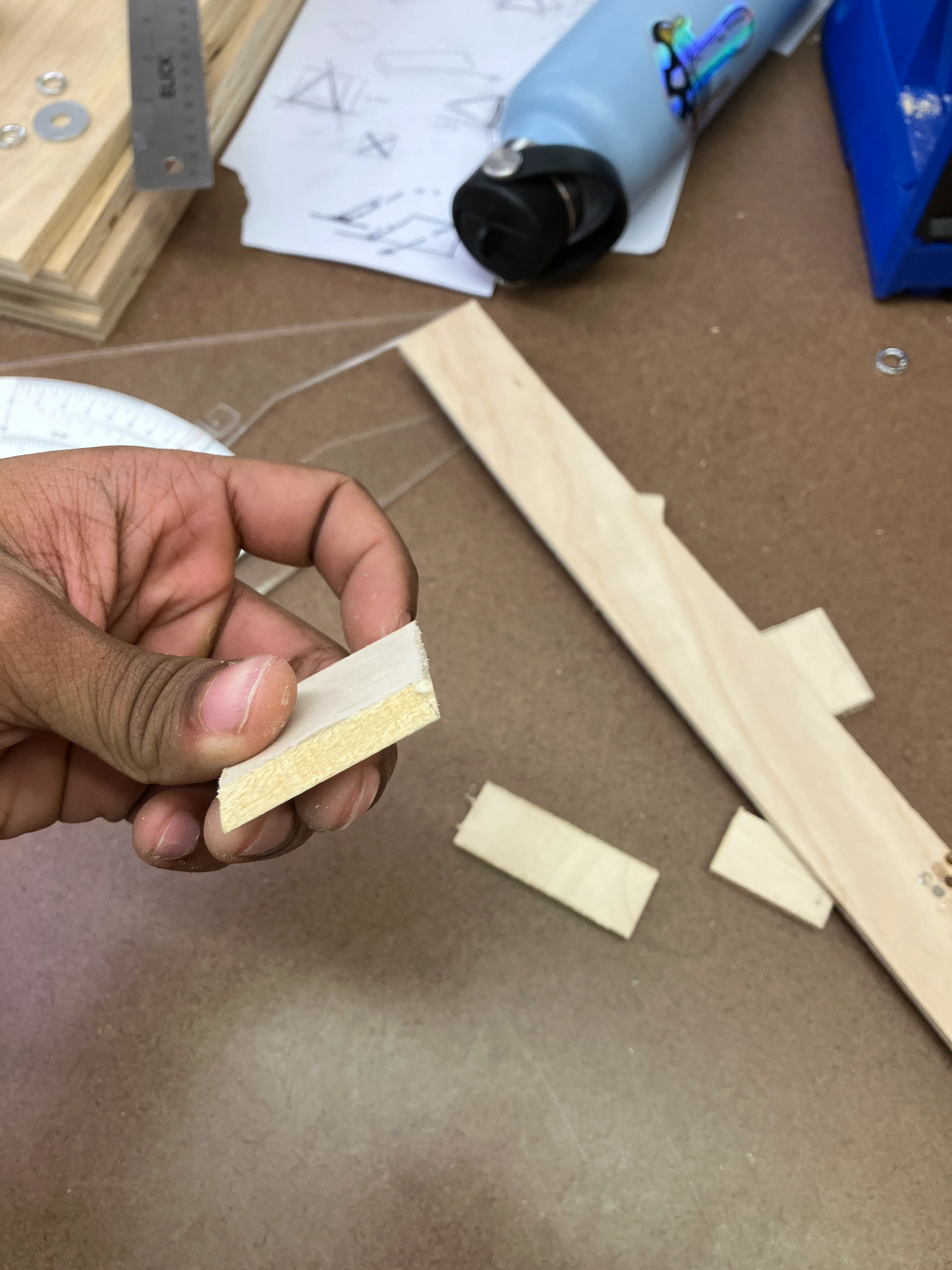
made the bulbs. dealt with chipping.
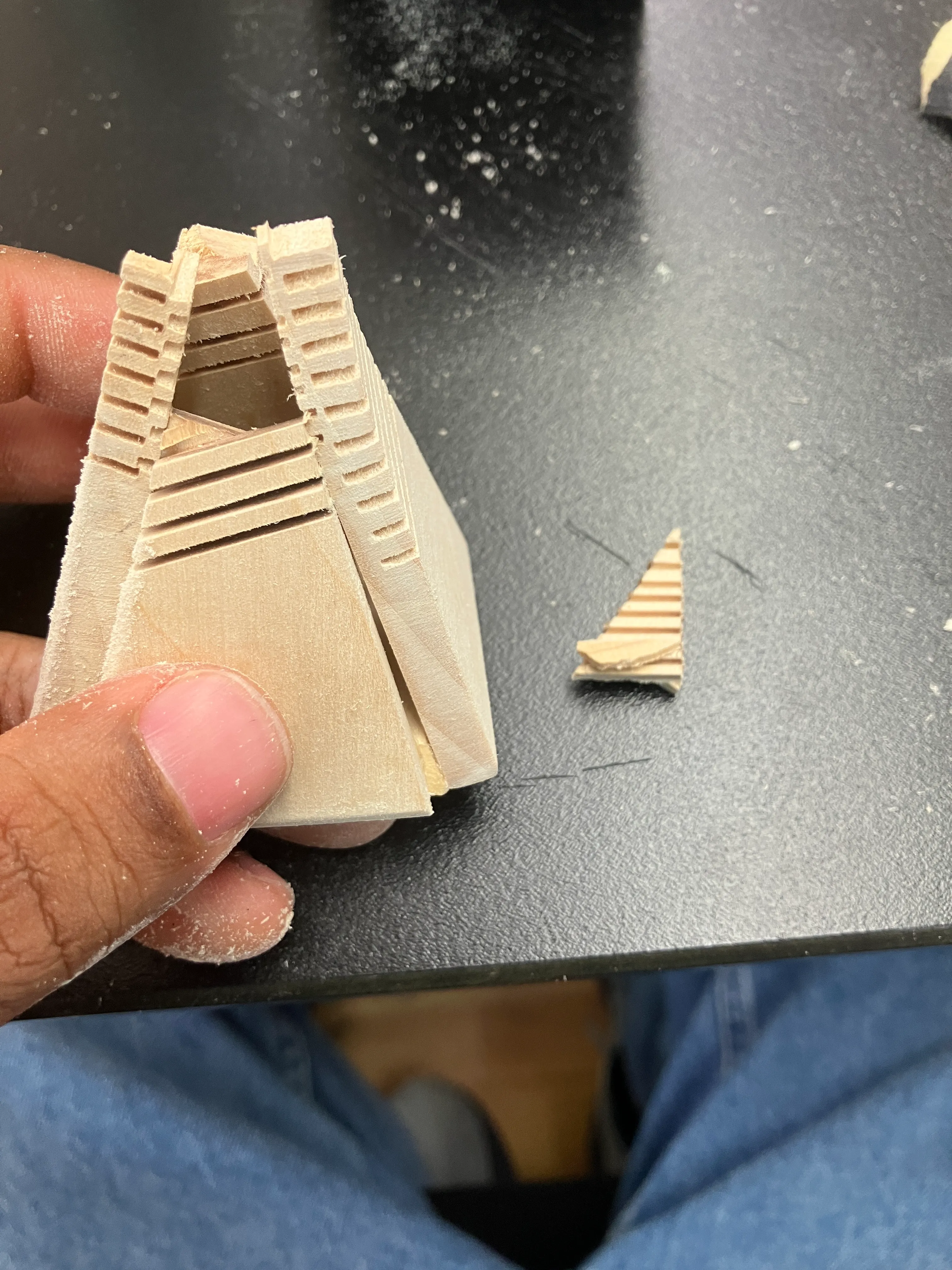
sanded.
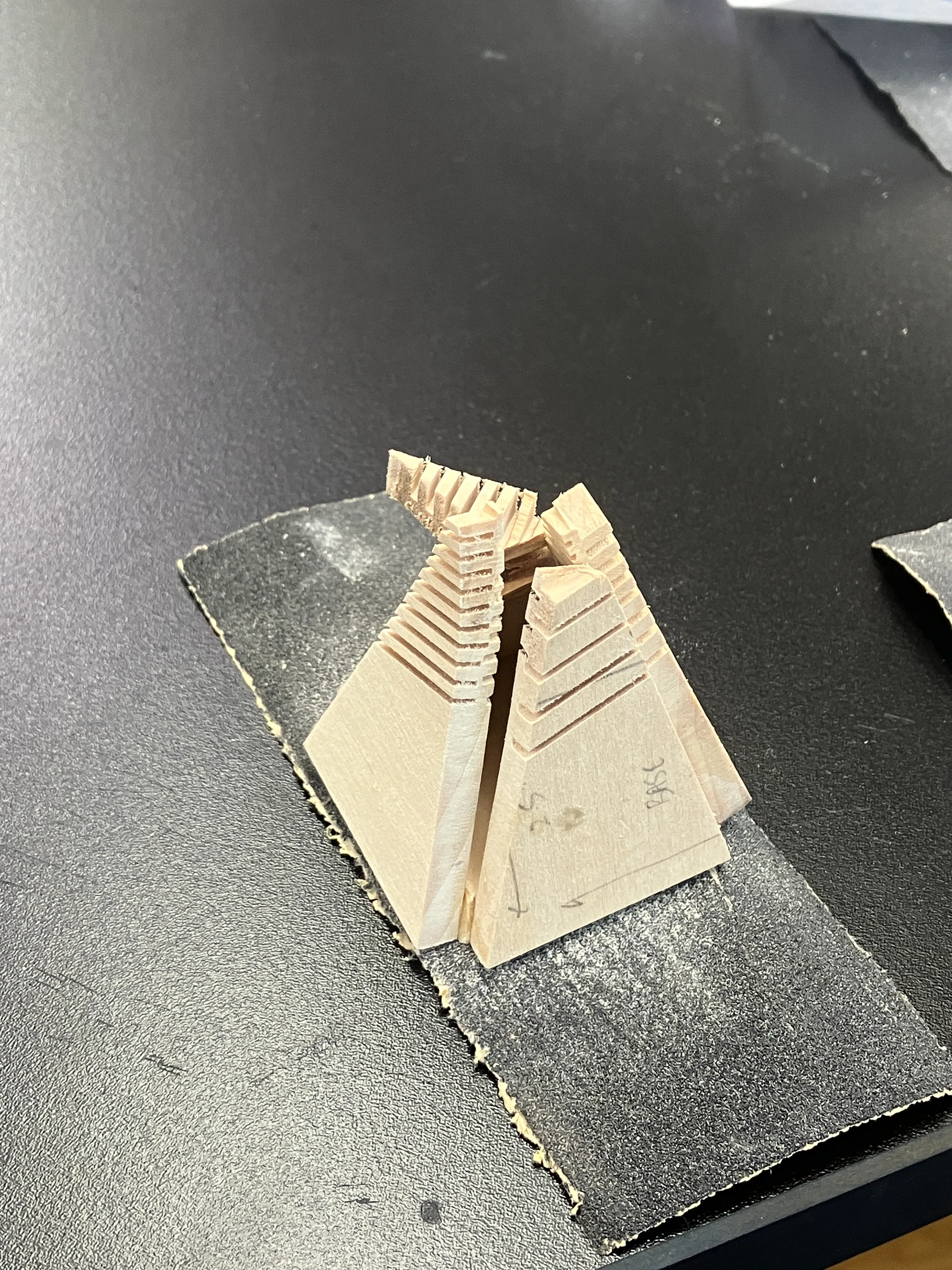
remade the origami bulb, put dowels; realised i should have drilled before. broke the bulb again; made do.
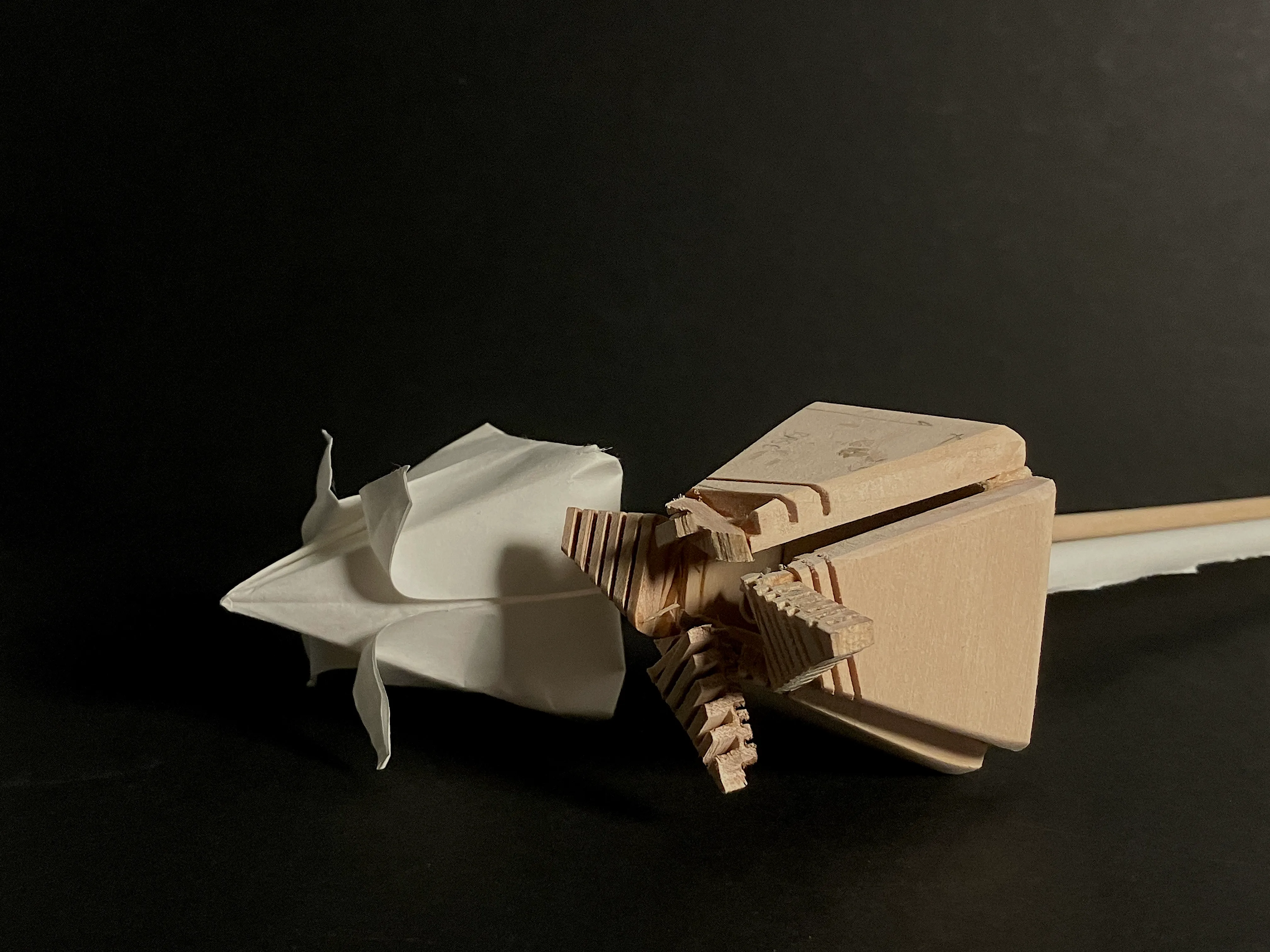
once i got done with the objects, i went about photographing. i had tried clicking pictures once earlier, during week-3.
here is the same object, with different treatments:
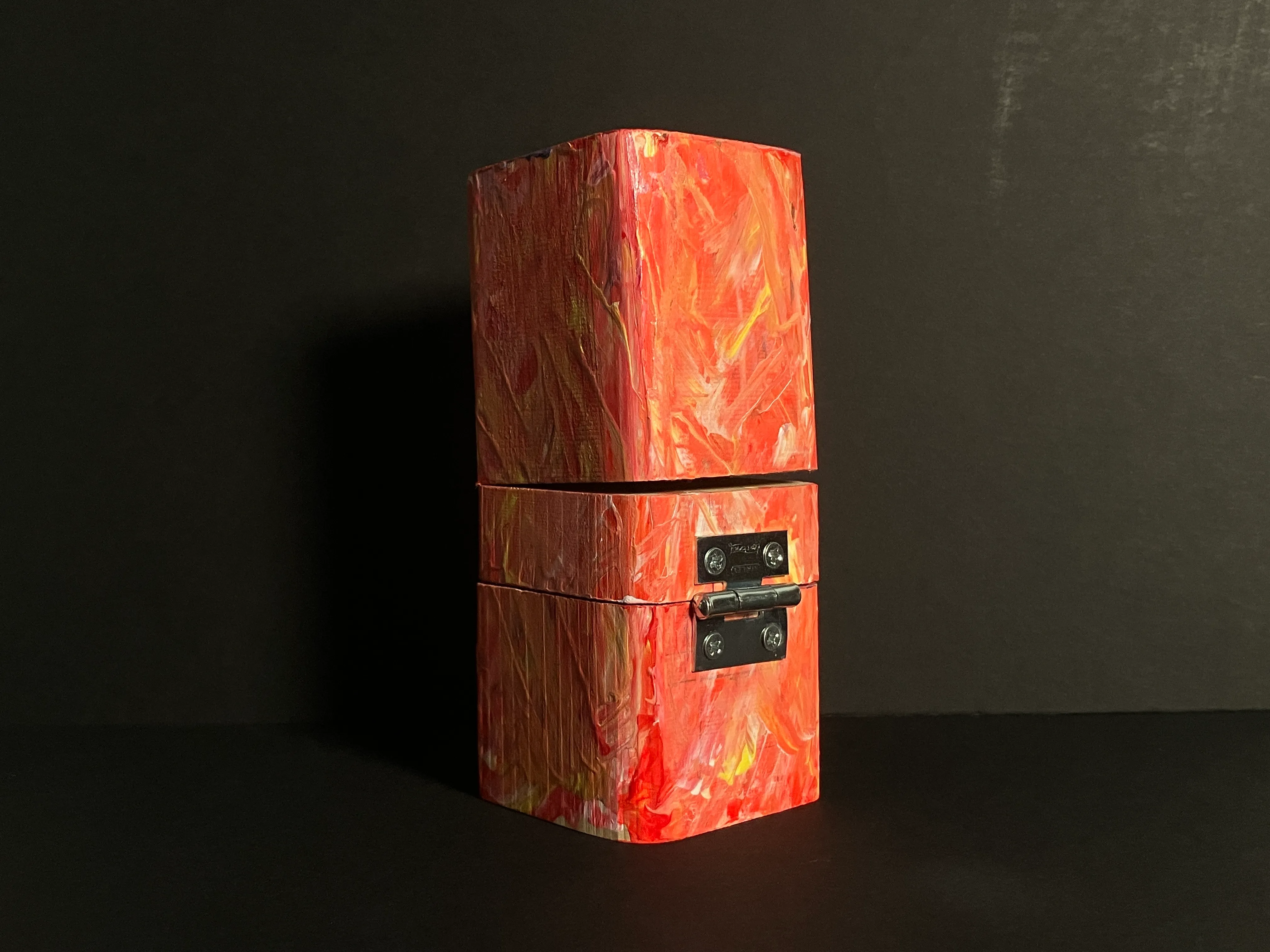
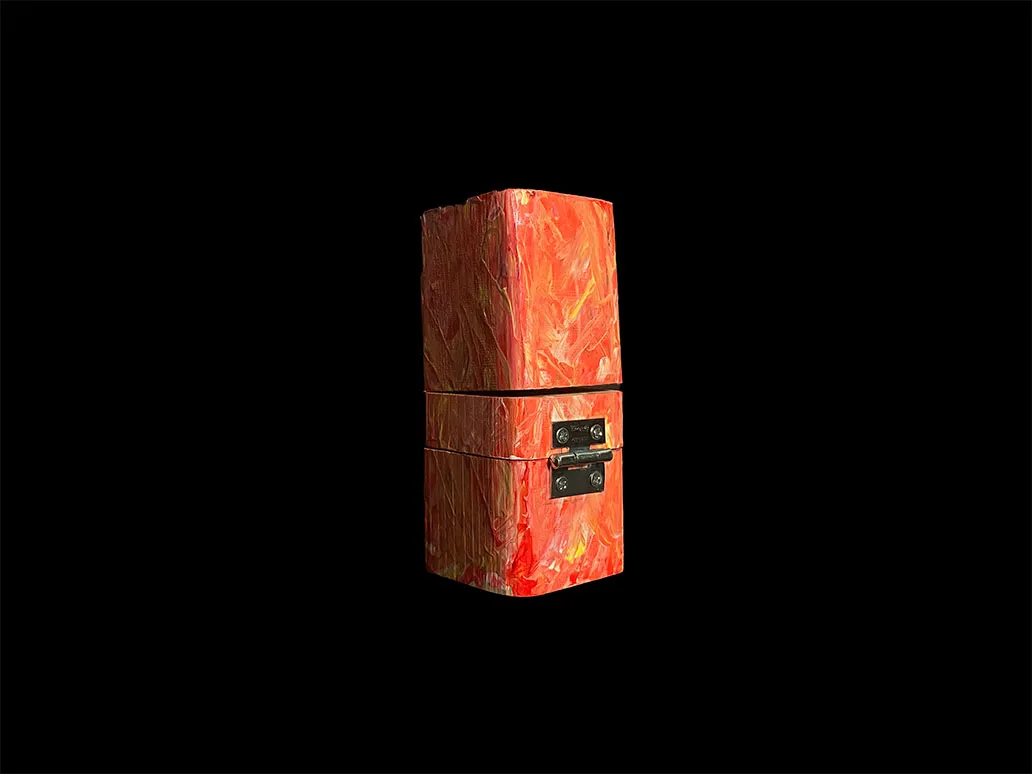
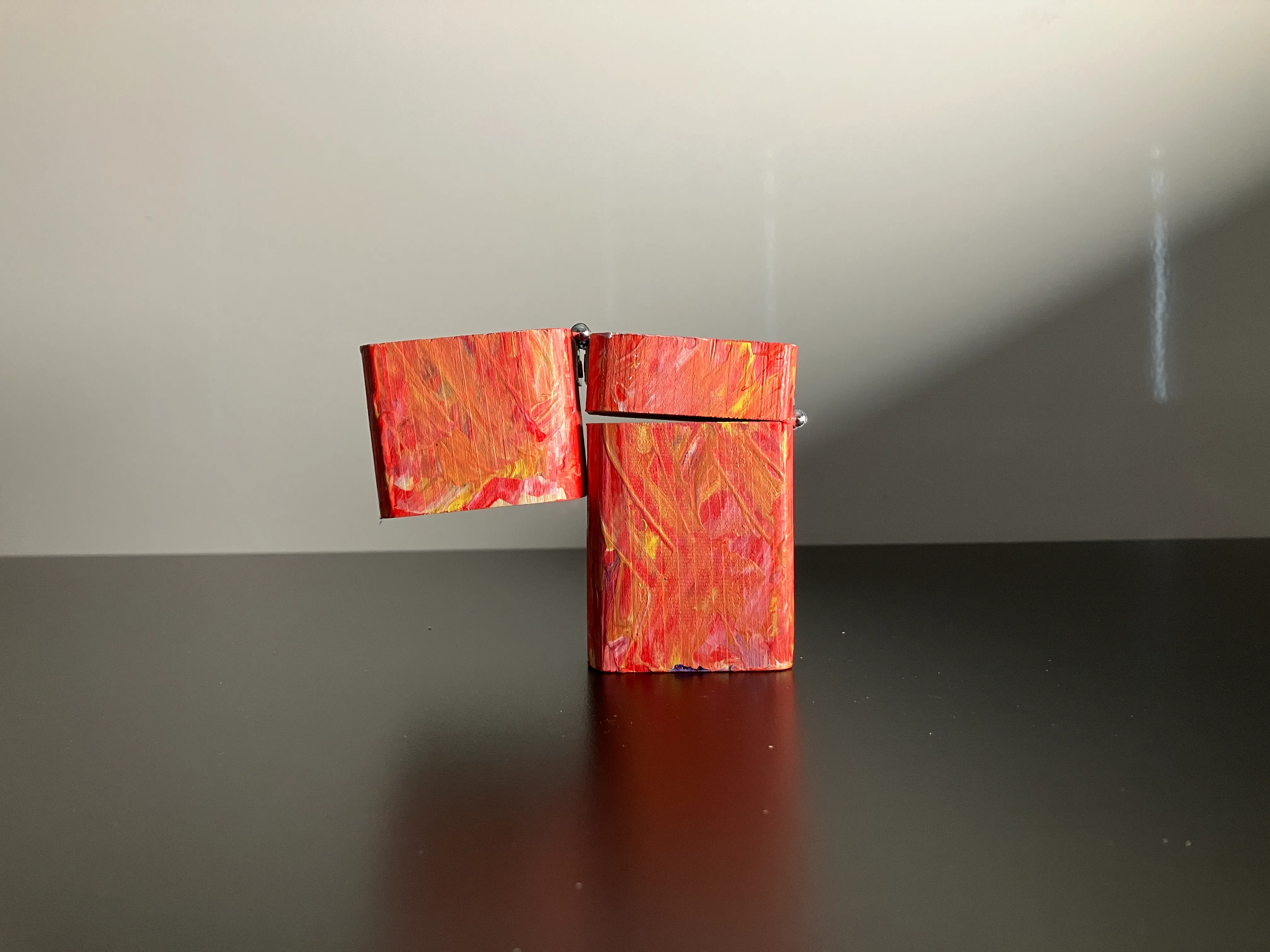
i realised that i probably should have used natural light instead of an artificial one, because the artificial one was too strong (and can be seen on the background in image-one).
i thought of going with the best shots that i had for each object, even if that meant a difference in styles.
i suck at photography. and, i probably should’ve used a camera.
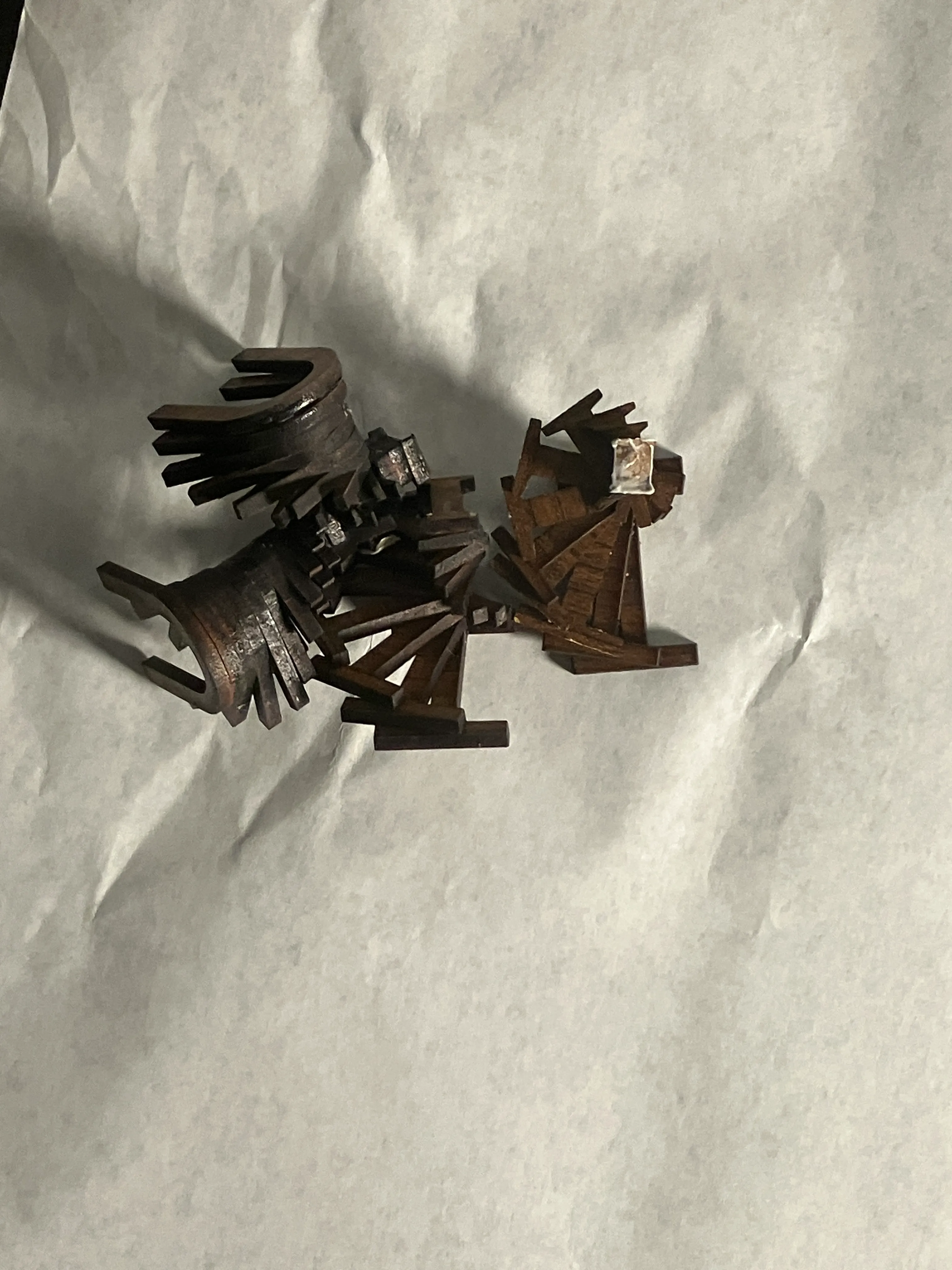
i also broke the piece made in fab_experiments_week-3.
the site is available here: https://arjunmakesthings.github.io/projects/2025_intro-to-fabrication/page.html