genetic engineering,
at nyu & biotech without borders.
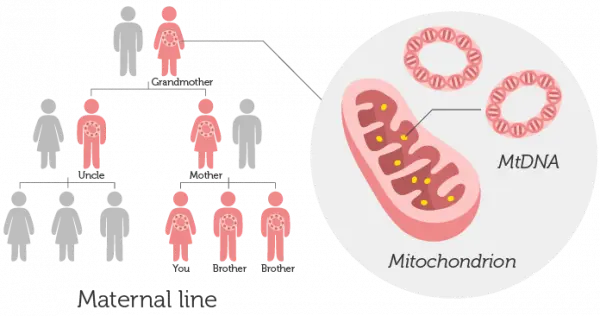
mitochondrial-dna1
(or mtdna) in human-beings is inherited by a child exclusively from
their mother. therefore, as a single male child, my mother's mtdna is
fatefully destined to die with me.
as an offspring with little to no tangible inheritance, learning about
this instinctually made me want to preserve this piece of dna, and see
it passed down to future generations. through genetic-engineering, with
help from
dr. ellen jorgensen
at
biotech without borders, we addressed this desire & successfully expressed some of my mtdna
into e. coli. bacterial cells — a commonly used organism in
biotech-labs.
however, the moment we did so, we killed them2. millions of them — living peacefully in small colonies on a petri
dish — wiped out by a human-desire to preserve a piece of maternal
inheritance. analogous to a world where people increasingly preserve
more — data; objects; spaces; genomes — i wonder how many such organisms
will bear the price for the human inability to let go.
to present this at the
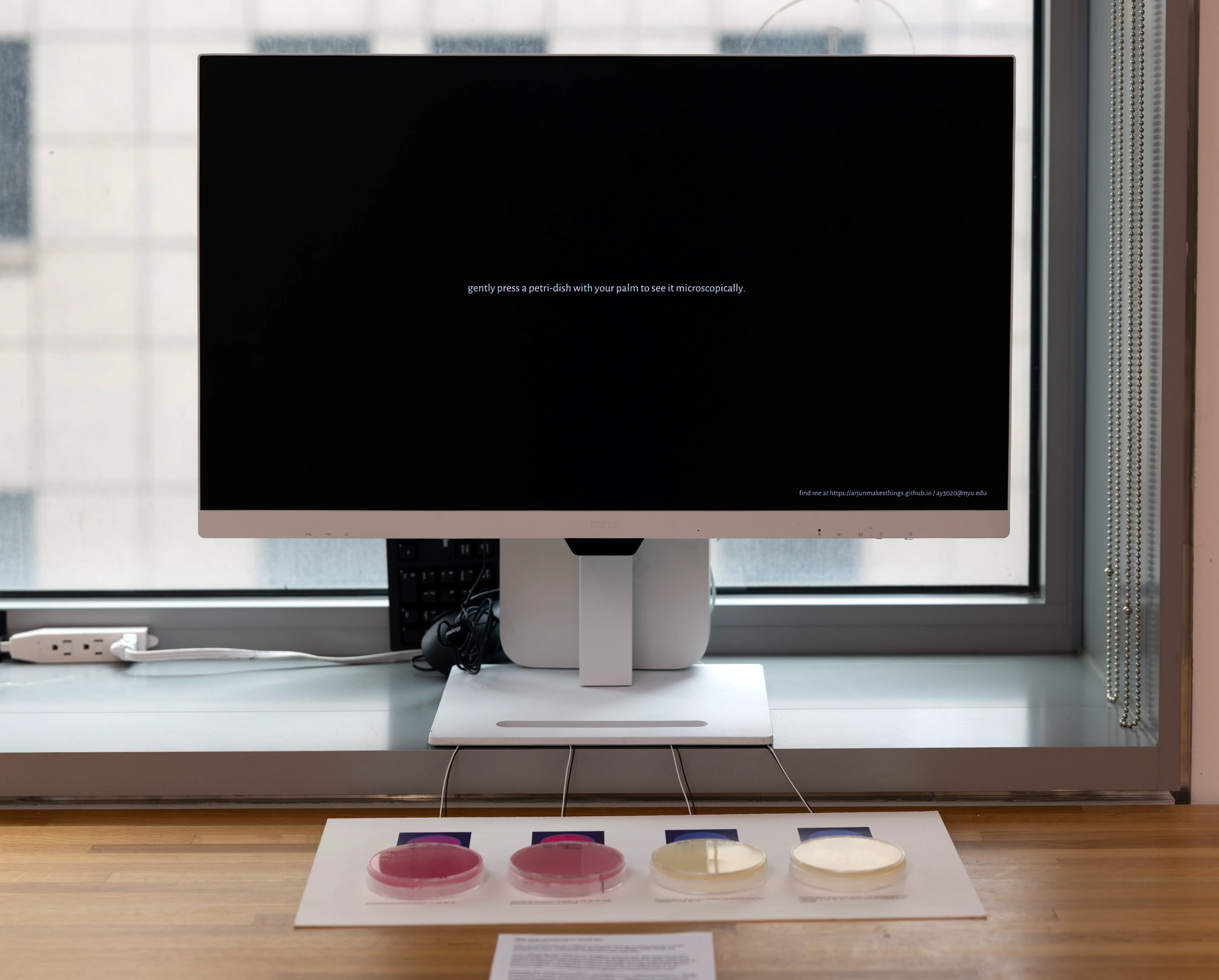
itp-spring-show, i designed a small interactive-exhibit that allowed people to view
microscopic footage of bacterial cells with different treatments (with &
without my dna), by pressing petri-dishes.
video-demonstration. if youtube is being funny (sometimes it likes to
be), and disallowing you to play the video directly from here, then you
can go to this
youtube-link.
main exhibit at the itp-spring-show.
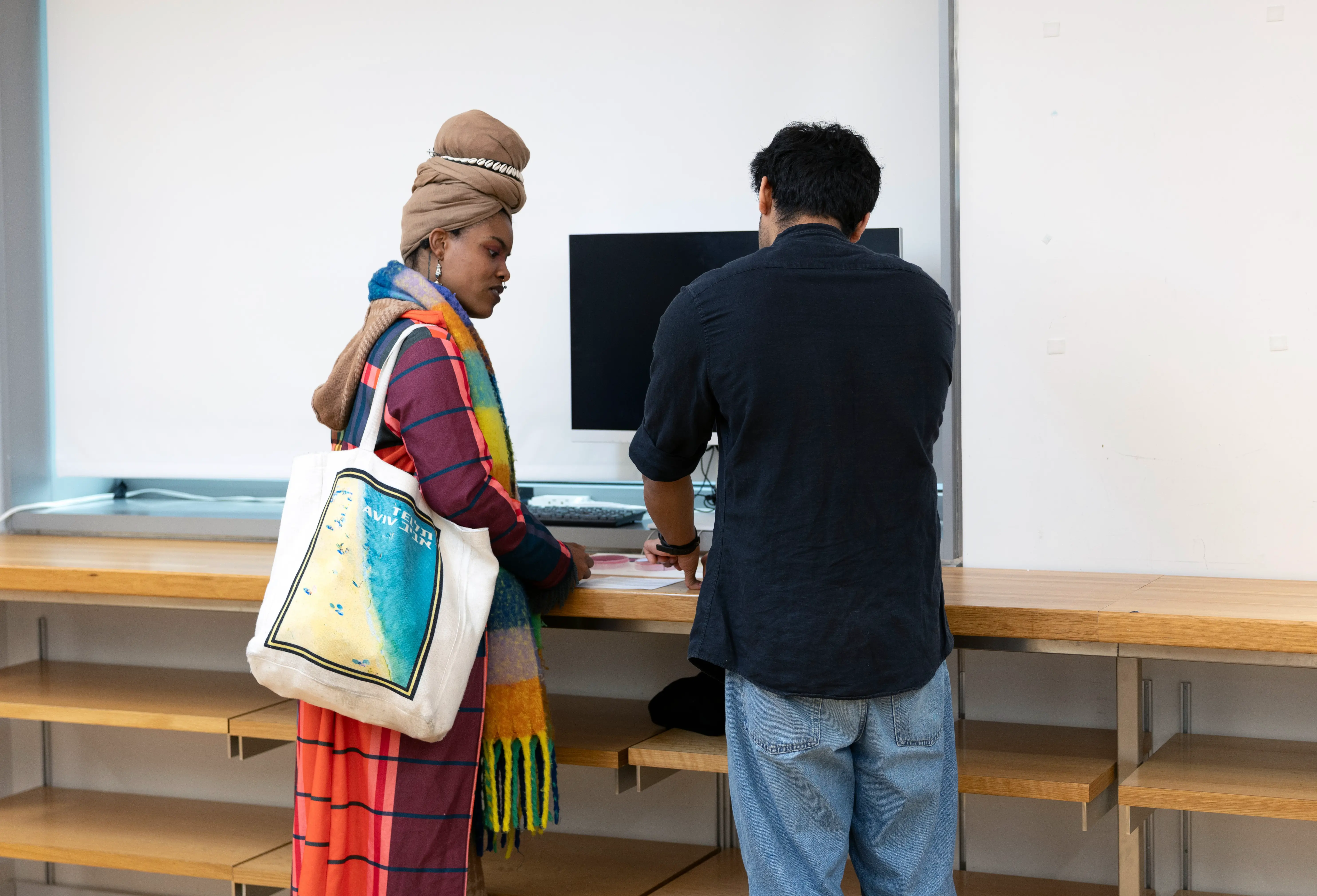
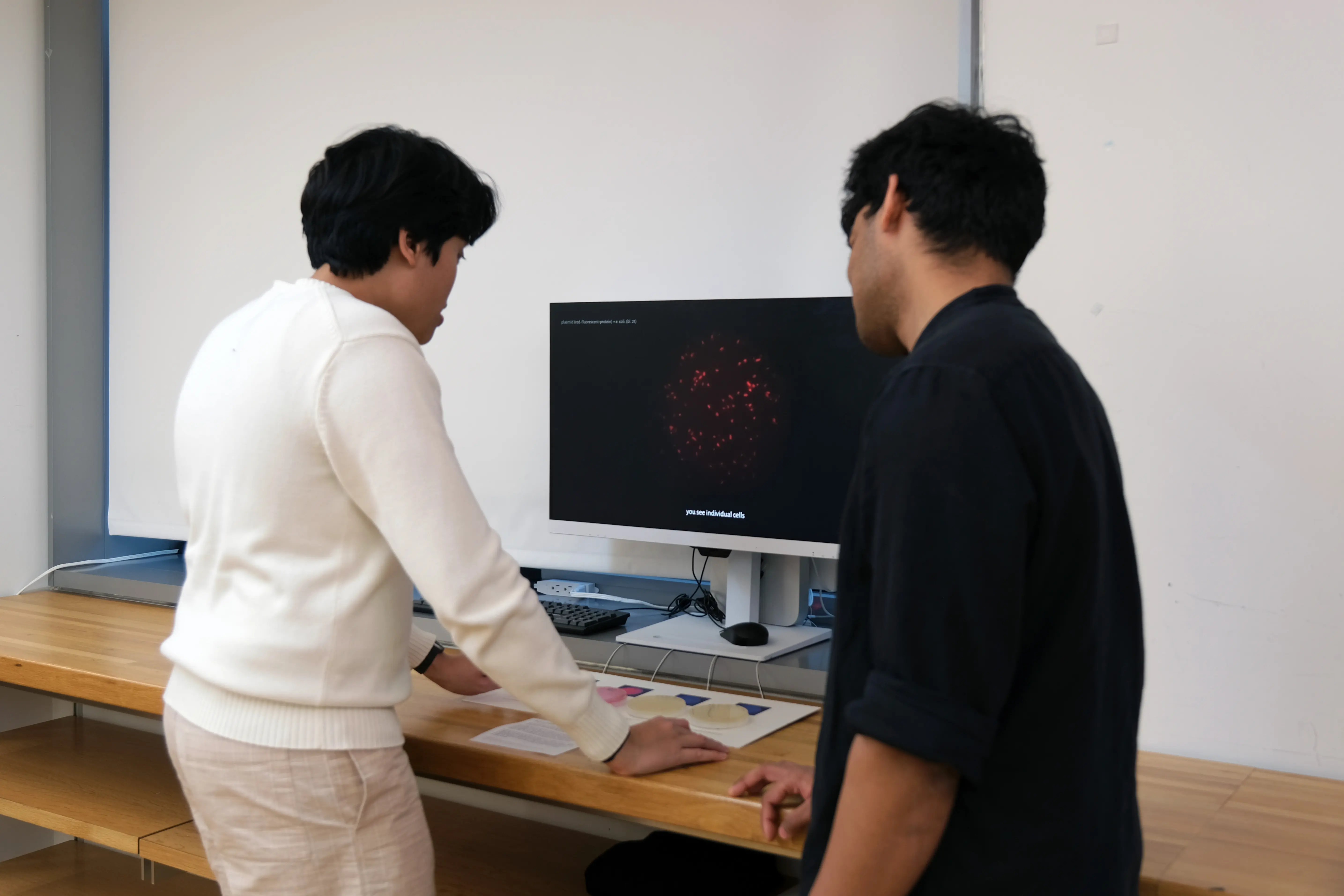
people interacting with the exhibit at the itp-spring-show. photos by
jackie (left), and delaney (right).
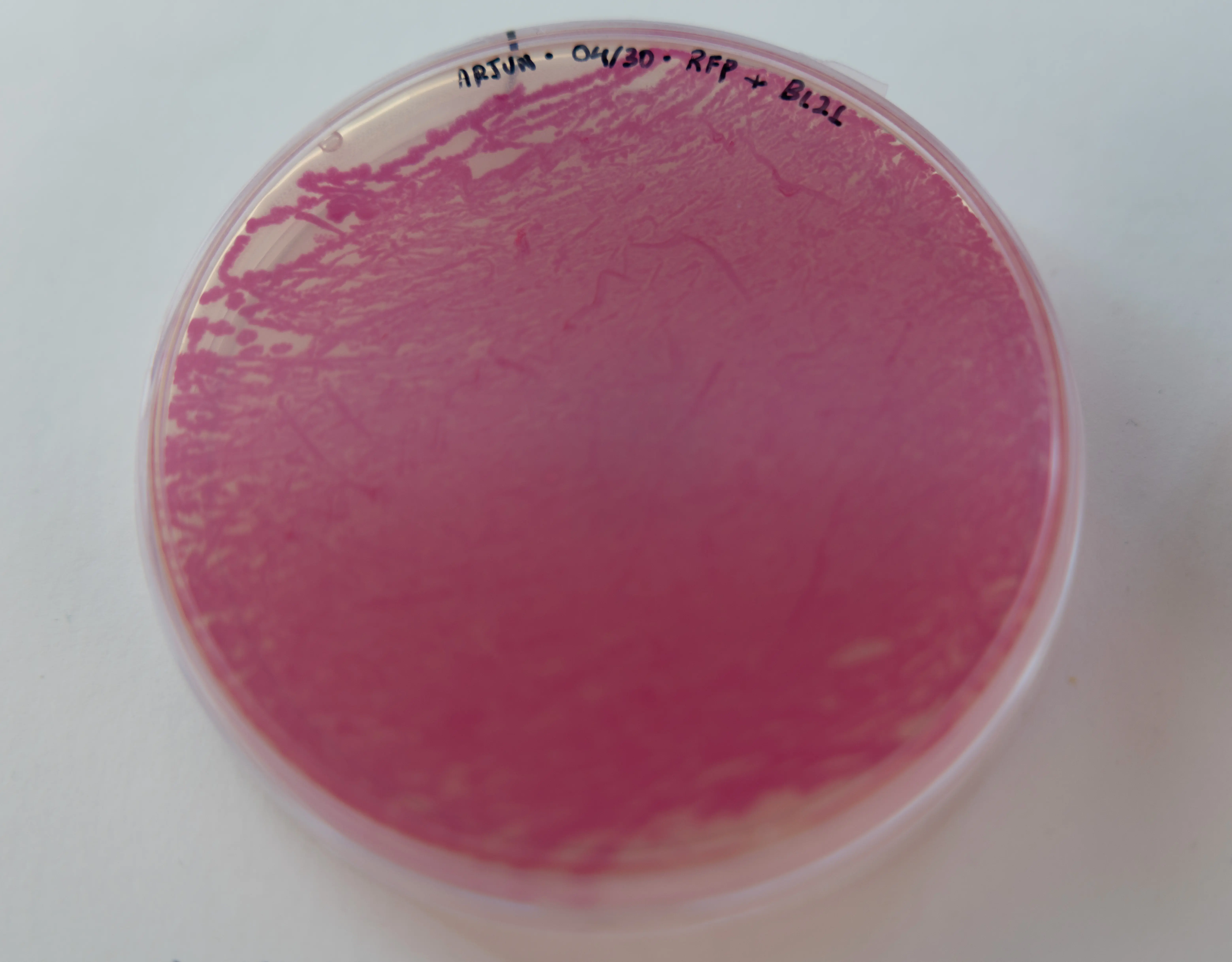
bacteria petri-dish.
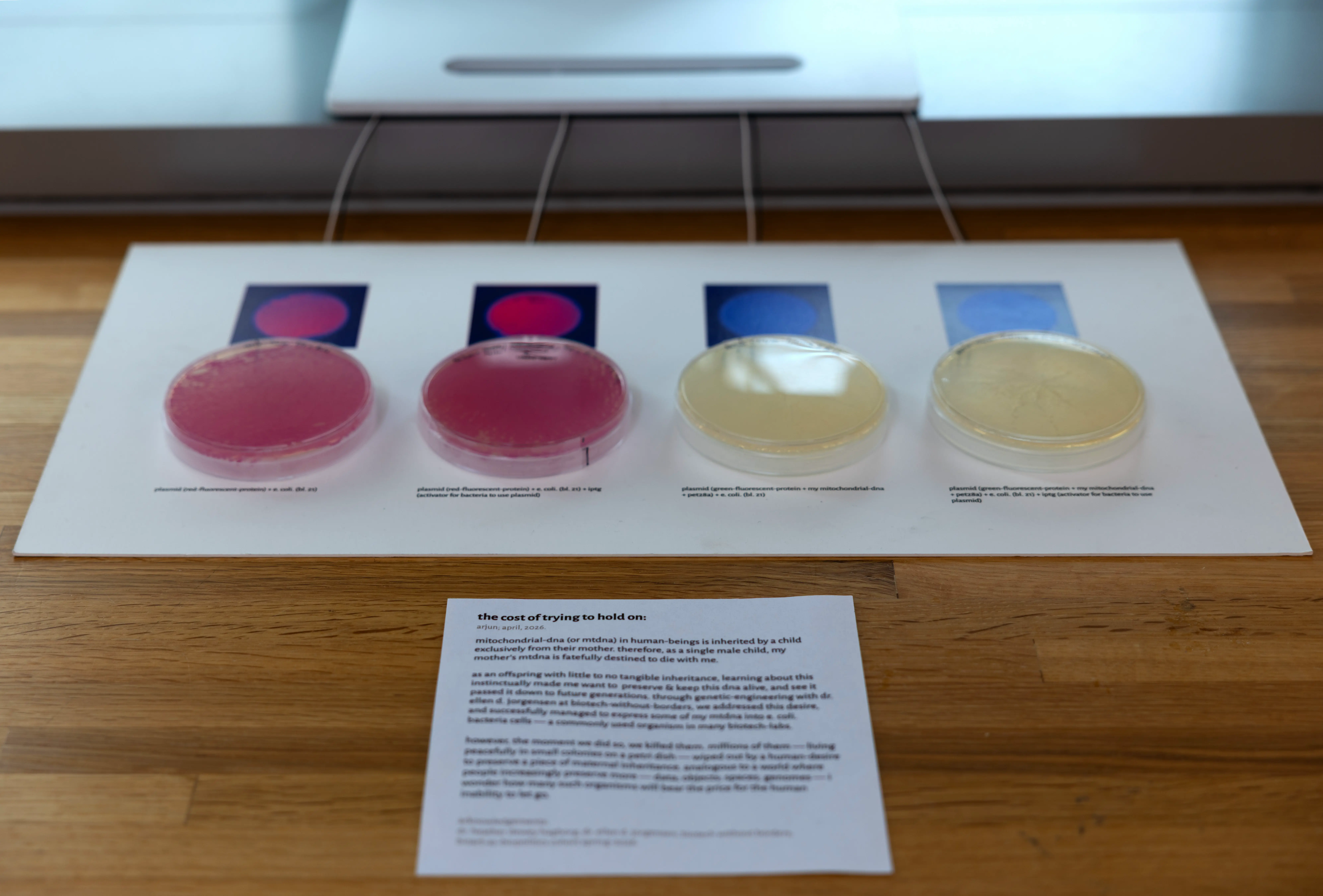
controller (petri-dishes) and exhibition-text.
process:
we extracted my mtdna using a cheek-swab, purified it, sent it for
sequencing, and then cleaned up the sequence as part of
heather-dewey-hagborg's class.
thereafter, ellen & i sliced two subsections of that dna: one from the
beginning until the first stop codon3, and the other from the last start codon till the end. we also added
an expression vector4 & a
green-fluorescent-protein to be able to visually track whether the
expression was successful or not.
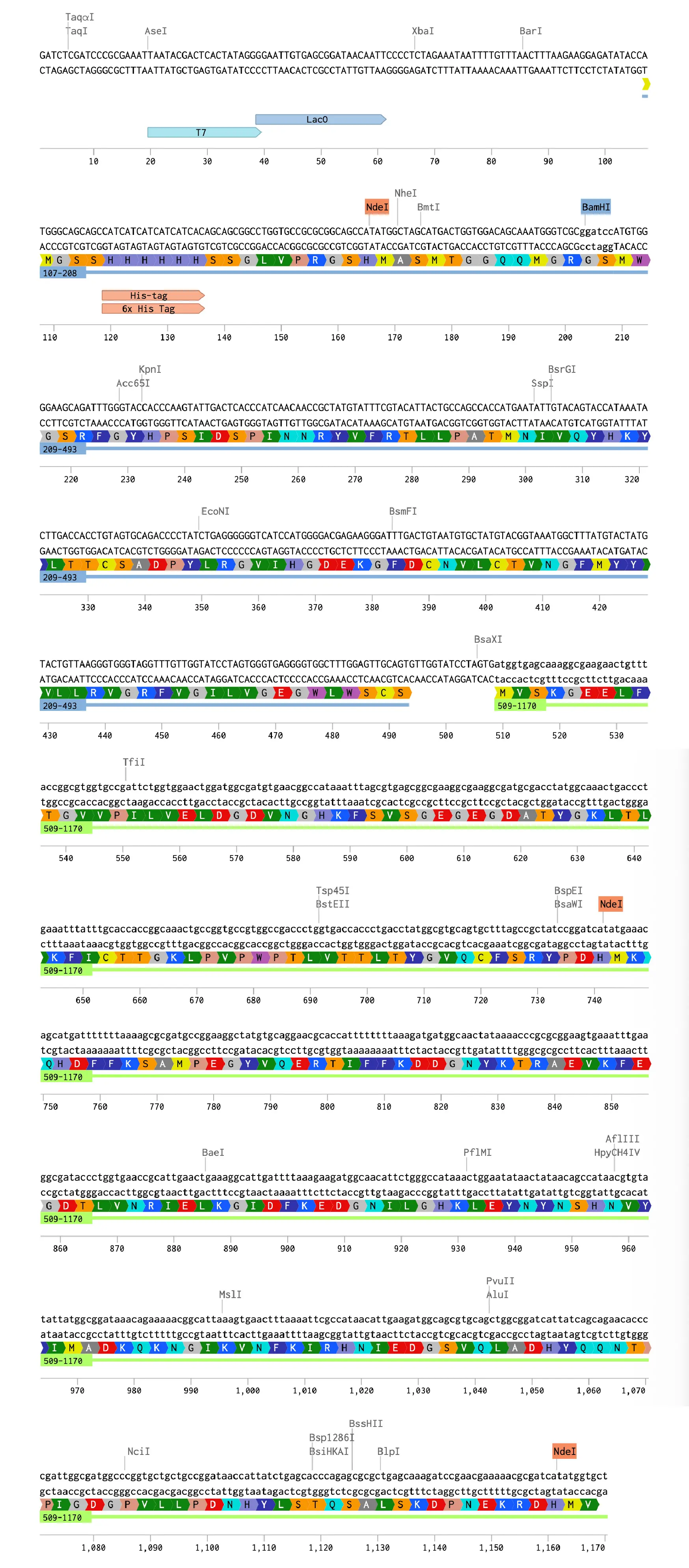
below is an annotated image of the whole sequence. it starts with the
two subsections of my dna, the expression-vector (plasmid) in blue, and
the green-fluorescent-protein in green.
annotated sequence with typical markers.
then i purified the dna, checked its concentration using gel
electrophoresis5, performed ligation6, cut the dna at specific points, and finally performed
bacterial-transformation7.
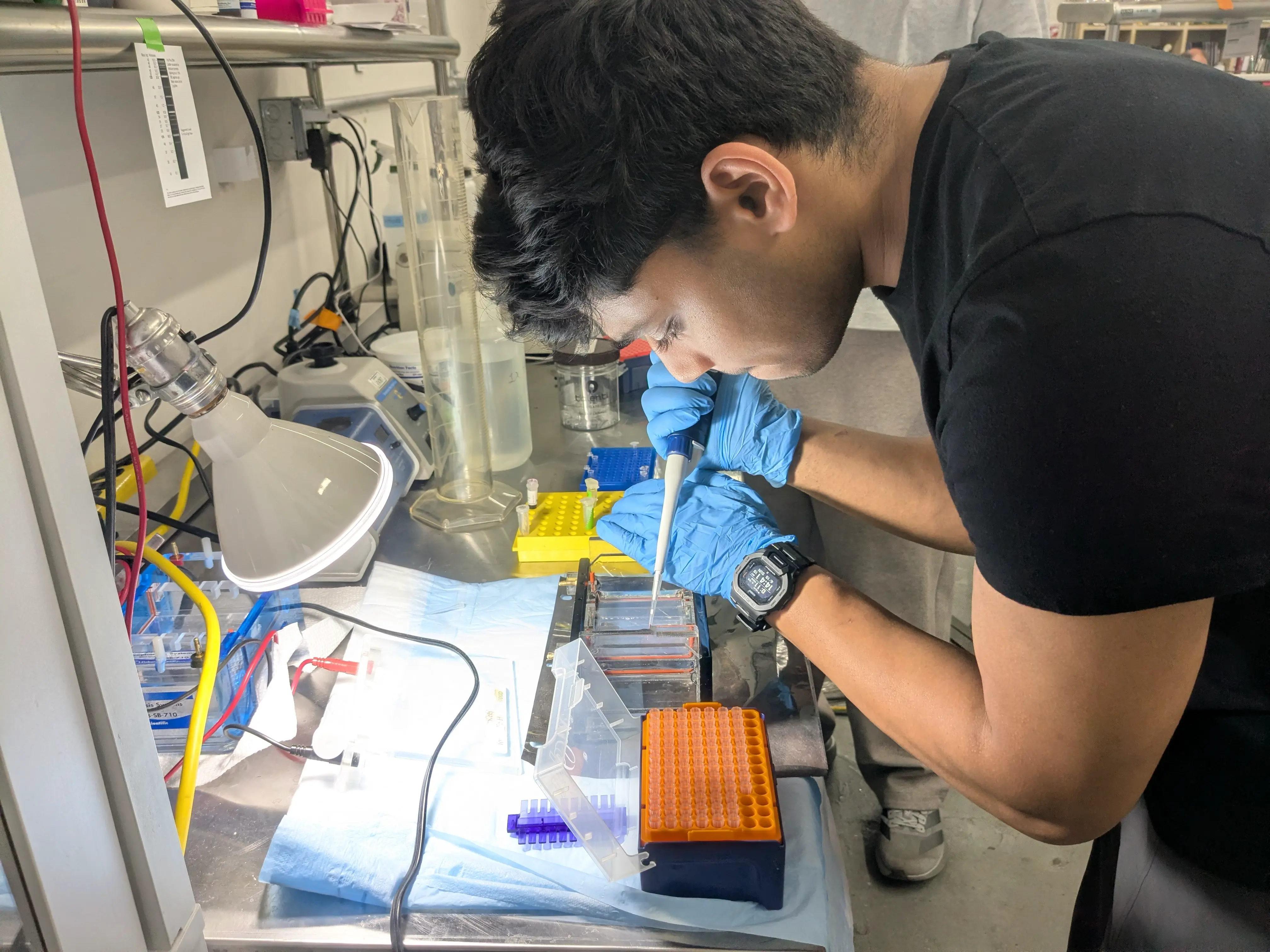
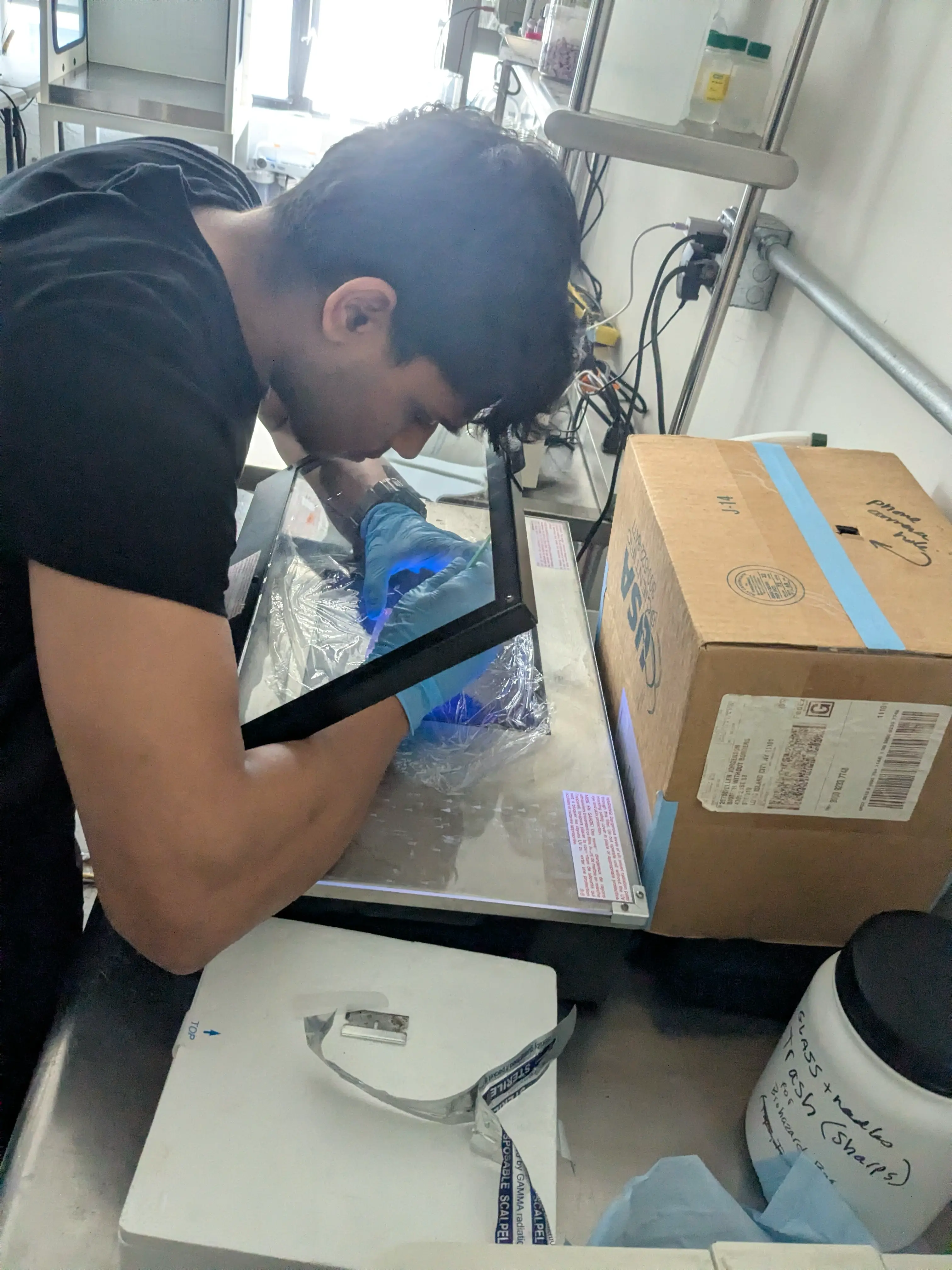
performing gel-electrophoresis.
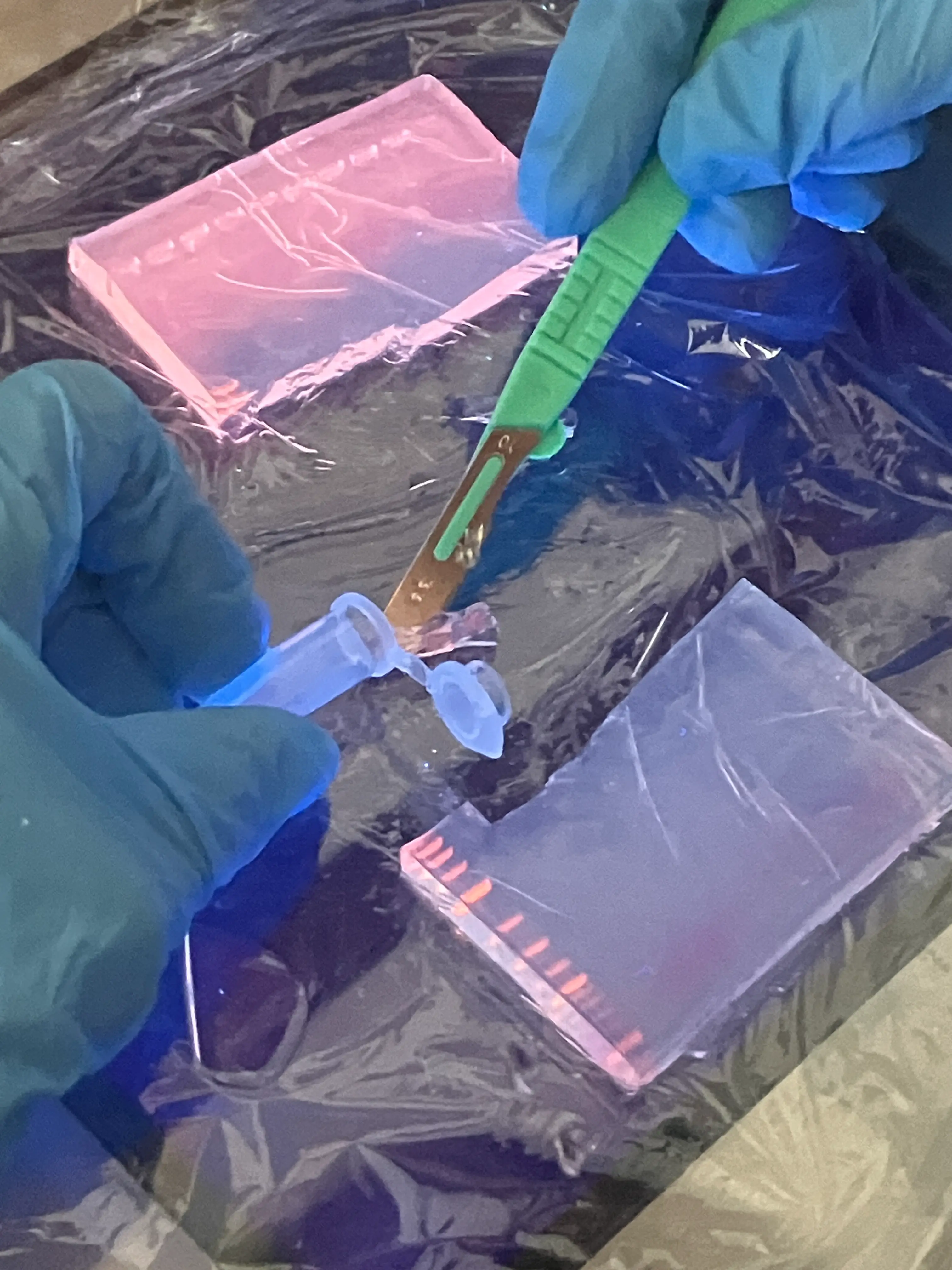
slicing bands of dna from the gel-electrophoresis to check for
concentration.
finally, i spent time streaking bacterial-colonies onto agar plates to
check for growth.
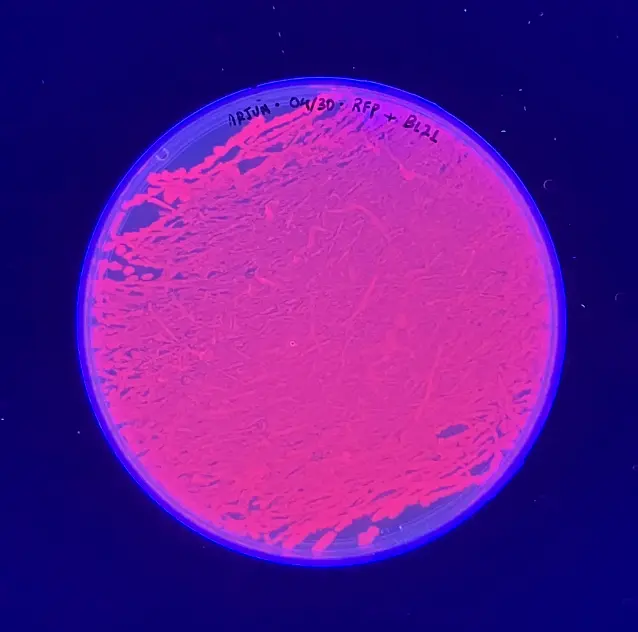
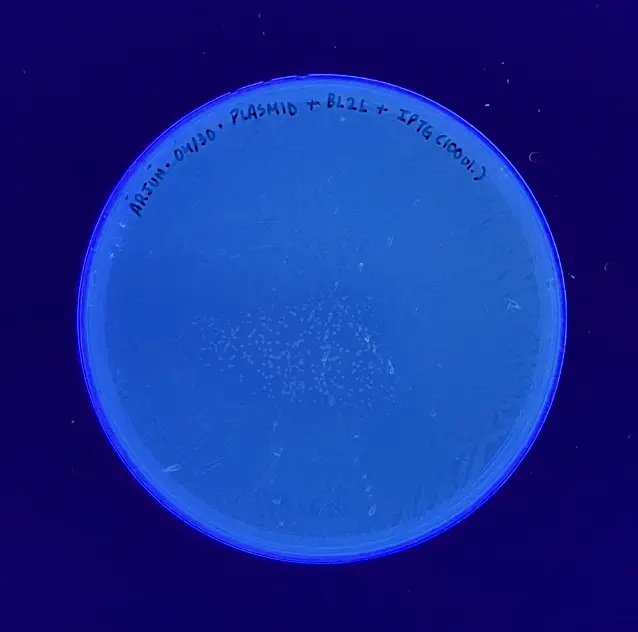
pictures of agar plates with bacterial growth, taken under uv light.
left: plasmid (red-fluorescent-protein) + e. coli. (bl. 21); right:
plasmid (green-fluorescent-protein + my mitochondrial-dna + pet28a) +
e. coli. (bl. 21) + iptg (activator for bacteria to use plasmid).
an in-depth log of this project can be found
here.
human mitochondrial dna was the first significant part of the human
genome to be sequenced, and is actively used by ancestry-dna
services (such as 23andme). read more on
this
wikipedia page.
this is, sadly, still a hypothesis (although verified by dr. ellen
jorgensen). to claim this with certainty, i'd have to extract the
recombinant dna, send it for sequencing, and verify whether it was
actually my dna that killed the bacteria. however, to do so would
require funds that i did not have at this time.
start & stop codons are three-letters long, and tell the ribosome
where to begin & end dna-transcription (to make relevant proteins).
read more on
this
wikipedia page.
an expression vector is a plasmid (a small circular piece of dna) or
a virus designed to transfer (express) a gene to a particular cell.
read more on
this
wikipedia page.
gel-electrophoresis is a method to analyse pieces of dna by
separating large bands of dna-molecules, in an electrically charged
medium. read more on
this
wikipedia page.
ligation is a step in the transformation process, to join two
nucleotides into a single polymeric chain using a ligase. read more
on
this
wikipedia page.
we heat-shocked the bacteria cells to break open the cell-walls, and
then put the dna into the cell. read more on
this
wikipedia page.