this weekend, i visited the krasner & pollock exhibit at the met.
i questioned what about pollock’s art speaks to me, because i went with someone to whom it didn’t. they were used to more sensorial-stimulation; for me the visual depth was enough.
what is common across pollock’s work & notes from light exhibition by zach lieberman, is that they keep you looking (perhaps what tom-igoe calls ‘sustained’ interaction (albeit this isn’t ‘interactive’)). i stood in front of this for a while:
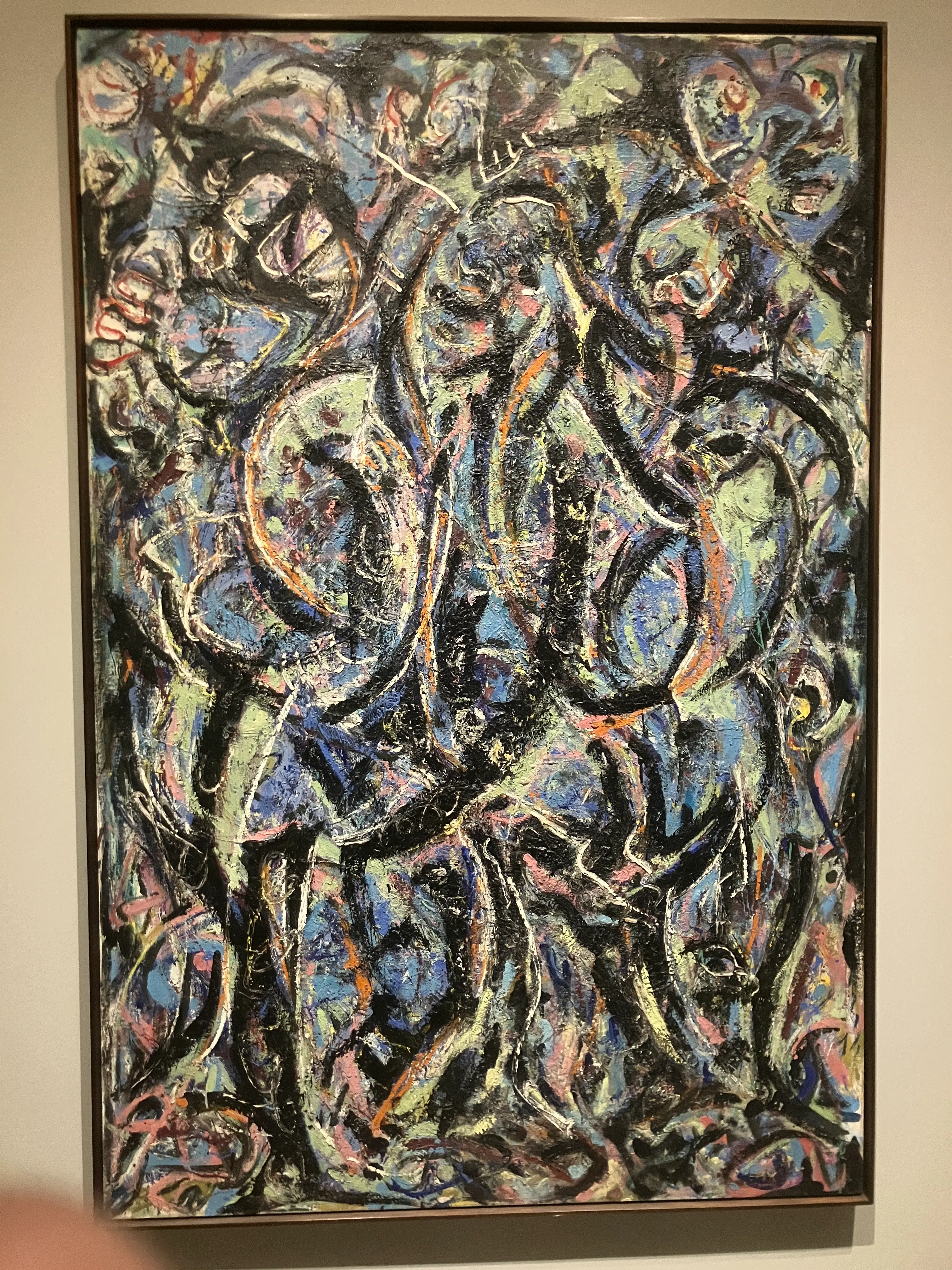
the figure — what seems to me like a lady, in a dynamic pose; with eyes around her; there is so much to discover in the painting. as you keep looking, more details are revealed to you (they emerge from what wasn't).
that is the thing about complexity — structure emerges when you look.
the other bit of reflection worth articulating about is that cubist painters were pushing the visual definition of a form — what does it mean to represent something?
look at this pollock sketch:
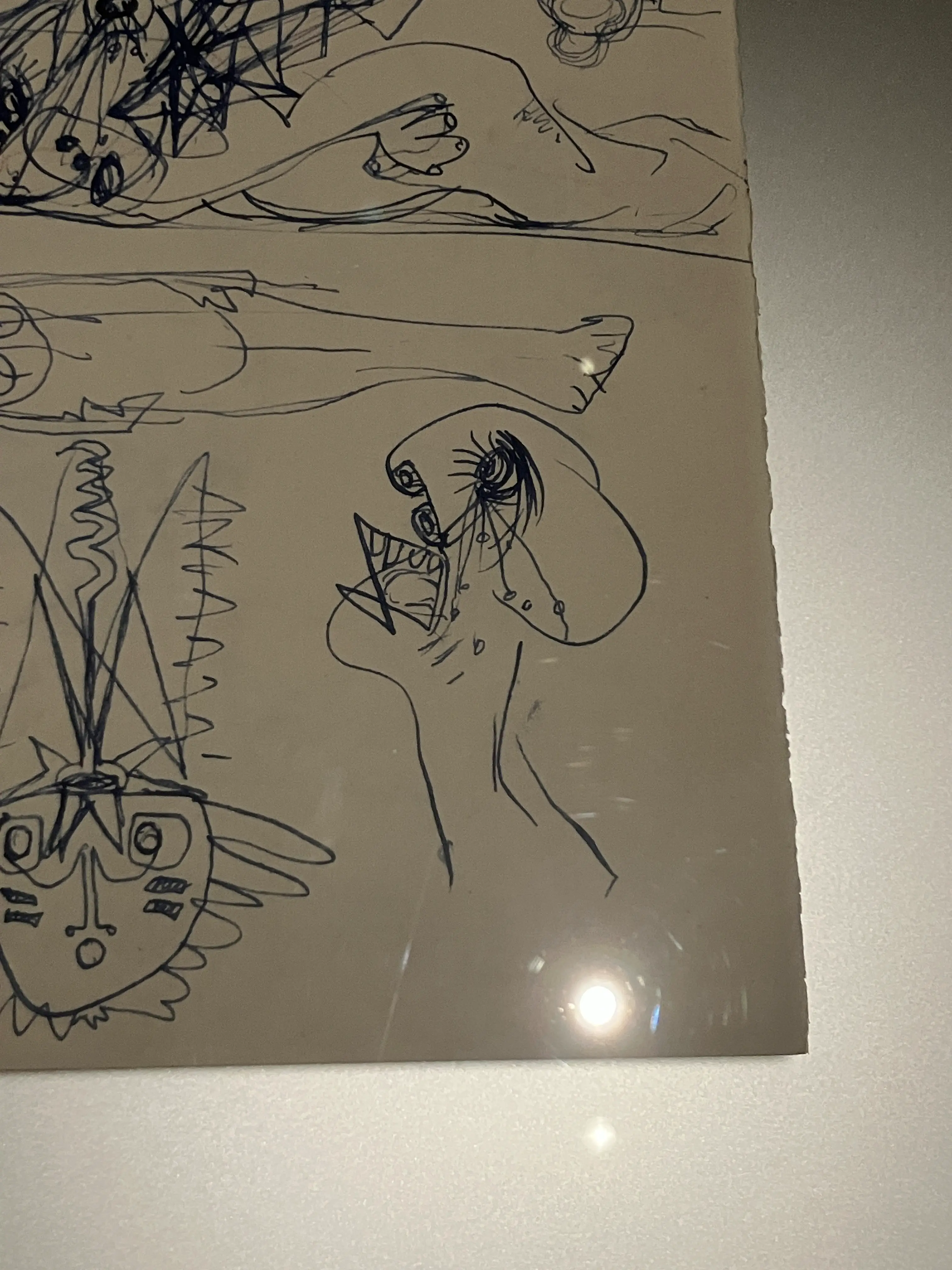
it such a beautiful exploration of form — what can the human head look like? i don’t know the exact question he was trying to explore, but the sheet reveals that he was trying to find a form; a way to look at something in a way that hasn't been done before.
that is also valuable.
can i make people look? can i make people go beyond seeing — go to noticing; identify structures at play; ignite curiosity such that they may think of the world in similar ways?
i think that’s what i’m trying to do with my thesis.