from:
aquinas:
“Could God create a stone so heavy that even he could not lift it?” This is a paradoxical question because if God could create something he could not lift, then he would not be omnipotent. Similarly, if God was able to lift the stone then that would mean he was unable to create something he could not lift, leading to the same result. Alternative statements of the paradox include "If given the axioms of Euclidean geometry, can an omnipotent being create a triangle whose angles do not add up to 180 degrees?" and “Can God create a prison so secure that he cannot escape from it?”.
westernized reductionism:
take a complex system; break it into simple parts → additive nature means complexity rises linearly.
from:
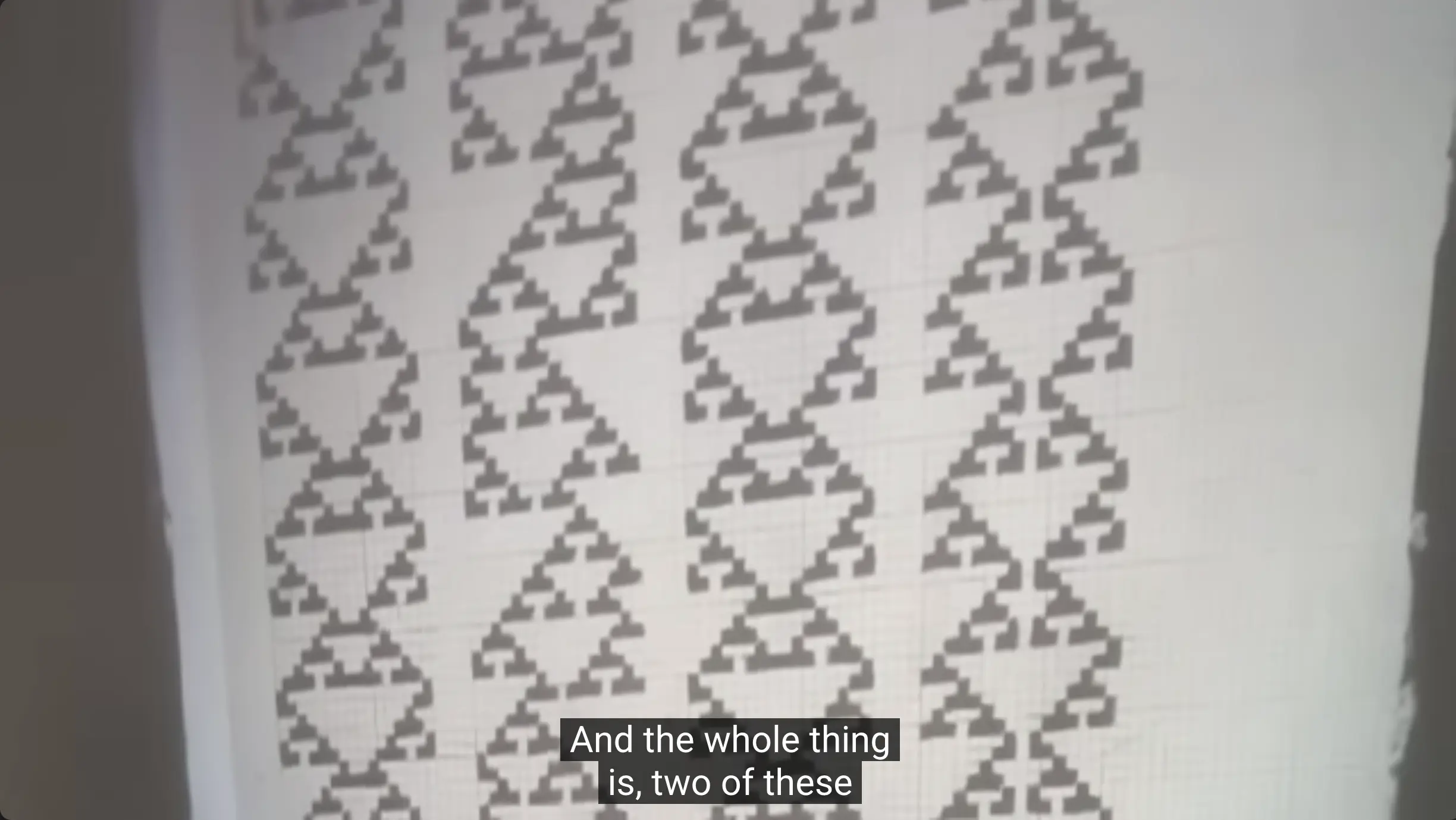
starting state in no way can offer you a prediction about the mature state (whether infinite or extinct).
starting states of asymmetric patterns produce more dynamic systems.
times when you reach a state, but you can never tell what the starting state was (convergence of multiple systems):
speaks about two plants in different geographical conditions converge onto the small form:
Another thing in a living biological system that begins to suggest this. OK, so I do this research in East Africa.
13:28
And every now and then over the years I’ve gone to this mountain called Mount Kenya, which is on the equator.
13:34
It’s about 17,000 feet. It’s got glaciers up on top. So this is an equatorial glacial mountain.
13:40
And you go up to about the 15,000-foot zone, and there’s like— it’s more land.
13:46
Almost everything is dead up there from the cold. And there’s basically only, like, four or five different types of plants up there.
13:53
Oh, already a very small number that survive in that environment.
13:58
And each one of them is very bizarre and distinctive looking. There’s one of them that looks like
14:03
a little, like, rosebud thing, except it’s about 5 feet across. And then there’s another one that
14:10
has sort of a sprouty thing like this and then a big central cactus-looking thing that isn’t really cactus.
14:15
So there’s a few of these really distinctive, bizarre-looking plants. And in some way or other, that’s what
14:22
it takes to survive up there. So I have this friend who does research up in the Andes.
14:28
And he does botany stuff up there. And he goes into this one range there that is on the equator
14:35
and high enough that there’s glaciers up there. Ah, a glacial equatorial mountain on the other side
14:40
of the globe. So one day I’m sitting around and looking at some of his pictures there. And suddenly I look and say, that’s the exact same plant.
14:48
That’s the big rosebud plant that is in Mount Kenya. And oh, my god, that’s the tall sprouty one.
14:54
And say, it’s the exact same plant. How can that plant be over there? And we go rummage around in his botany taxonomy stuff,
15:02
and they are completely unrelated plants. They are taxonomically of no connection whatsoever.
15:10
But what they’ve done is converged onto the same shape.
15:15
And in some mysterious way, if you’re going to be a plant growing on the equator at about
15:21
15,000 feet, there’s only about four or five different ways of appearing. There is massive convergence.
15:28
And there’s only four or five ways that you can survive an environment like that. You get organisms in very dry environments,
15:37
and there’s, like, only four or five ways that you can go about being an organism that’s super
15:43
efficient at retaining water. And those are the only ones you see amongst them.
15:48
Desert animals, and completely unrelated ones, have converged onto some of the same solutions.
15:54
There’s only a very finite number of ways to do legs and locomotion.
16:00
Two is good, four, weirdo things that fly of six, creepy things have eight.
16:05
You don’t find seven. You don’t find three. You find some of the solutions here are immensely different
16:11
starting states and have converged. What we see is in these living systems over and over stuff
16:17
that look like cellular automata, where slight differences magnify enormously butterfly effects,
16:25
where you are modeling living systems in a very real way. Most of them go extinct.