tried in-house electrowetting with a ribbon cable, and 30v. it didn’t work.
spoke with deqing-sun about it. he recommended i get a boost-converter, and try it with a copper pcb.
milled a small set of electrodes; checked that they weren’t shorting. ordered the converter & teflon-plumbers-tape to act as a hydrophobic surface.
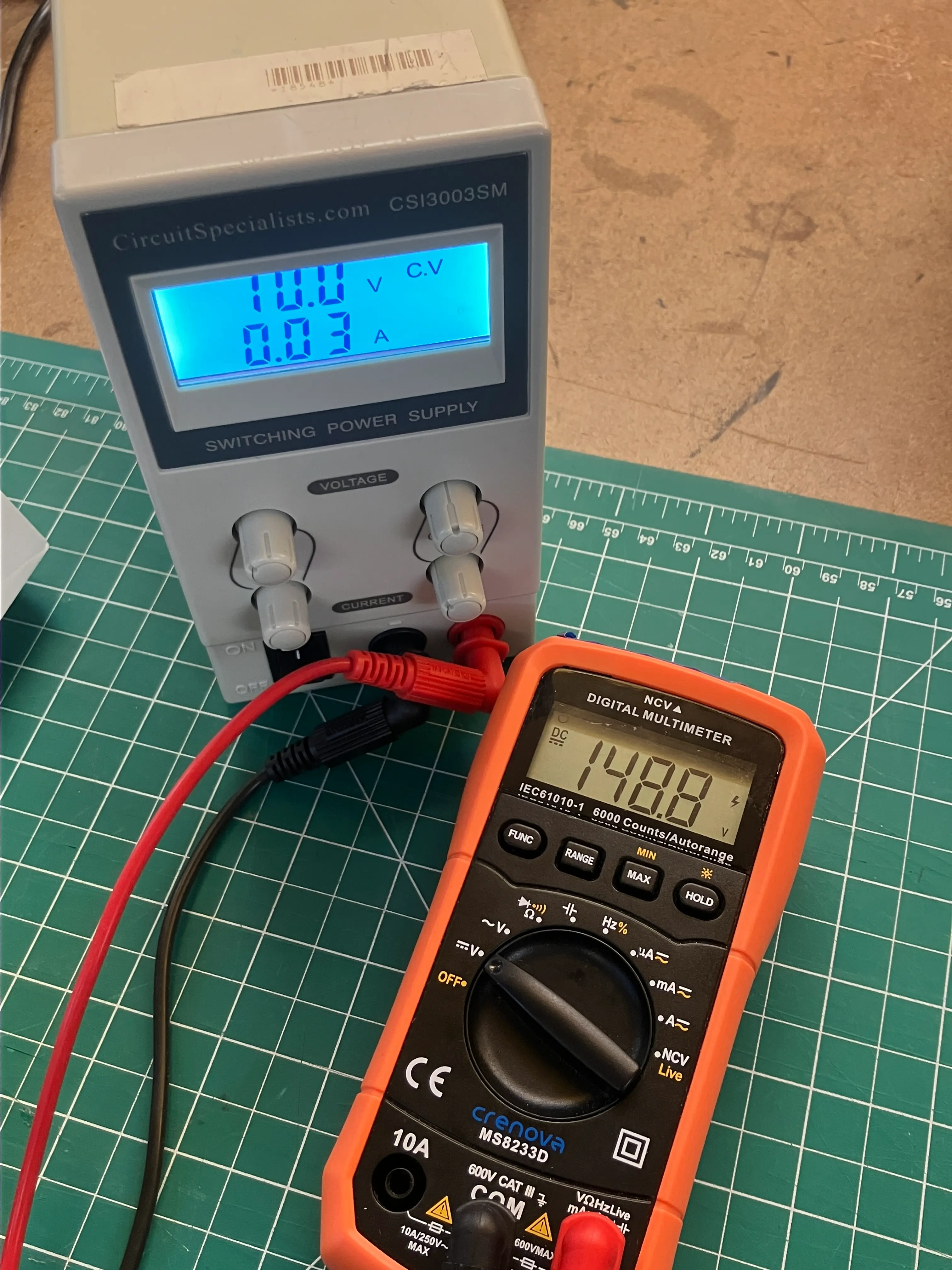
got boost converter to work:
with teflon tape, the water sparked because of micro-holes.
got it to work! more voltage, cling wrap & olive oil as dielectric layers.
conversation with matt-griffin (260918):
discussed dielectric layers, and possibilities to get a smooth finish on the bottom layer. he recommended kapton tape (which i later got from phil), mineral spirits or mineral oil (to suspend liquid in; and kindly gave me a petri dish too), glycerin, baby shampoo. and brain slides — although expensive — might be a good dielectric layer (and very regular surface).
understanding electrowetting:
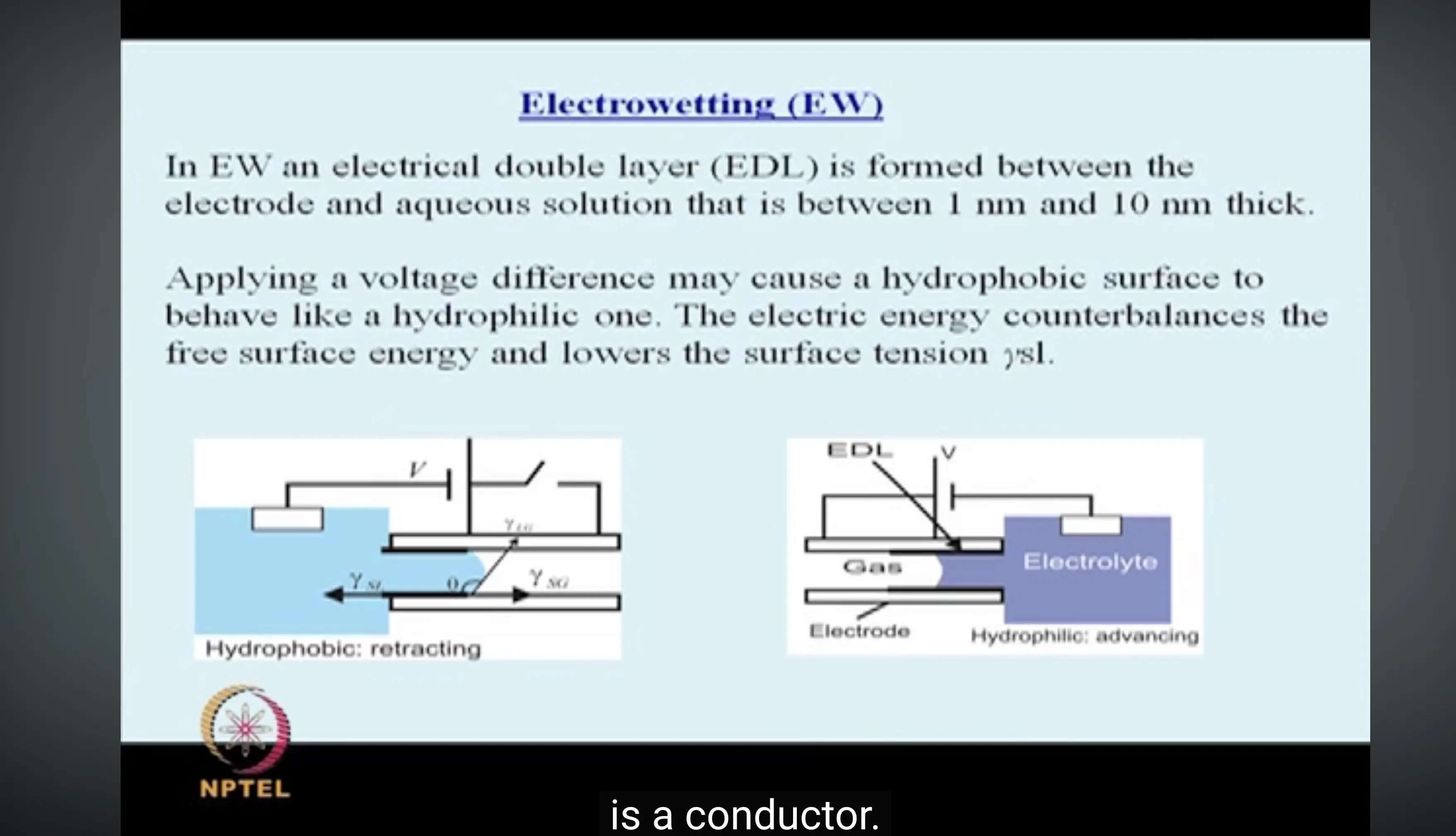
watched this lecture by iit-kharagpur: https://www.youtube.com/watch?v=eCxPy8wI_lk
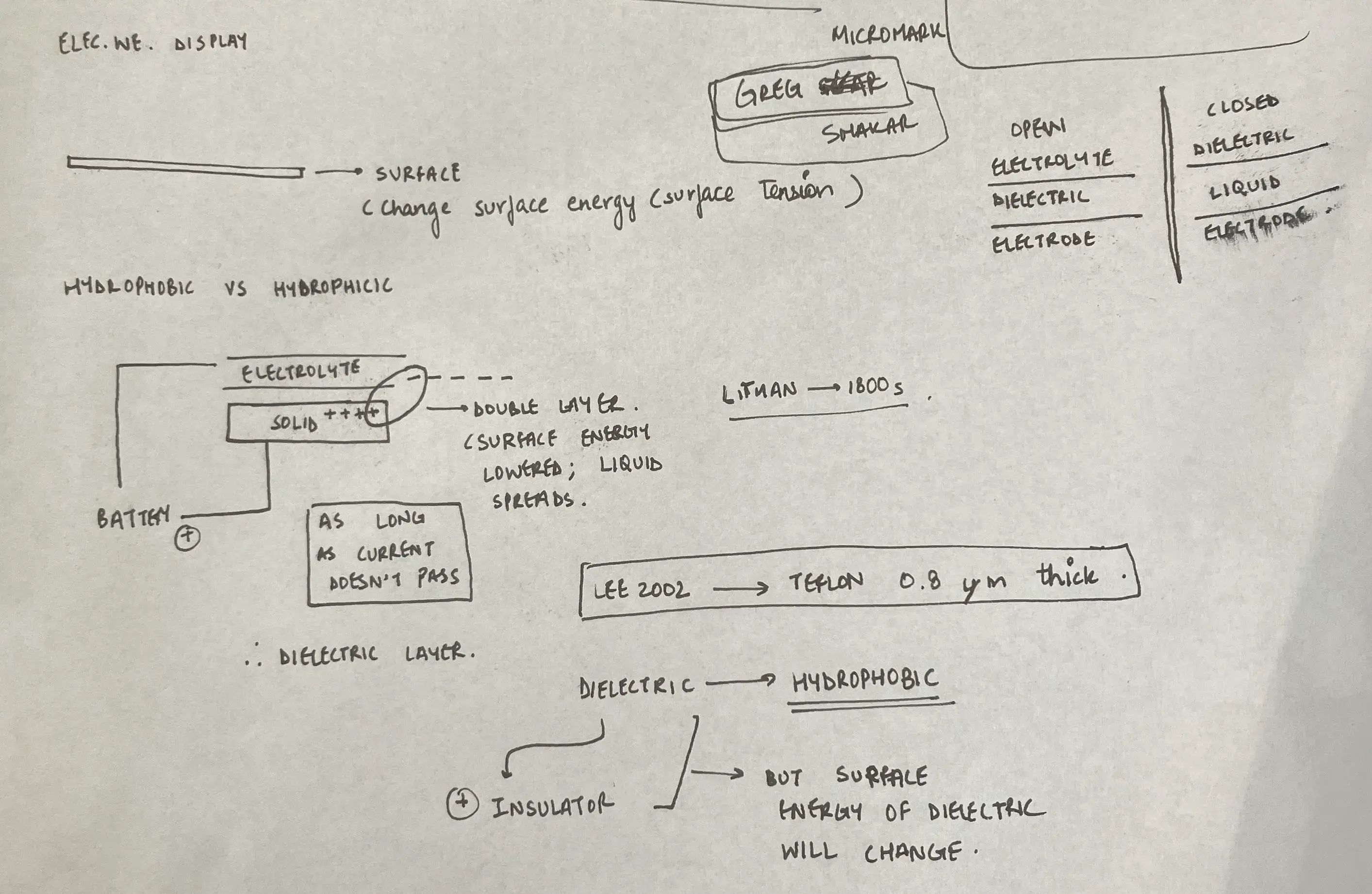
my notes (i think i understood enough to not have to write it down again):
limitations:
- if you break the dielectric layer, and current passes, then the ewod is gone (i wonder if that’ll destroy my circuit too). might have to add a fuse.
spoke with phil; who also introduced me to greg-shakar.
phil worked with me to break down my build. for the first prototype, we discussed buying a solid copper rod, cutting it & then putting it on tiny pedestals (either 3-d printed or resin-printed).
- micromark to buy copper.
- lens coat material / thor labs. he told me to think of the dielectric layer as a coating rather than something i paste (like a spray or something).
spoke about using the roller or laminator in the design lab.
260923:
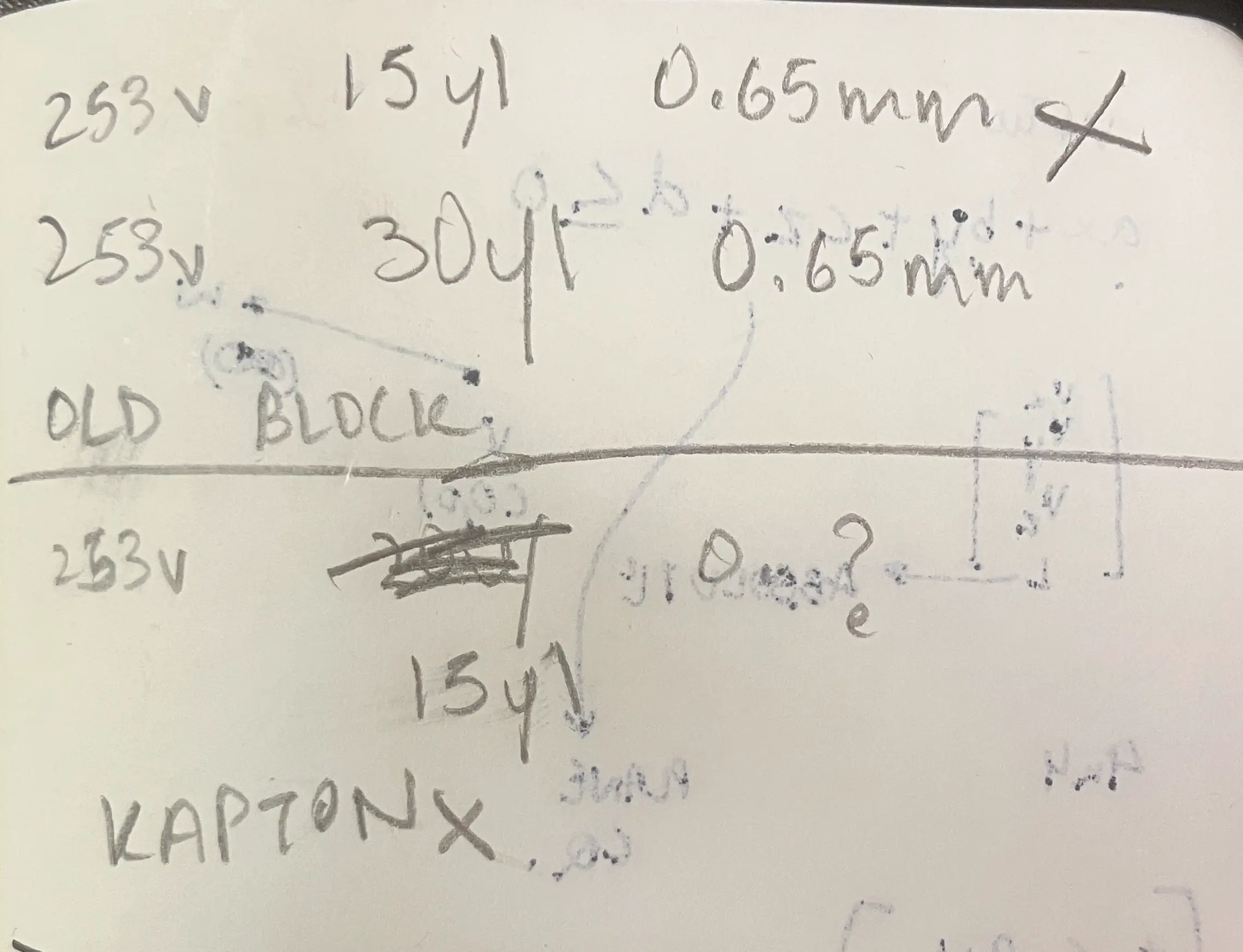
failed with all of these settings:
260925:
found this paper, which shows actuation with saran wrap, peanut oil & a 20-30ul droplet. tried finding peanut oil near 370 jay; no luck. i assume i can do the same with olive (that we have in the kitchen).
burnt my 253v boost converter because i was trying to rush through the experiment.
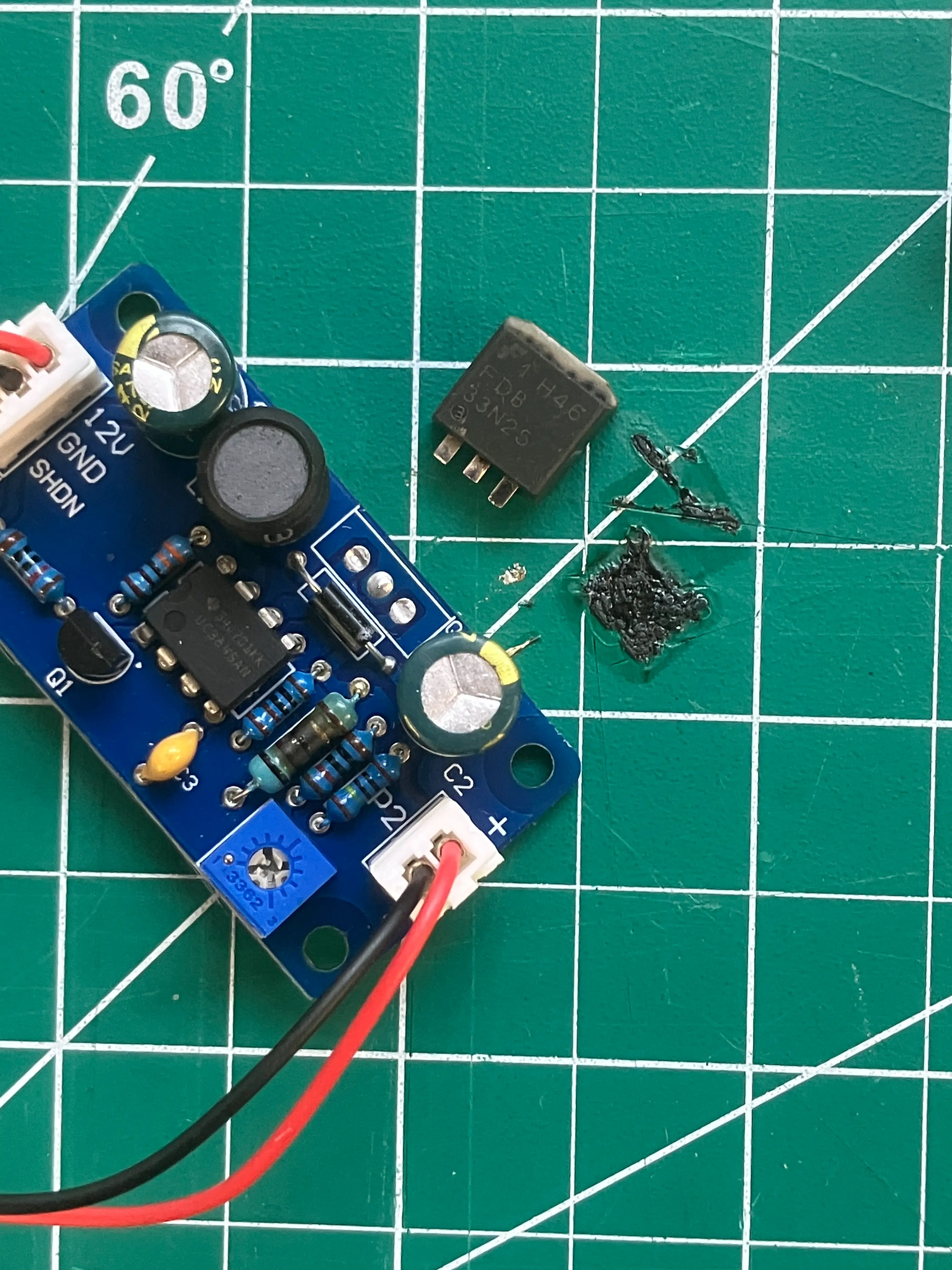
261007:
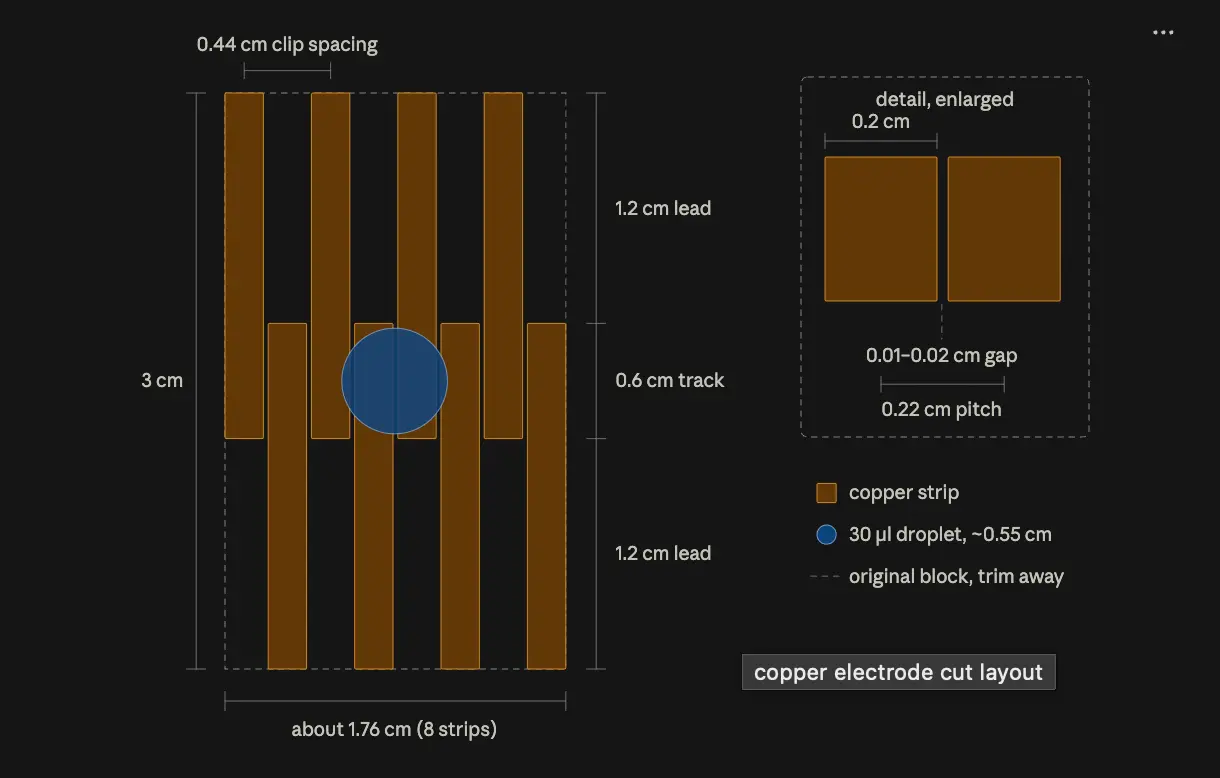
got actuation; 253v; 20ul. used copper sheet, salt-water, olive-oil, cling-film wrap.
rough setup (except that gaps were the thickness of a utility knife):
261011:
tried various, various actuation experiments.
received some actuation at 253v, but not reliable since i have to manually move the ground wire from the droplet.
also broke the cling film and achieved a zap.
spoke with nikolai about a possible build.
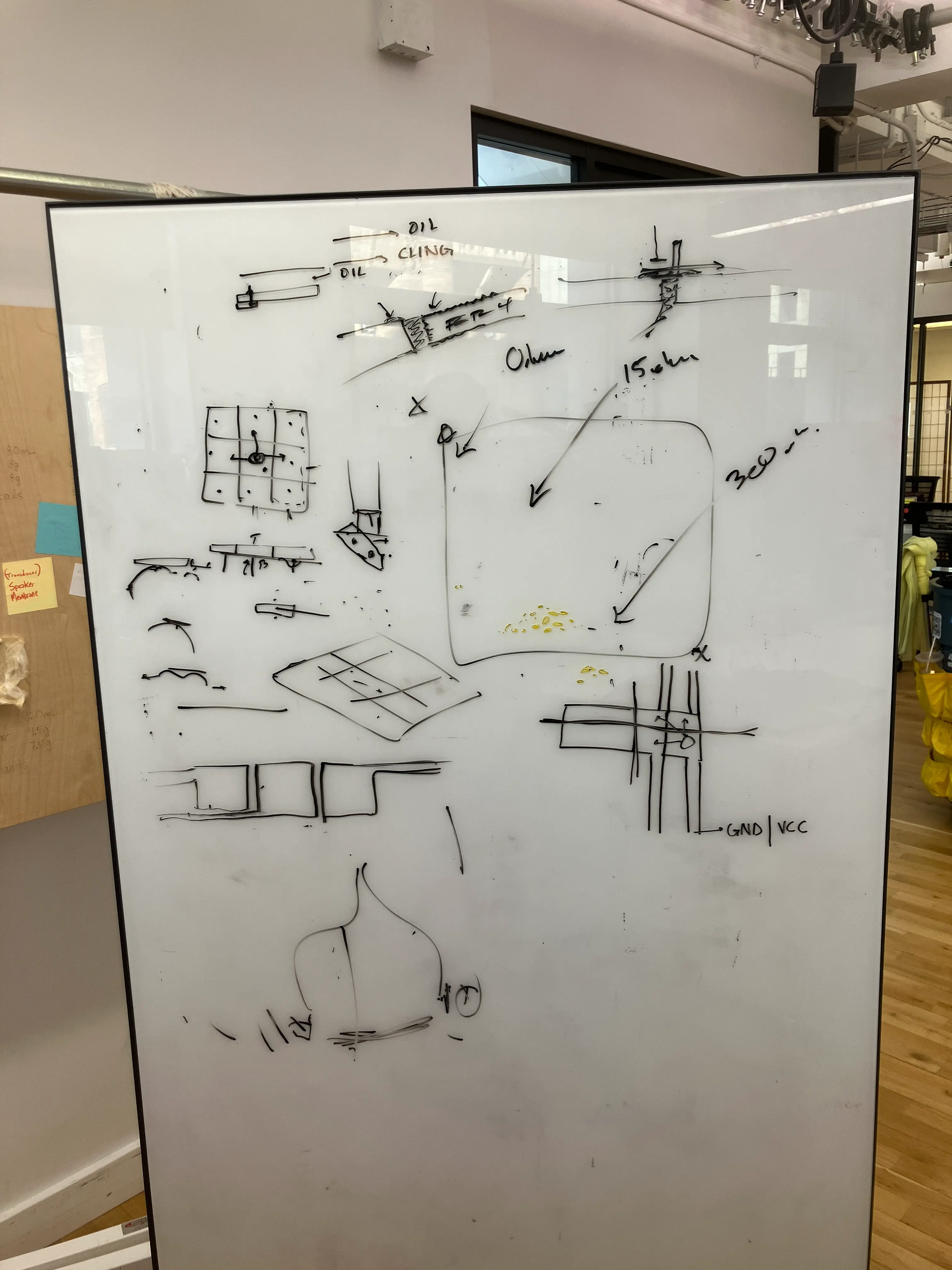
he gave me a conductive ito sheet.
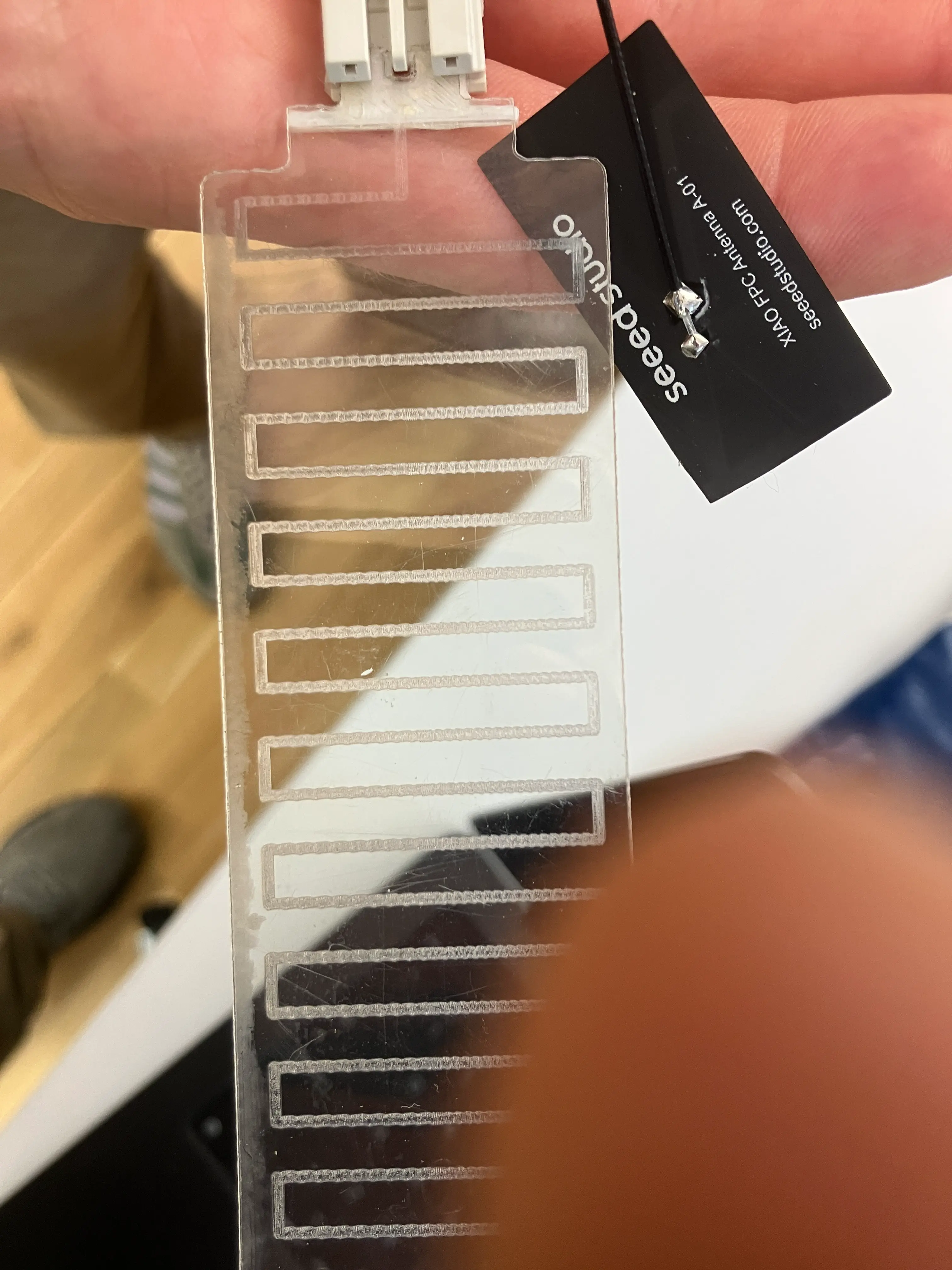
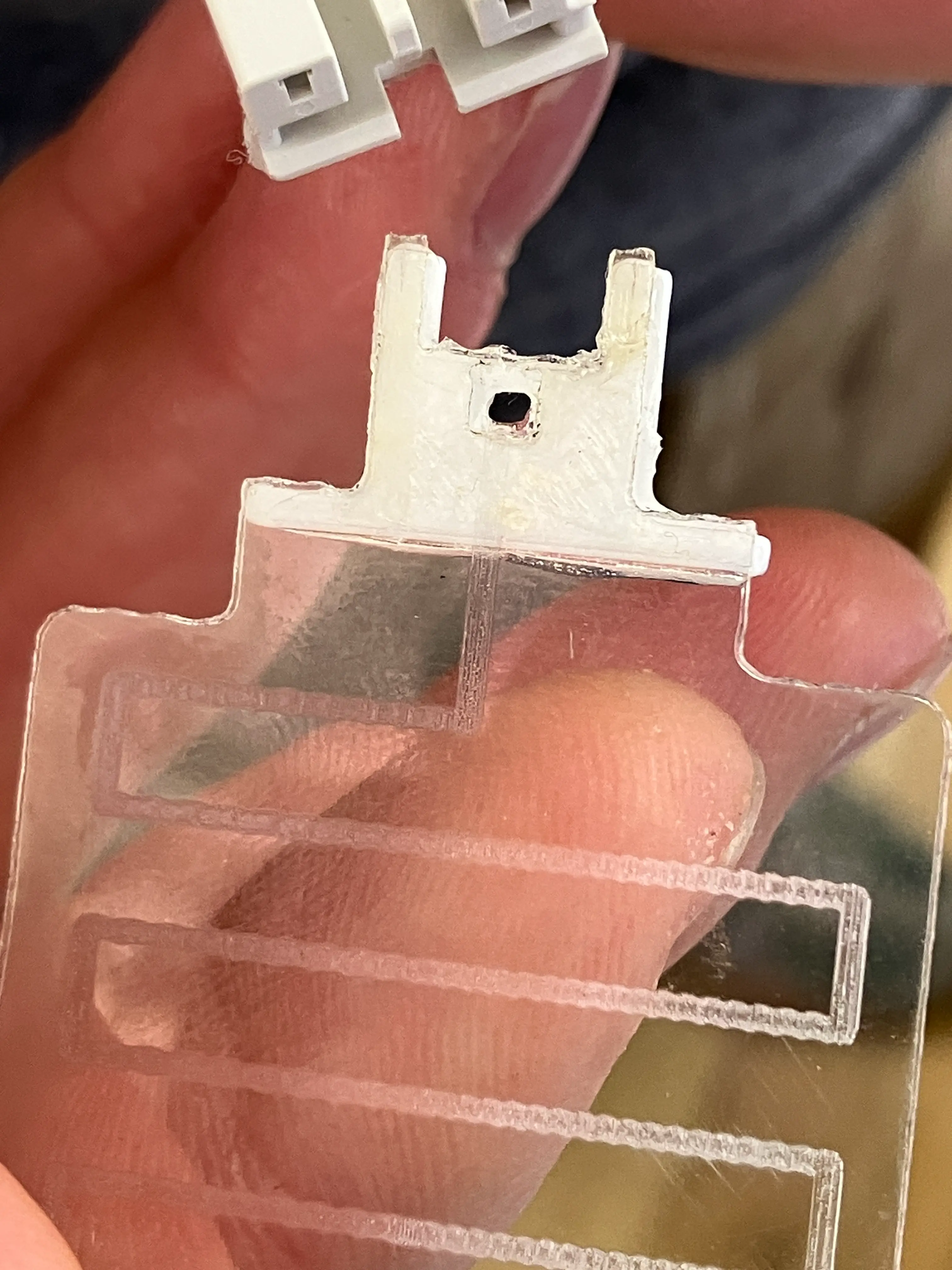
nikolai helped me figure out that for an svg, you want to export it as ‘inline style’ and not internal css.
bantam-milled a pcb to test 1-d movement with high-voltage transistors.
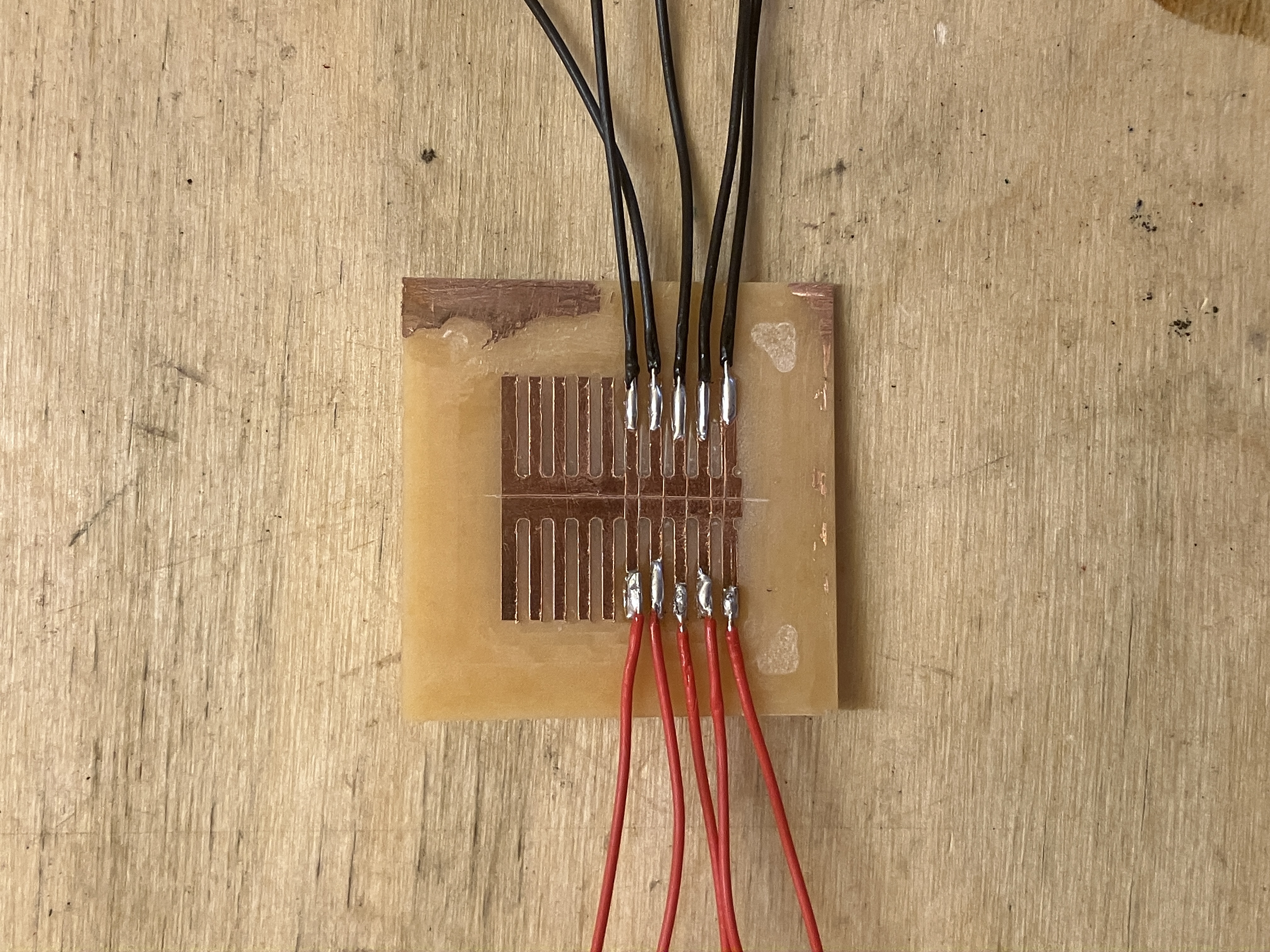
small build: https://www.youtube.com/watch?v=V_h0AEX9wQo
waiting for my high-voltage transistors to come in on monday.
didn’t work because the heights were not double of that of the droplet. milled again.
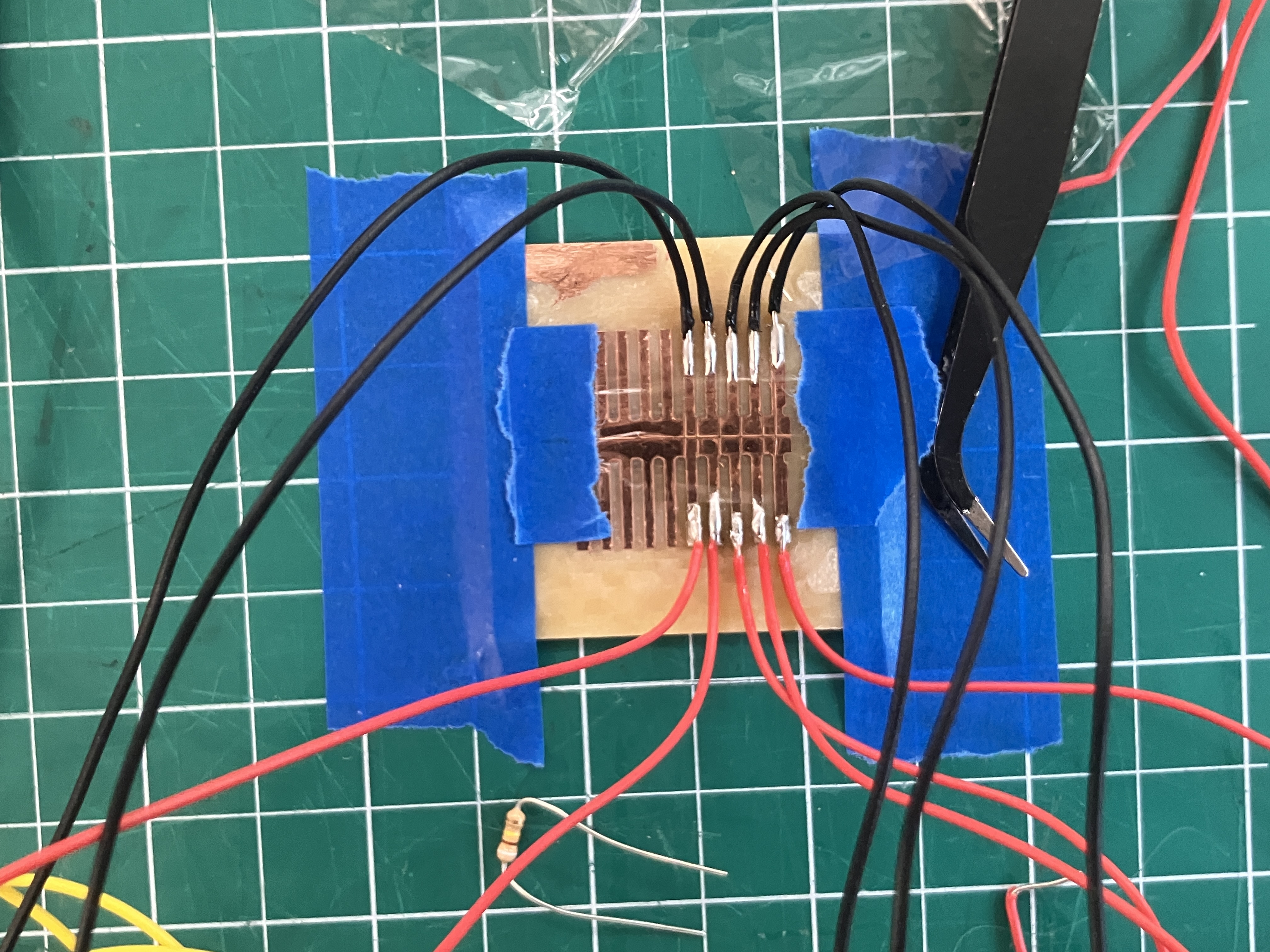
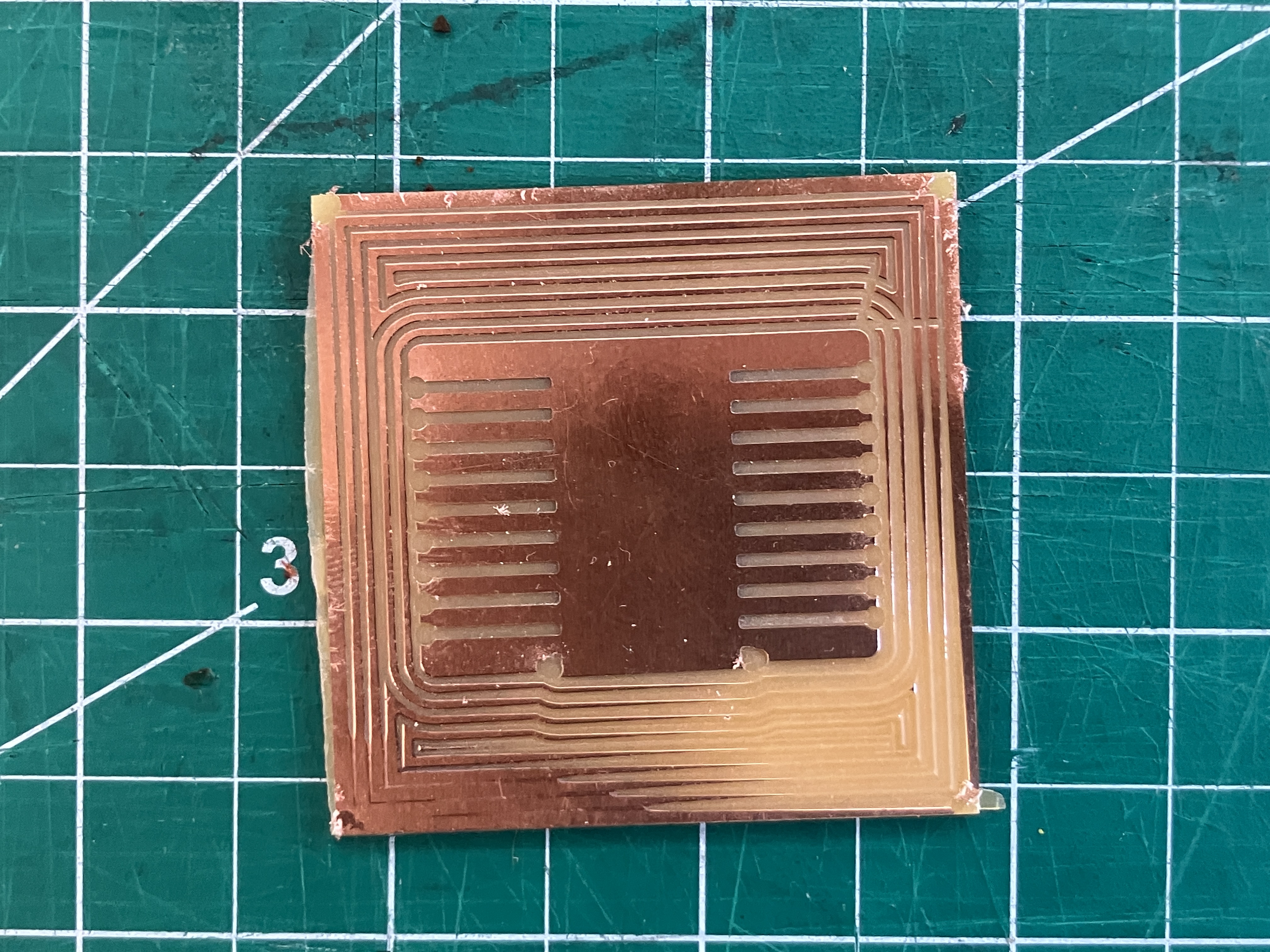
david rios helped me figure out the electronics.
got no actuation after multiple attempts. could not figure out why.
nikolai suggested using an a.i. model to suggest an experiment design … i had a lot of problems doing that. it kept hallucinating and suggesting more complicated builds.
261106:
i asked claude to read through all of the papers i’d collected, and design an experiment protocol for me. i then followed it to the t. it took me about 12 hours — although in the middle i helped gabriel mill a pcb during my shop shift.
it is currently 0206. but i’m happy — i made progress.
actuation, with oil-suspension:
longer video:
i’m too sleep to document right now, but shall do so tomorrow.