read more here: https://github.com/arjunmakesthings/daily-movement_emergence-studies
log:
260619:
mass had to grow with age, but then slow down. tried logarithmic growth, but that wasn’t proper (as growth needs to have a ceiling). could have used constrain, but that’s unnecessary computation.
found this: https://math.stackexchange.com/questions/2821035/exponential-something-what-is-the-name-of-that-asymptotic-exponential-functi (thanks to jagi).
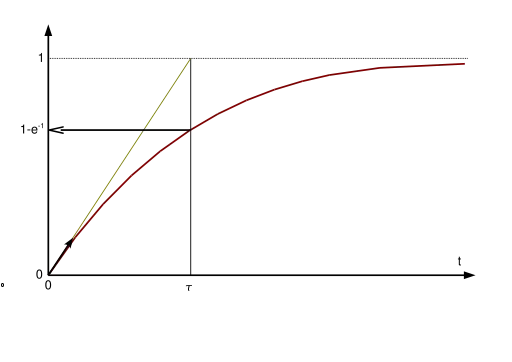
equation:
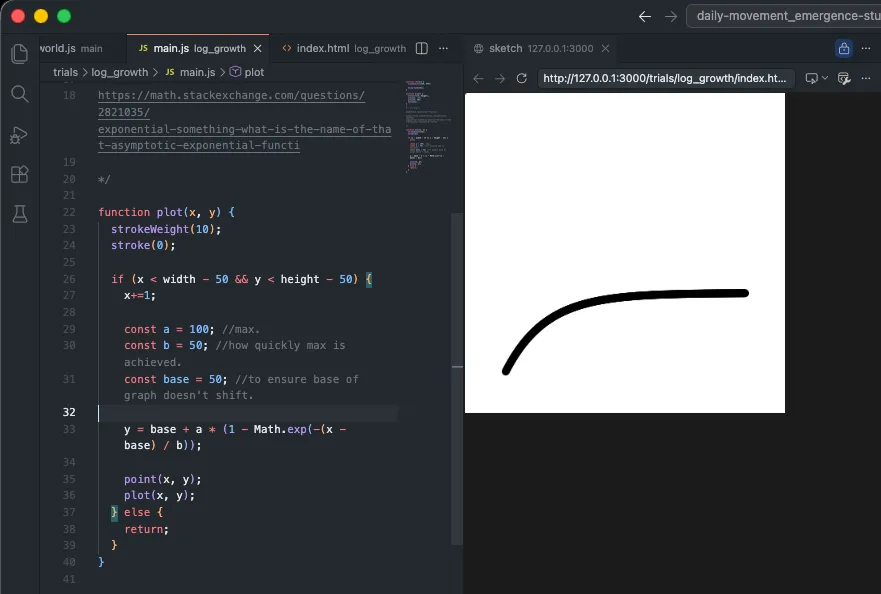
which can be implemented like so:
    const a = 100; //max.
    const b = 50; //how quickly max is achieved.
    const base = 50; //to ensure base of graph doesn't shift.

    y = base + a * (1 - Math.exp(-(x - base) / b));
plotted like this:
260625:
got these getters right:
get_mass() {
    //for a given current age, calculate mass.

    //mass is an asymptotic-exponential-growth graph.

    const a = 10; //max.
    const b = 18; //in how many steps is max achieved.

    return (a * (1 - Math.exp(-5 * (this.curr_age / b)))) / (1 - Math.exp(-5));
  }
  get_energy() {
    //energy is like a bell curve.

    /*
    https://www.desmos.com/calculator/3iioyvma2l

    f(x) = y = e^(-((x-a)^2) / b).
    */

    const m = 10;

    return (
      (1 / (1 + Math.exp(-(this.curr_age - 18) / 2))) *
      (1 / (1 + Math.exp((this.curr_age - 35) / 5))) *
      m
    );
  }
the simulation works well. need to refactor a little bit to clean it up, and make things more variable to have a basic simulation going.
fixed scheduling:
  /*
  for given age, get a schedule based on the busyness (the older you are, the more busy you get).
  */
  get_schedule(age) {
    let avl_time = Array.from({ length: day_length }, (_, i) => i);
    let schedule = [];

    //calculate available time slots based on age.
    const min = 2;
    const max = 12;
    const peak = 25;
    const sigma = 10; //spread-width.

    const g = Math.exp(-Math.pow(age - peak, 2) / (2 * sigma * sigma));
    const mean_busyness = min + (max - min) * g;

    const spread = 1.25 + (1 - g) * 3.5;

    let busyness = Math.round(randomGaussian(mean_busyness, spread));
    busyness = constrain(busyness, min, max);

    //^ this is the length of our to-be-created schedule array.

    let i = 0;

    while (i < busyness) {
      i = (i + Math.floor(Math.random() * 6)) % avl_time.length;
      let a = avl_time.splice(i, 1)[0],
        b = avl_time.splice(i, 1)[0];
      schedule.push(
        schedule.length ? [schedule[schedule.length - 1][1], a] : [a, b],
      );
    }

    schedule.push([schedule[schedule.length - 1][1], schedule[0][0]]);

    this.get_new_destinations(schedule);

    return schedule;
  }
wrote a small algorithm distribute points in space — somewhat randomly — but with a minimum distance between them.
was inspired by the poisson-disk-sampling algorithm.
but mine is simpler.
/*
select hotspots away from each other, recursively, by drawing circles.
*/

function setup() {
  createCanvas(800, 800);
  background(255);

  // let spots = find_spots(width, height, 5, 20);
  let spots = find_spots(width, height, 5, 100);

  // console.log(spots);
}

/*
for a canvas of width w & height h, and a min-radius specified between points,
return tuples of x, y coordinates such that;
coordinates are away by min-radius,
and are somewhat uniformally distributed across space.
*/
function find_spots(w, h, n, min_spacing) {
  let posis = Array.from({ length: n }, () => []);
  let size = min_spacing;
  //check if co-centric circles min_spacing apart can fit onto the space:
  const can_fit = Math.floor(Math.min(w, h) / min_spacing) >= n;

  //we now do two branches:
  const origin = createVector(width / 2, height / 2);
  if (can_fit) {
    //randomly plot them on the circles (they will always be at-least min-spacing apart).
    for (let i = 0; i < n; i++) {
      let theta = random(TWO_PI);
      let x = origin.x + (size / 2) * cos(theta);
      let y = origin.y + (size / 2) * sin(theta);
      noFill();
      stroke(0);
      strokeWeight(0.5);
      // circle(origin.x, origin.y, size);
      strokeWeight(10);
      stroke(255, 0, 0);
      point(x, y);
      size += min_spacing;
    }
  } else {
    let circle_count = 0;
    while (origin.x + size / 2 < w && origin.y + size / 2 < h) {
      noFill();
      stroke(0);
      strokeWeight(0.5);
      circle(origin.x, origin.y, size);
      size += min_spacing;
      circle_count++;
    }

    let spots_on_each = Math.ceil(n / circle_count);
    //reset size:
    size = min_spacing;

    let drawn = 0;

    for (let i = 0; i < circle_count; i++) {
      //draw the original circle:
      noFill();
      stroke(0);
      strokeWeight(0.5);
      // circle(origin.x, origin.y, size);

      let start_theta = random(TWO_PI);
      let inc = TWO_PI / circle_count;
      let theta = start_theta;

      for (let j = 0; j < spots_on_each && drawn < n; j++) {
        let x = origin.x + (size / 2) * cos(theta);
        let y = origin.y + (size / 2) * sin(theta);
        stroke(255, 0, 0);
        strokeWeight(10);
        point(x, y);
        theta += inc;

        drawn++;
      }

      size += min_spacing;
    }
  }

  return posis;
}
explanation:
given a 2-d surface of dimensions {w,h},

we draw cocentric circles from an origin, w units apart (w == min spacing required between points) until:

a) # of concentric circles == n (number of points we want)
b) cocentric circle x + r >= width or height of surface.

in case (a):

	we select a random theta, and draw a point for each of the circles so that:
		x = origin + size/2 * cos(theta)
		y = origin + size/2 * sin(theta)

in case (b)*
	for each co-centric circle, we draw multiple points d degrees apart such that:
		d == n (number of points we wanted) / # of cocentric circles.


* in case b, it is not possible (with this approach) to have n points w units apart. so, we do the best we can.
i considered returning vectors and not tuples, so that you could access, say, spots[n].x && spots[n].y, but decided against it (more operation required). in this case, an array works better.
260721:
wip pictures from interpretation 1:
.webp)
.webp)
.jpeg)
.jpeg)
260722:
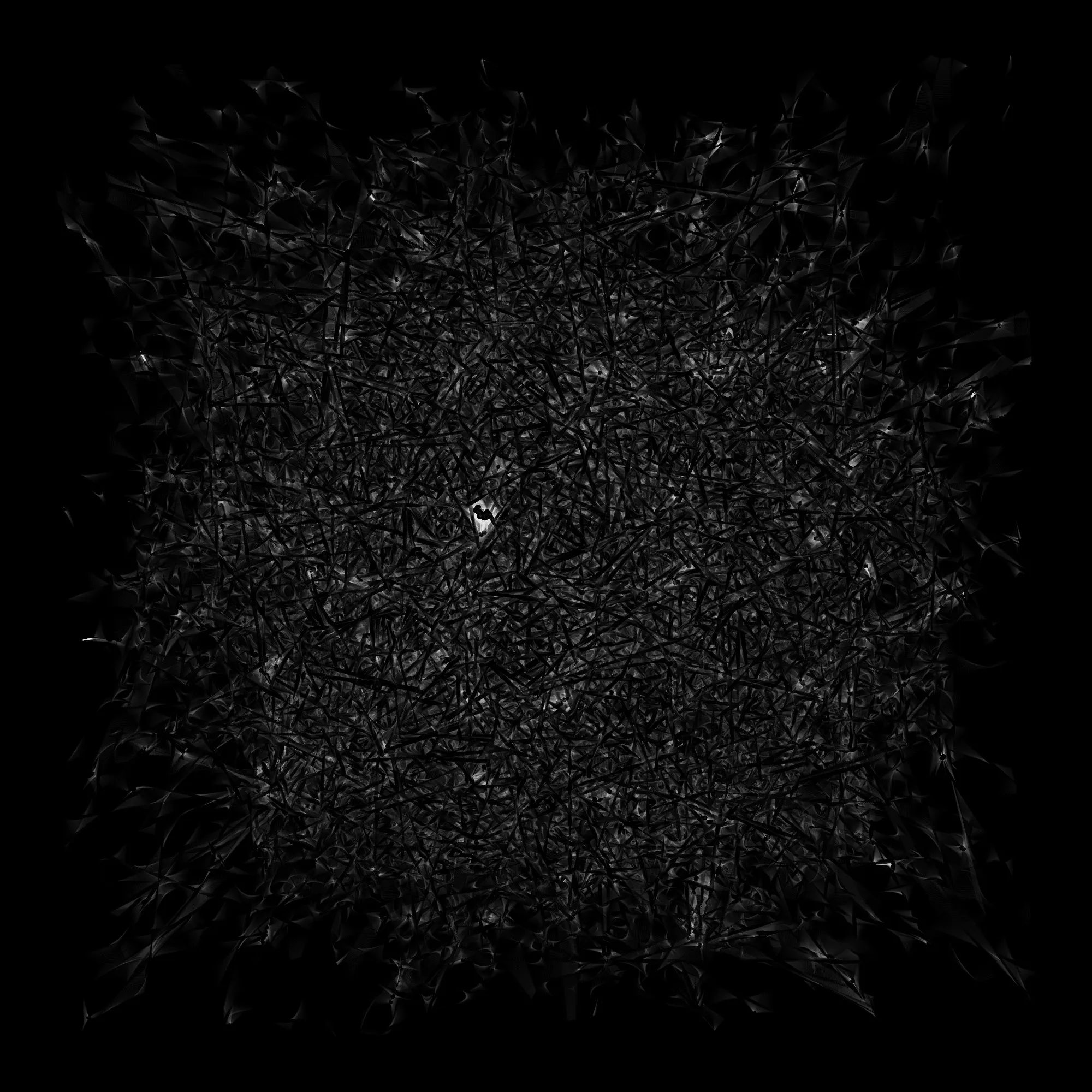
was walking & thought of all the ‘missed connections’ we have.
/*
interpretation #2.0: missed connections.

thought:
we walk by so many people. when they are within a certain distance, we have a short window of time to connect with each other in physical-space, until we are distant again.

expression:
draw a line from each being to other beings around them within a specific radius, with the distance between them signifying the intensity of a possible connection.

parameters:
population: 1000,
day_length: 10,

22nd july, 2026.
*/
/*
interpretation #2.1: missed connections.

thought:
we walk by so many people. when they are within a certain distance, we have a short window of time to connect with each other in physical-space, until we are distant again.

expression:
draw a line from each being to other beings around them within a specific radius, with the distance between them signifying the intensity of a possible connection, over time. connections are wiped out, however, by the movement of beings.

parameters:
population: 1000,
day_length: 10,

22nd july, 2026.
*/
260724:
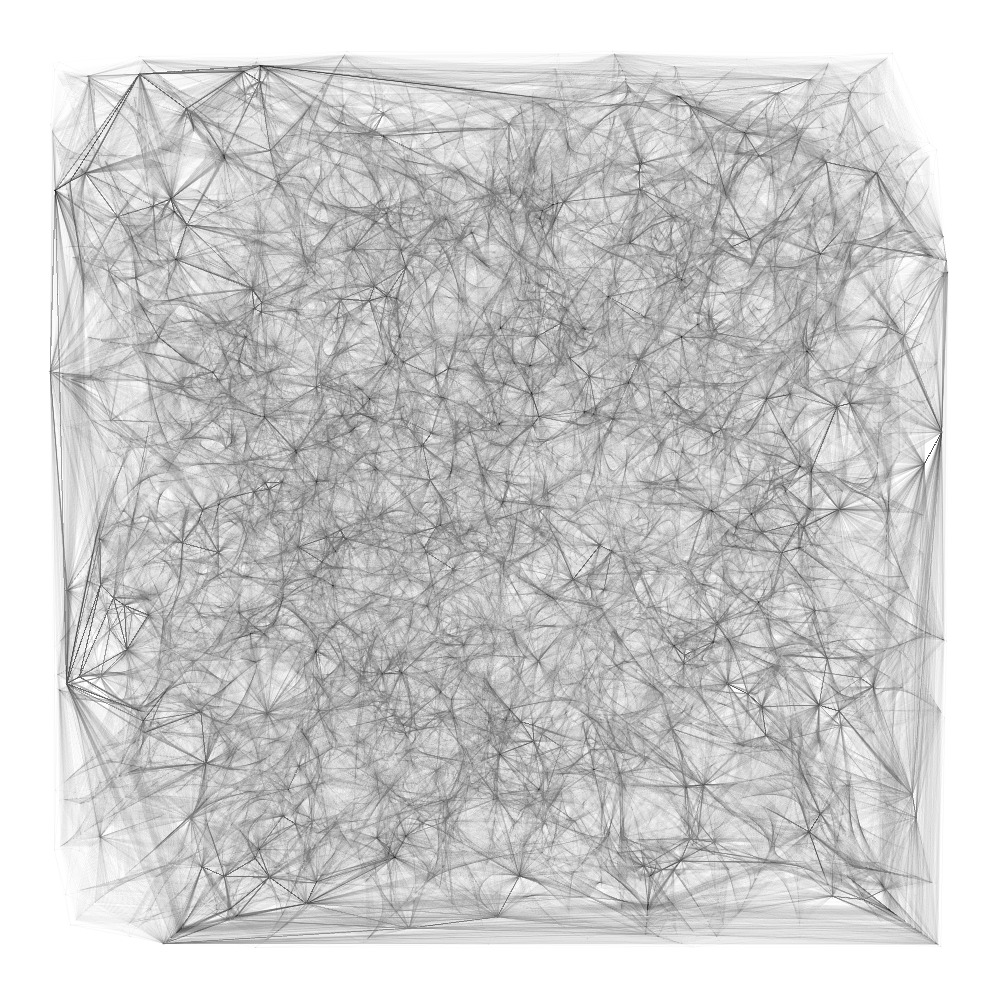
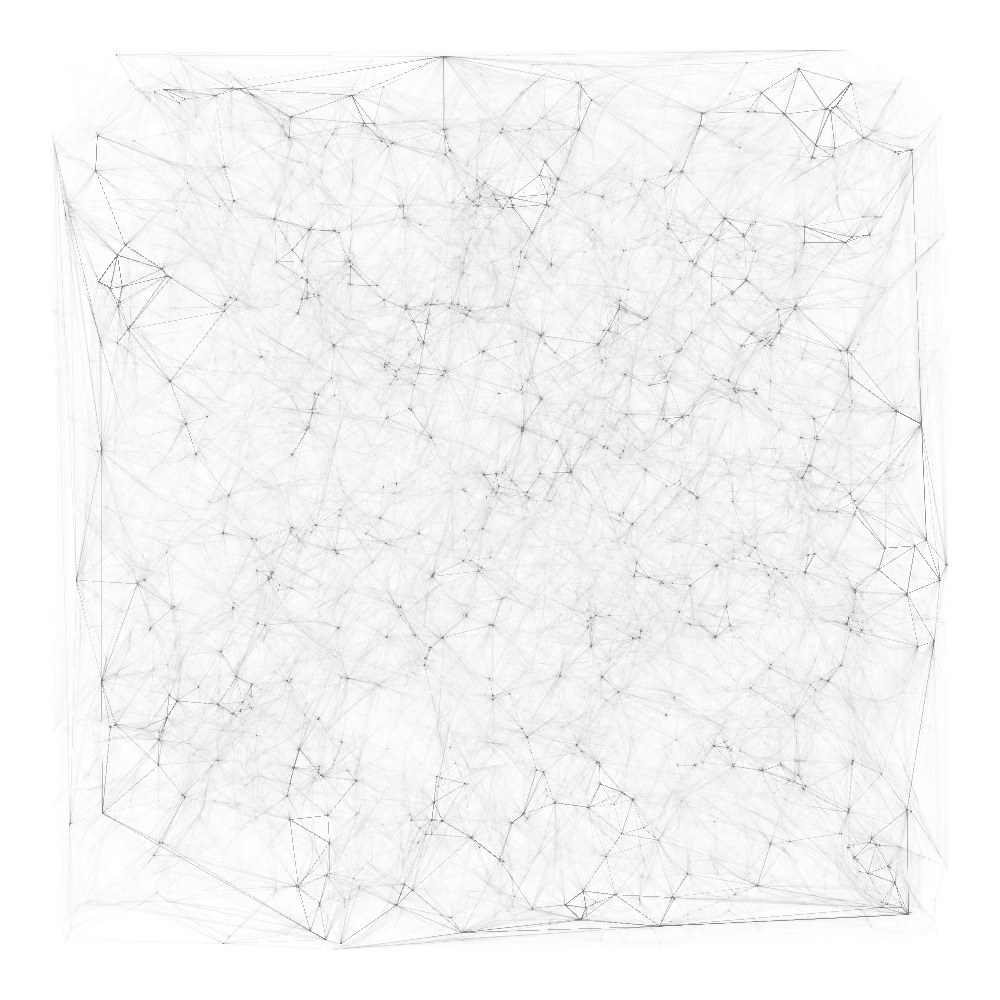
achieved delaunay triangulation:
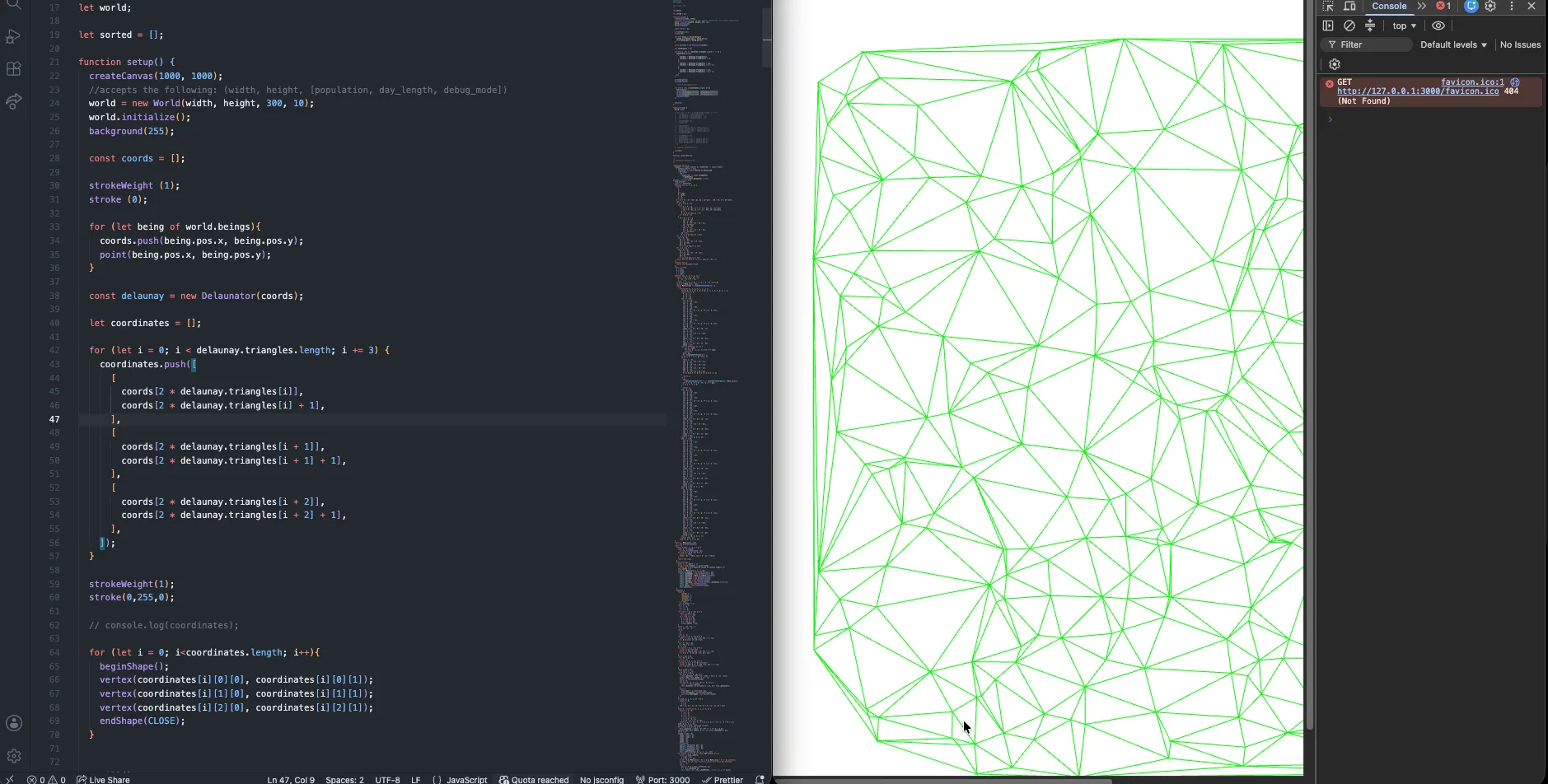
interpretation 3:
/*
interpretation #3: all the world's a mesh.

thought:
all beings are connected to each other via an invisible mesh.

expression:
treat the position of each being as a vertex. generate a triangular-mesh by finding tuples close to each other, so that no point is inside a face. keep generating the mesh over time, as beings move.

parameters:
population: 1000
day-length: 5

24th july, 2026.
*/
260727:
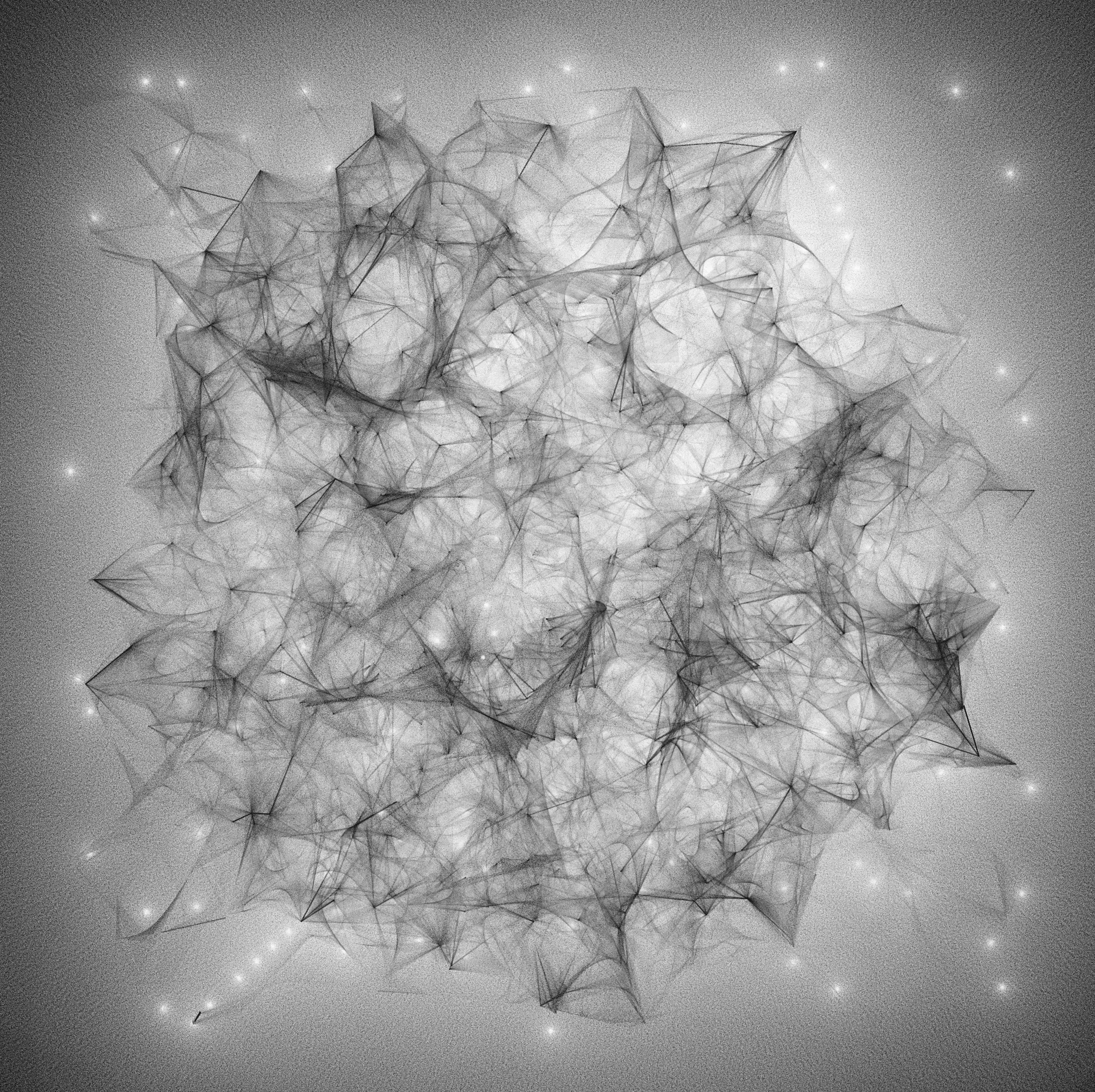
/*
interpretation #4.1: meetings are ripples.

thought:
meeting people can be resounding. when two beings meet, a ripple is sent through in space & time; that may affect other beings.

expression:
connect beings close to each other with a black line. when two beings collide, send out a circular ripple expanding from the point of collision. the closer the beings are, the further the ripple goes. lay this out over time.

parameters:
population: 500
day-length: 10

27th july, 2026.
*/
260730:
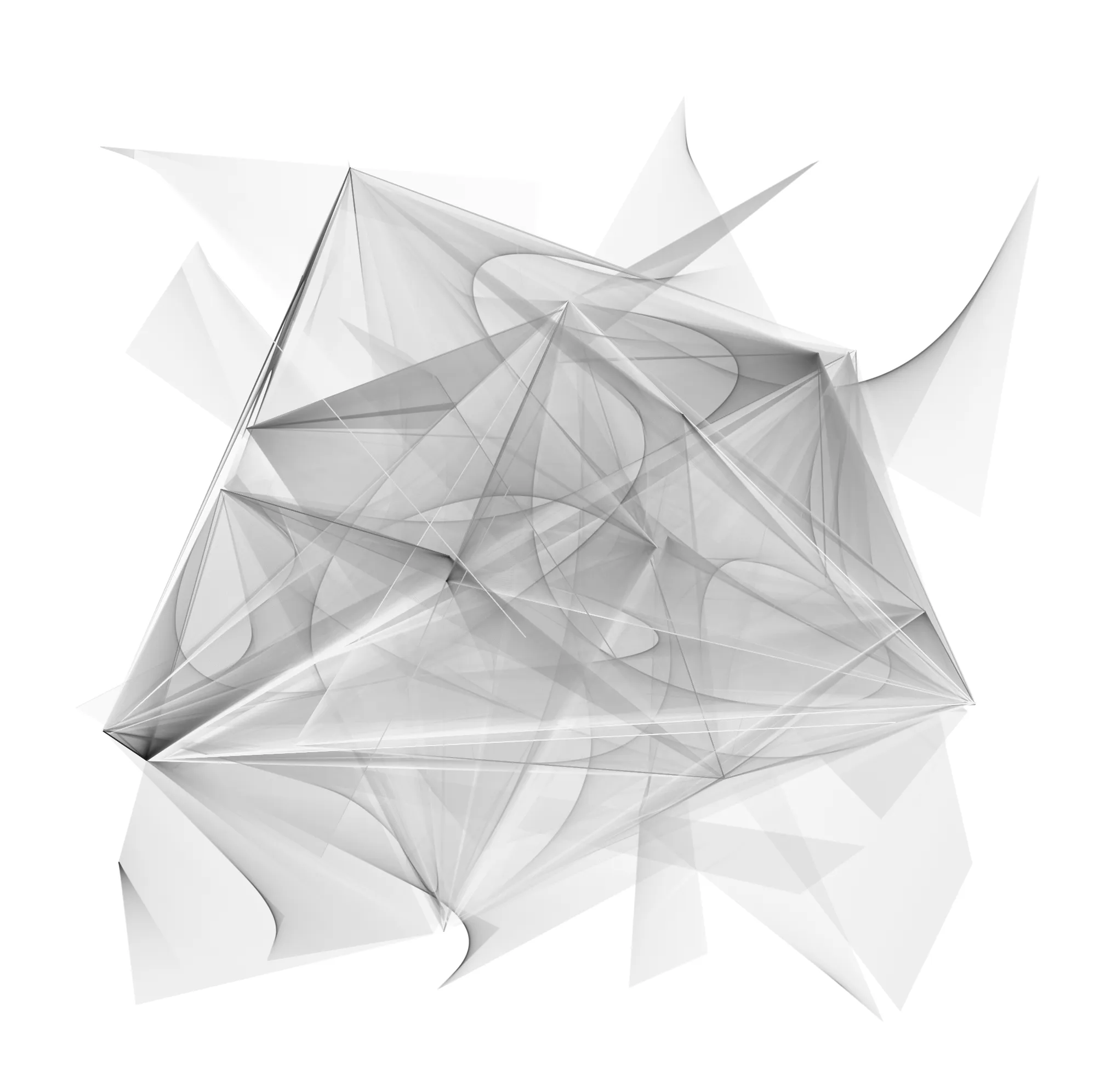
/*
interpretation #1.3: born in pairs.

thought:
beings are destined to be with someone that they were born close (in proximity & age) to. however, as they live out their lives, they may be close or separated in the world. ideology borrowed from: red thread of fate -> https://en.wikipedia.org/wiki/Red_thread_of_fate.

expression:
draw a line between a being & their partner over time. the closer they are, the darker the line; the further they are, the lighter the line.

parameters:
population = 40;
day length = 10;

30th july, 2026.
*/
presentation; 2608 @recurse:
i am interested in the idea of emergence/