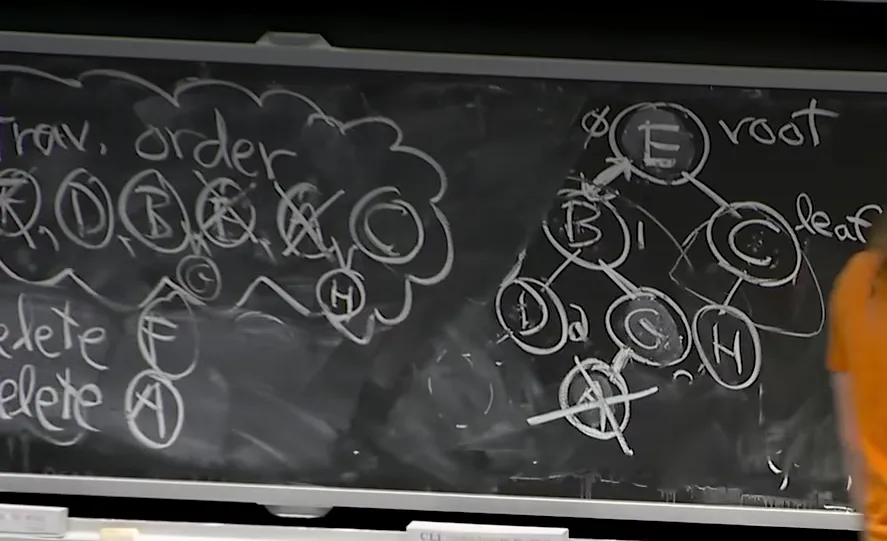
an efficient data structure.
a binary tree consists of nodes & edges, and has the following terminology:
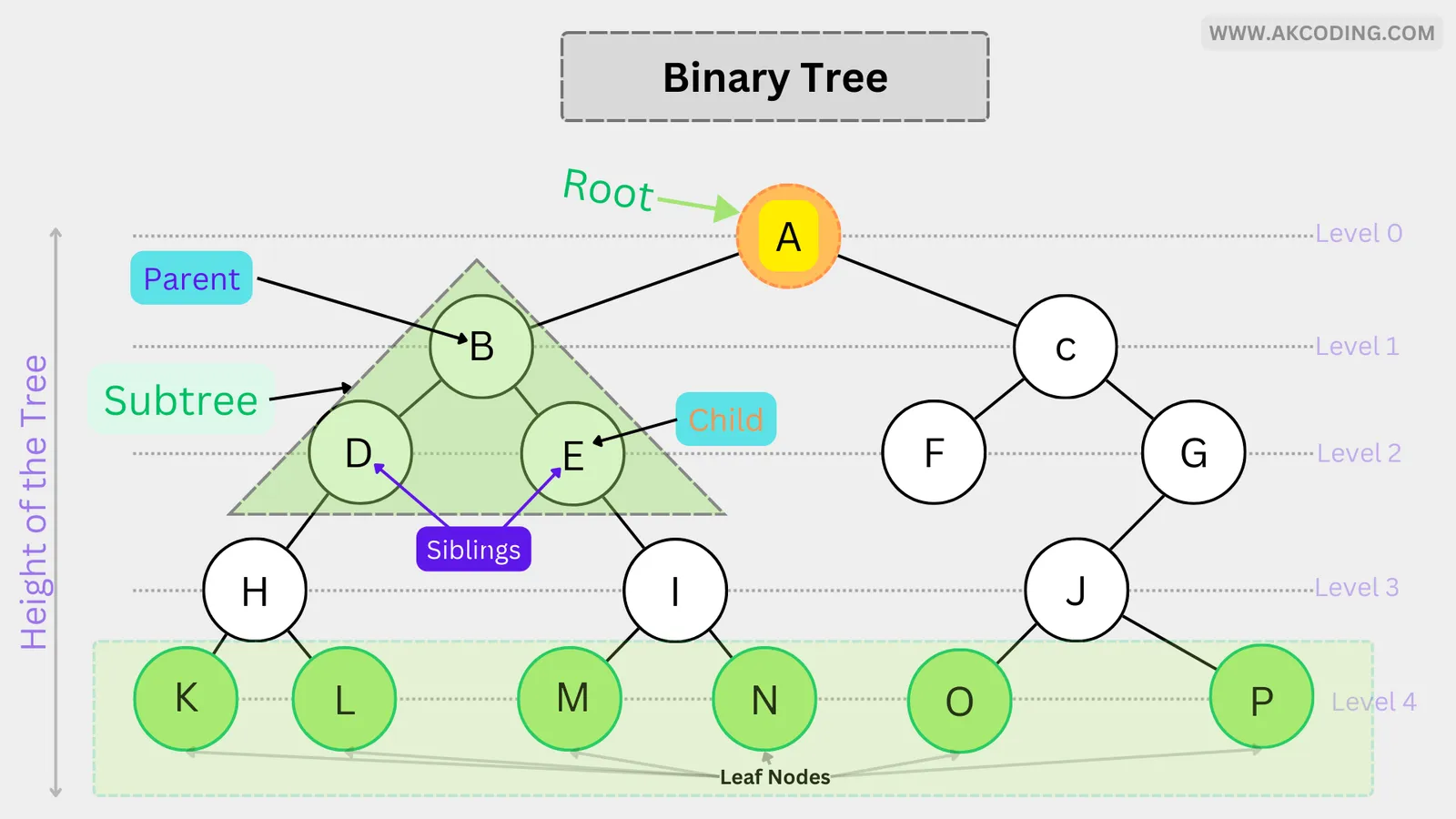
subtree (x) → all descendants of x.
depth (x) → # of edges from x to root.
height (x) → # edges in longest downward path or max depth of x’s subtree.
height of root is height of tree.
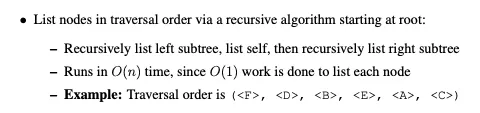
can traverse & represent by essentially storing the tree via a recursive algorithm:
iter (x):
	iter (x.left)
	output x
	iter(x.right)
therefore you get the following:
efficient because finding is log(n) time. (half the items get discarded).
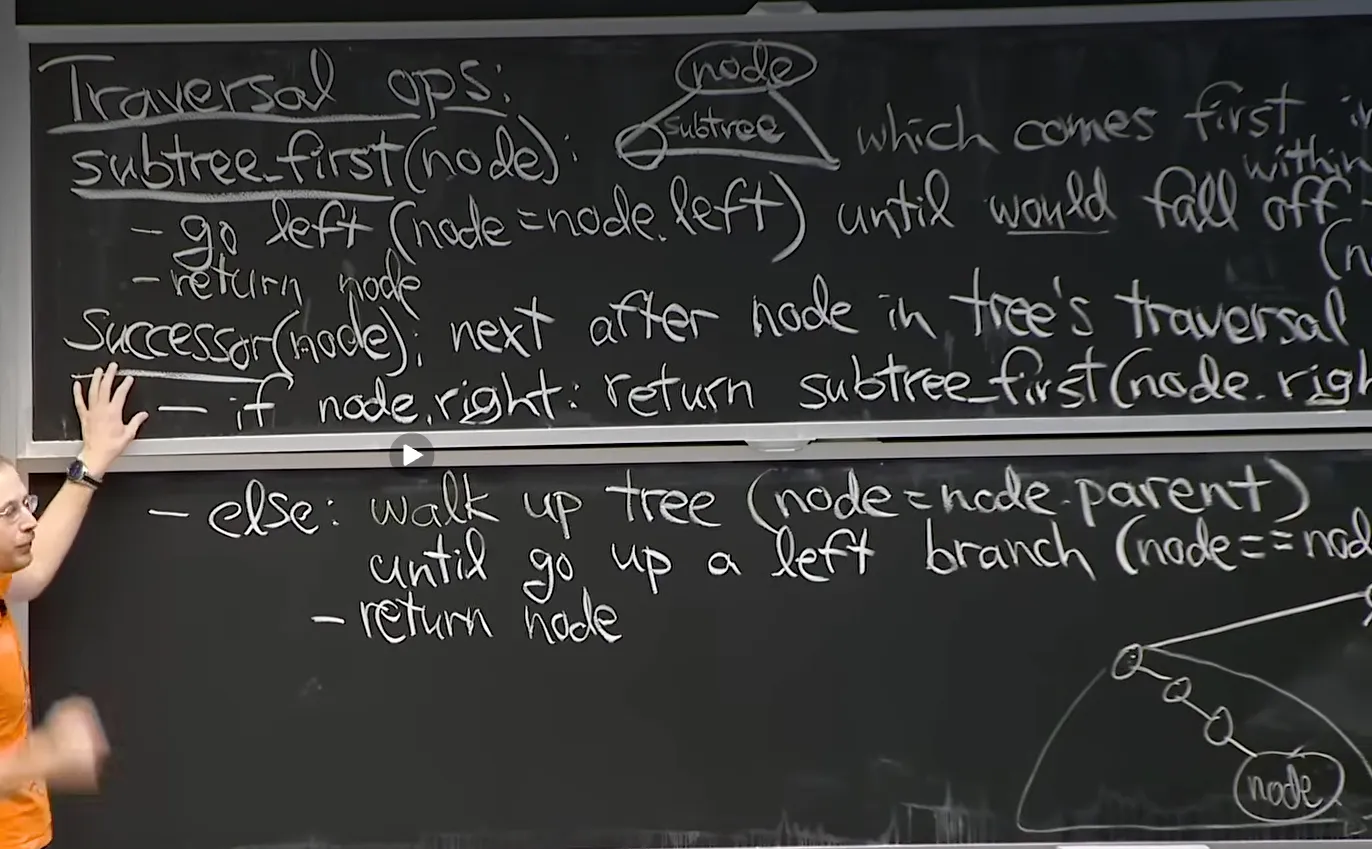
even though data is stored in a tree, you might think that they preserve ‘connections’ (for example a is connected to both b & c, and so on). but that doesn’t really matter — this is just an abstract way to store data — the connections are just for us to visualize them.
so in the case of deleting something, we actually change the order in which things were stored: