wiring similar to that of a d.c. motor.
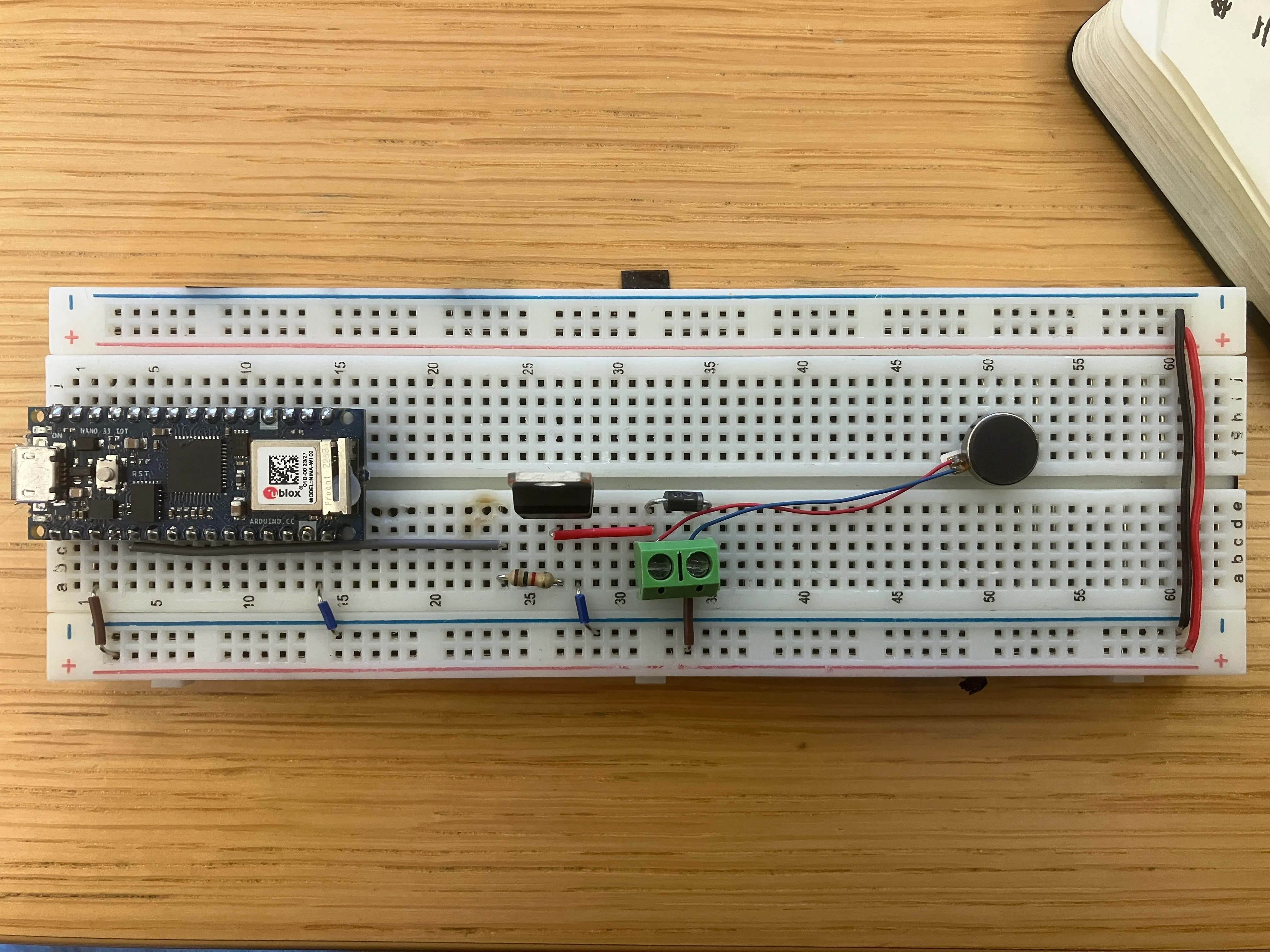
different voltage levels control intensity of pulses.
also made a three -finger motor driver to test for sensory funneling illusion. i dislike that i have to use the arduino for this, but know that i could perhaps link each motor to a different 555 in astable mode and change the timing quicker. the circuits would also be much neater.
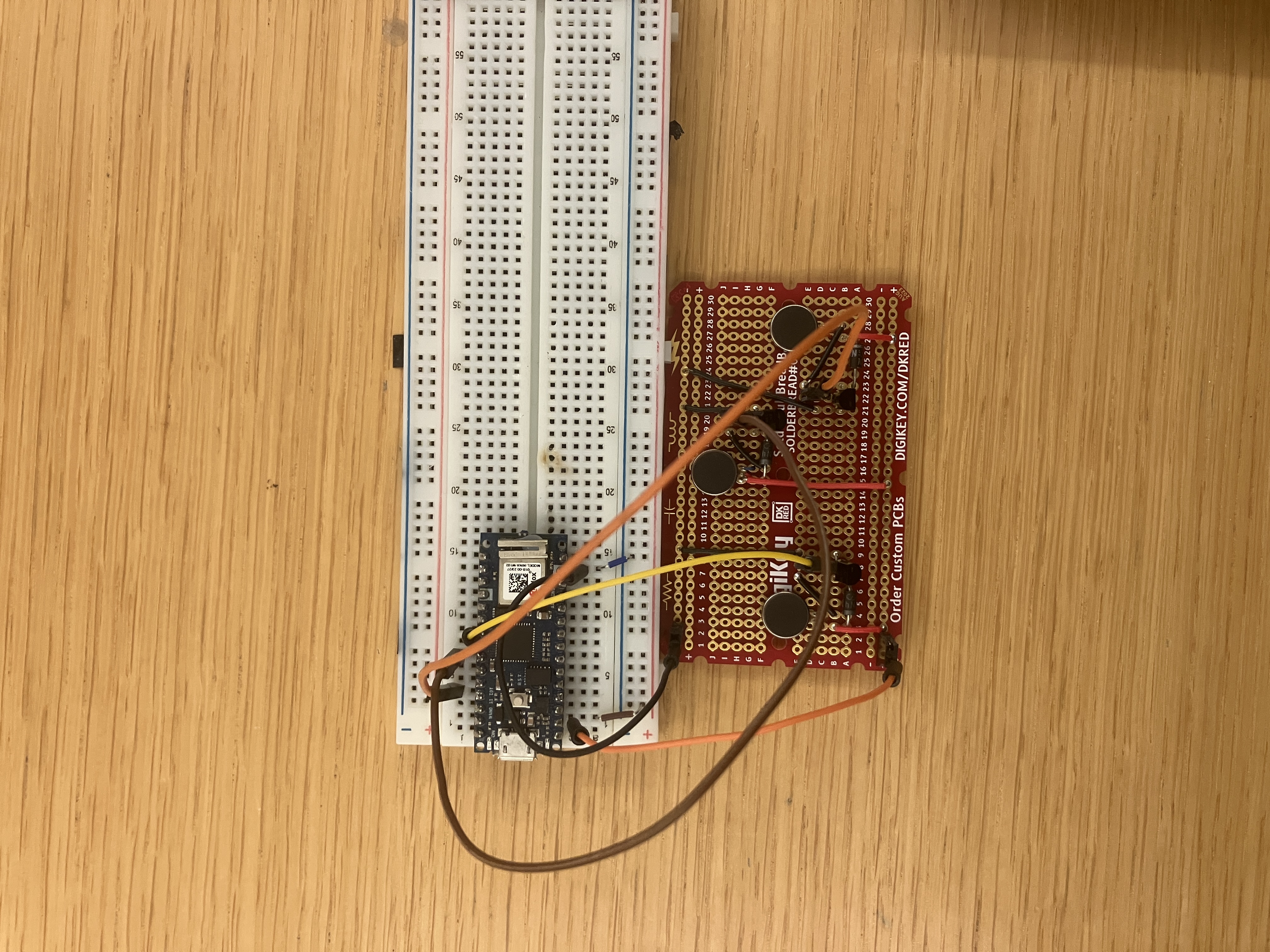
frankly, we didn’t have enough time to experience how it ‘feels’ like on different parts of the body.
code to make three motors vibrate:
int motors[3] = {10,11,12};

void setup() {
  // put your setup code here, to run once:

  for (int i = 0; i<3; i++){
    pinMode(motors[i], OUTPUT);
  }

}

void loop() {
  // put your main code here, to run repeatedly:

    for (int i = 0; i<3; i++){
    analogWrite(motors[i], 100);
    delay(500);
    analogWrite(motors[i], 0);
  }


}
better:
//3 motors.

int motors[3] = { 10, 11, 12 };

int strength = 250;
unsigned long pulse_dur = 50;
unsigned long rest = 1000;

unsigned long prev_millis = 0;

int curr_motor = 0;
bool motor_state = false;  // false is resting; true is pulsing.

void setup() {
  for (int i = 0; i < 3; i++) {
    pinMode(motors[i], OUTPUT);
  }
}

void loop() {
  unsigned long curr_millis = millis();

  if (motor_state) {
    //means pulsing.
    if (curr_millis - prev_millis >= pulse_dur) {
      //turn off.
      analogWrite(motors[curr_motor], 0);
      motor_state = false;
      prev_millis = curr_millis;
    }
  } else {
    //means resting.
    if (curr_millis - prev_millis >= rest) {
      analogWrite(motors[curr_motor], strength);
      motor_state = true;
      prev_millis = curr_millis;

      curr_motor++;
      if (curr_motor >= 3) {
        curr_motor = 0;
      }
    }
  }
}